UConn event blends yoga, meditation, and stress relief for students
A one-hour UConn Stamford session pairs yoga, meditation, and smoothies with free perks to make mindfulness feel low-pressure. The payoff is a quick reset students can actually use.
A one-hour reset built for real student schedules
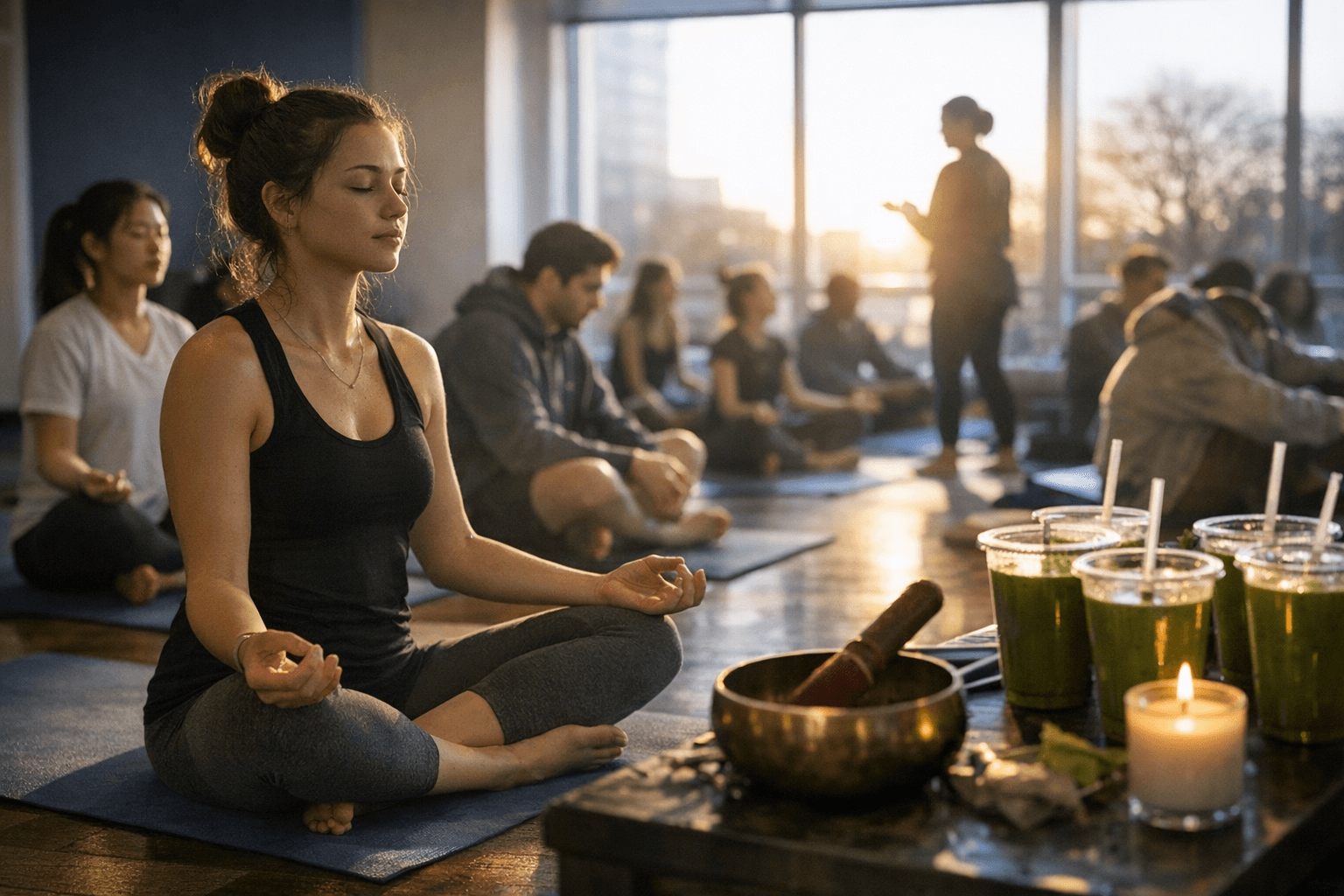
Breathe & Balance turns mindfulness into something students can try between classes instead of putting off for some later, calmer week. The UConn Stamford event brings yoga, meditation, breathing techniques, and relaxation practices into a single one-hour session, then adds smoothies and healthy juices afterward so the payoff is immediate, social, and easy to understand.
The program was set for Wednesday, April 8, 2026, from 2:00 PM to 3:00 PM EDT at Schreiber Reading Room, 253, 1 University Place, Stamford, CT 06902. It is organized by the Psychology Club in collaboration with Liberation Programs, and the listing makes the pitch plainly student-friendly: free food, free stuff, and a low-pressure way to learn something useful about stress relief.
Why the format matters
The real strength of Breathe & Balance is not that it asks students to become committed meditators in one afternoon. It does the opposite, giving a short guided practice that introduces breath awareness, body awareness, and relaxation without requiring any prior yoga experience. That matters on a campus where many students are looking for relief, but not necessarily for a formal wellness class that feels too serious or too long.
A casual setting can make all the difference. By pairing the session with smoothies, healthy juices, and an informal chance to connect with other students, the event lowers the social barrier that often keeps people from walking into a meditation room in the first place. It also gives the practice a practical edge: students leave with something they can actually use when exams, deadlines, or work shifts start piling up again.
A campus wellness system behind the event
Breathe & Balance fits into a broader UConn Stamford approach that treats wellness as a shared campus effort, not a one-off activity. UConn Stamford says regional wellness is intentionally cultivated through collaborations with students, campus leaders, staff, and faculty, and that its support system is built around evidence-informed practices such as harm reduction, health promotion, and direct services.
That wider structure matters because it gives a small event real context. UConn Stamford’s Mental Health Resource Center offers free and confidential appointments, walk-in hours, individual assessments, brief therapeutic intervention, crisis intervention, wellness workshops, and referrals to community providers and services. In other words, the campus is not only offering informal mindfulness programming, it is also maintaining a pathway to more direct support when students need it.
UConn Student Health and Wellness extends that same logic with its Introduction to Mindfulness and Meditation Mondays, which are free, open to all UConn campuses, and designed to support stress reduction and overall wellbeing. The public-facing nature of those sessions reinforces the message behind Breathe & Balance: mindfulness is being packaged as something accessible, repeatable, and easy to enter, not as an exclusive practice reserved for people already comfortable with meditation.
Why the Psychology Club and Liberation Programs pairing works
The Psychology Club is a natural host for this kind of event because its mission already reaches beyond coursework. UConn’s Stamford campus describes the club as a student-led organization focused on professional development, community-building, and experiential learning beyond the classroom, which makes wellness programming a strong fit for its identity.
Liberation Programs adds another useful layer. The collaboration signals that mindfulness here is not being treated as a stand-alone trend, but as part of a wider conversation about coping, connection, and support. That connection helps the event feel less like a wellness performance and more like a practical resource, especially for students who may be curious about stress tools but hesitant to walk into a highly structured meditation session.
Stamford has been building this footprint already
Breathe & Balance also sits inside a campus tradition that has been steadily making mindfulness more visible. On March 3, 2025, Assistant Professor Na Zhang led a mindfulness workshop at UConn Stamford, where she guided students in meditation and discussed how to work with stress and improve quality of attention. That earlier session suggests the campus has been laying groundwork for this kind of programming rather than improvising it for a single event.
The setting itself helps explain why compact wellness events may resonate so well. UConn Stamford was founded in 1951 and moved downtown in 1998, and that urban, regional-campus footprint tends to reward programming that is short, convenient, and easy to reach. Schreiber Reading Room in Stamford is the kind of space where a one-hour offering can feel woven into the day instead of competing with it.
The bigger case for quick, practical mindfulness
The urgency behind these programs is not hard to see. The Centers for Disease Control and Prevention says mental health conditions such as anxiety, depression, and suicidal ideation are prevalent among college students and are a growing public health concern. The American Psychological Association has reported that more than 60% of college students met criteria for at least one mental health problem in 2020–2021, and that nearly three-quarters reported moderate or severe psychological distress in one national survey.
That is why the design of Breathe & Balance matters beyond the event itself. A one-hour class with guided breathing, relaxation practice, and a friendly post-session social moment is more than a campus perk. It is a direct response to the reality that many students need something simple enough to try today and useful enough to remember tomorrow.
Research cited in peer-reviewed literature points in the same direction, with a 2023 systematic review and meta-analysis finding mindfulness effective for improving mental health in university students. Put next to that evidence, UConn Stamford’s approach looks deliberately practical: start small, make it social, make it free, and connect it to a wider support system that students can return to later.
Breathe & Balance does not try to solve student stress with a grand gesture. It offers a short, friendly entry point, a few immediately usable coping tools, and a campus environment that makes mindfulness feel less like a special occasion and more like part of normal student life.
This article was produced by Prism’s automated news system from verified source data, official records, and press releases, then run through automated quality and moderation checks before publishing. The system is built and supervised by the people who set the standards it runs under. Read our full AI policy.
Did this article answer your question?