Casca bust gains hair, fabric, and embroidery detail in final pass
Casca’s final pass shows how hair, fabric, and embroidery can do more than add polish. On a 1/6-scale Berserk bust, the smallest strokes carry the biggest payoff.
The final pass is where Casca stops looking painted and starts looking finished
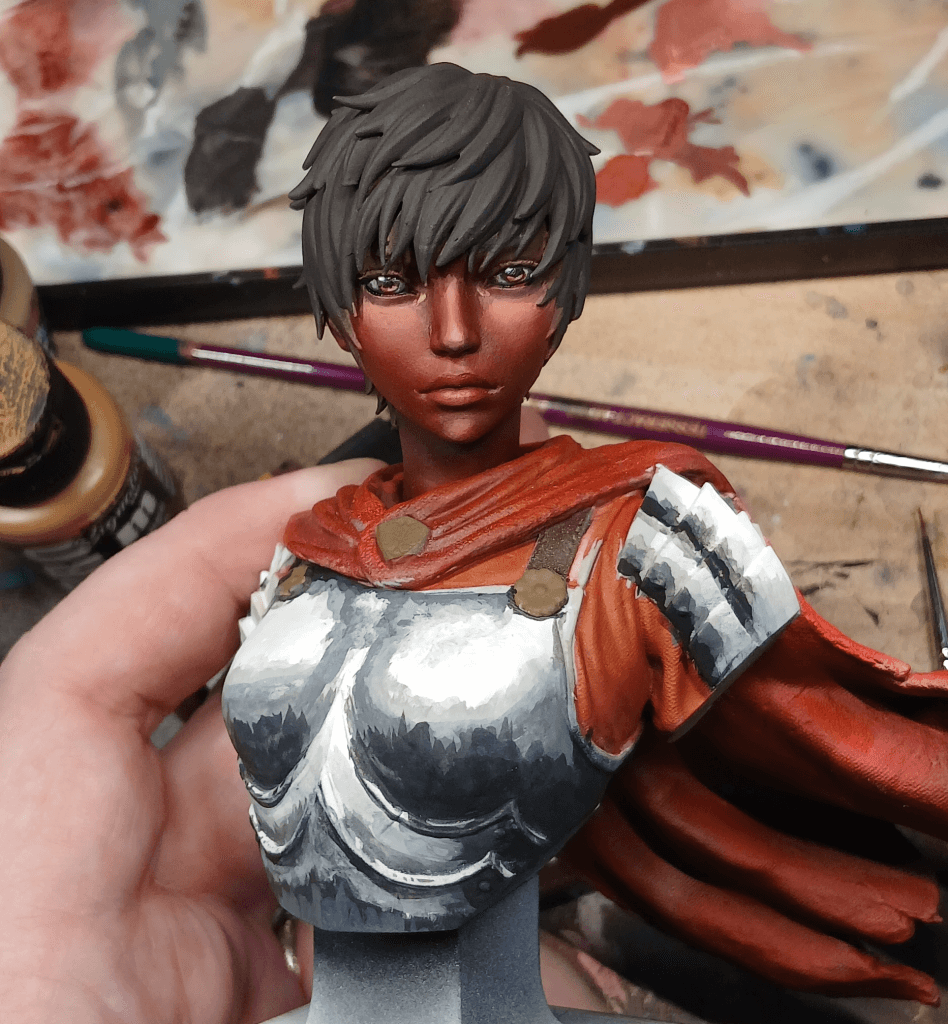
Casca’s face and armour were already complete, and that is exactly why this stage matters. In the fourth part of A Brush With Greatness, keewa returns to the Berserk bust and concentrates on the last layers that turn a nearly finished miniature into a showcase piece: hair, fabric, and freehand embroidery. The model’s 1/6 scale gives those decisions real weight, because the surface is large enough to hold intricate work while still demanding discipline from every stroke.
This is also the point in the series where the subject starts to feel fully defined. Earlier entries established Casca in her Golden Age pre-Eclipse attire and set the bust as the centerpiece of the project, which began on April 7, 2026. By the time this final pass arrives, the question is no longer whether the bust is painted well. The question is whether the last details make the whole piece feel deliberate, cohesive, and alive.
Hair: map the shine before you chase the strands
The hair treatment is the clearest example of how a controlled finishing stage can elevate a bust without overwhelming it. keewa starts with ProAcryl Black Brown as the base, then builds highlights with ProAcryl Warm Brown and Bold Titanium White. That order matters because the darkest tone anchors the mass, while the warmer midtone and bright highlight separate the planes of the sculpt instead of flattening them into a single brown block.
Rather than laying down broad highlights and hoping the shape appears later, the shine is mapped in a structured way. The goal is an anime-inspired halo effect with a slightly more realistic feel, which means the brightest accents are placed where light would naturally gather, not scattered everywhere for contrast’s sake. The result reads as intentional from tabletop distance and still rewards close inspection.
The texture comes from the brush control. keewa uses numerous fine strokes that follow the flow of the hair, so the surface suggests individual strands instead of a smooth painted shell. That choice is crucial on a bust like this, because the large scale invites detail, but only if the direction of the strokes reinforces the sculpt’s movement.
A useful way to think about the process is this:
- base the mass dark enough to hold depth
- place highlights where the hair actually turns toward the light
- use thin, directional strokes to suggest strand texture
- glaze back down if the transition needs to feel more connected
The final pass on the hair is not about making every lock different. It is about making the whole arrangement feel designed, readable, and tied to the character’s silhouette.
Why the glaze matters more than a blunt wash
One of the smartest choices in the piece is the use of a Speedpaint Oak Brown glaze to separate the hair sections. keewa explicitly prefers that to a premixed wash, and the reason is easy to see in the result: the glaze acts with more control and feels more surgical. Instead of flooding recesses indiscriminately, it deepens separation where it is needed and preserves the earlier highlighting work.
That distinction is useful for any painter pushing a high-detail bust toward the finish line. A wash can be fast, but it can also make a carefully built surface look softer than intended. A glaze, especially in a stage like this, lets you tune the contrast without sacrificing the structure already established by the brushwork. On a model where the hair is one of the main focal points, that restraint keeps the finish crisp.
Fabric and embroidery: make the freehand look chosen, not crowded
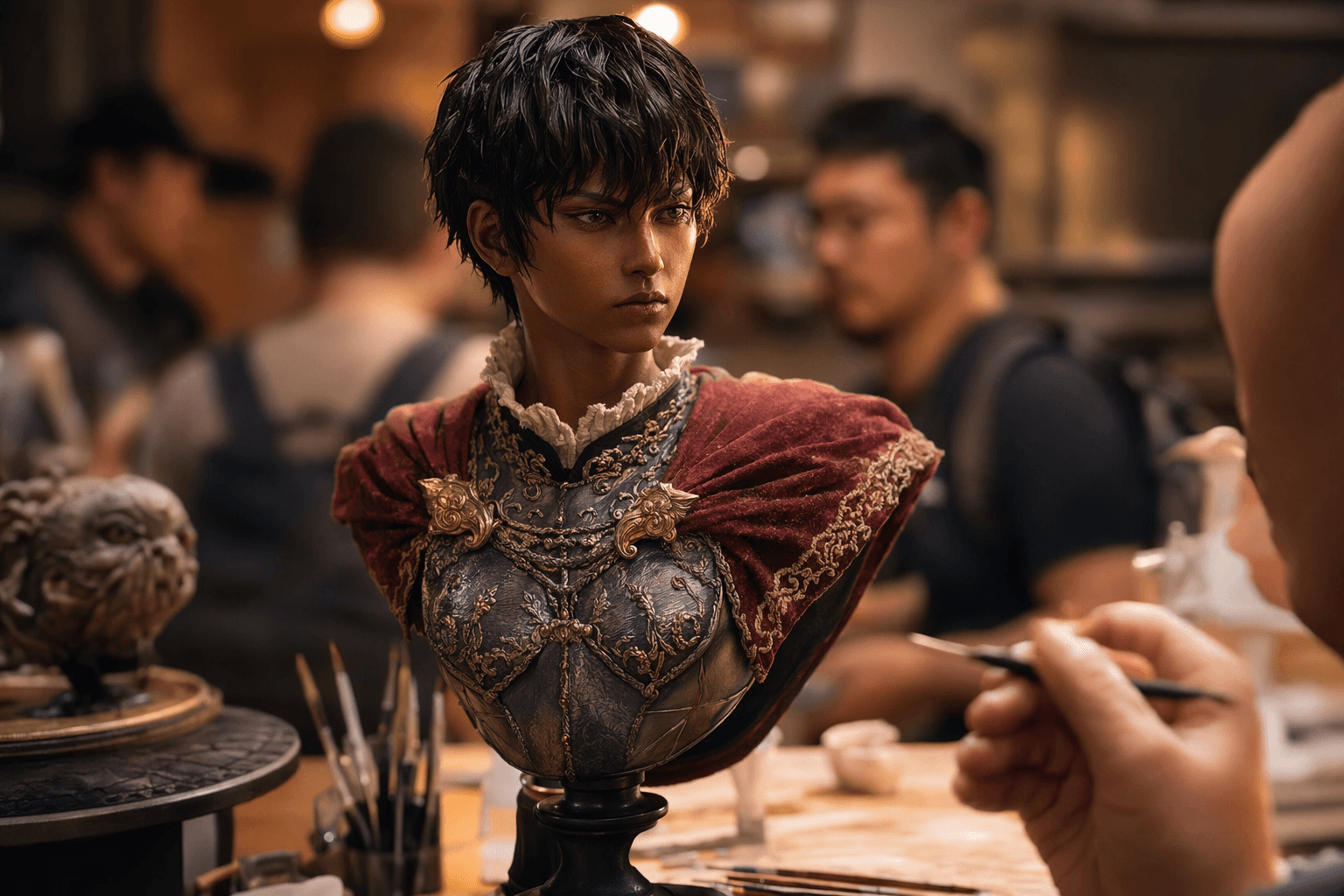
The fabric and embroidery sections carry the same lesson in a different register. Small touches of freehand can change the entire read of a miniature, but only if they look like part of the design rather than decoration added at the last second. On Casca’s bust, that matters because the clothing sits alongside the finished face and armour, so any embroidery that feels messy would immediately pull attention away from the character.
At 1/6 scale, embroidery has room to matter visually, but it still has to be disciplined. The safest approach is to think in terms of spacing, clarity, and contrast. The pattern needs enough separation from the cloth underneath to read as stitched work, yet it also needs to stay restrained enough that the garment still feels wearable rather than overworked.
For tabletop scale, that usually means:
- keep the shapes simple enough to read at arm’s length
- echo the folds of the cloth instead of fighting them
- use crisp edge control so the embroidery feels intentional
- stop before the surface starts looking crowded
That last point is the real trick. Good embroidery does not try to fill every empty inch. It chooses where to speak and where to leave quiet space, which is what makes the final result feel elegant instead of busy.
The value of finishing is emotional as well as technical
keewa does not treat the final pass as a purely technical exercise. The piece also talks openly about painting as a kind of therapy, including the difficulty of getting started on days when the desk already feels heavy. That perspective gives the article a different kind of usefulness, because it recognizes that hobby routines often sit right beside self-discipline and self-worth.
That honesty matters in a painting series because the last 10 percent of a project is often where momentum starts to fray. Hair highlights, fabric trims, and embroidery details are the parts that demand patience after the big decisions are already made. Framing that effort as part of a coping routine, not just a technical checklist, makes the work feel more human and more sustainable.
What Casca’s bust gets right about the final stage
keewa, who describes themself as one of Goonhammer’s painters, uses the series to do more than document a single model. The project also sits inside a broader practice of painting models to illustrate articles, writing painting guides, and reviewing models and paints. That background explains why this chapter feels so focused on the exact finishing choices that change a model’s final read.
The lasting lesson is straightforward: once the face and armour are complete, the smallest surfaces carry the most responsibility. Hair needs structured shine, fabric needs clean restraint, and embroidery needs freehand that feels deliberate from the first stroke to the last. On Casca’s bust, those decisions do not just add detail. They complete the character.
This article was produced by Prism’s automated news system from verified source data, official records, and press releases, then run through automated quality and moderation checks before publishing. The system is built and supervised by the people who set the standards it runs under. Read our full AI policy.
Did this article answer your question?