First-Time Battletech Painter Shares Kit Decisions and Step-by-Step Process
Kreighton Long's honest first-time Battletech painting walkthrough cuts through the noise on kit choices and process decisions most beginners get wrong.
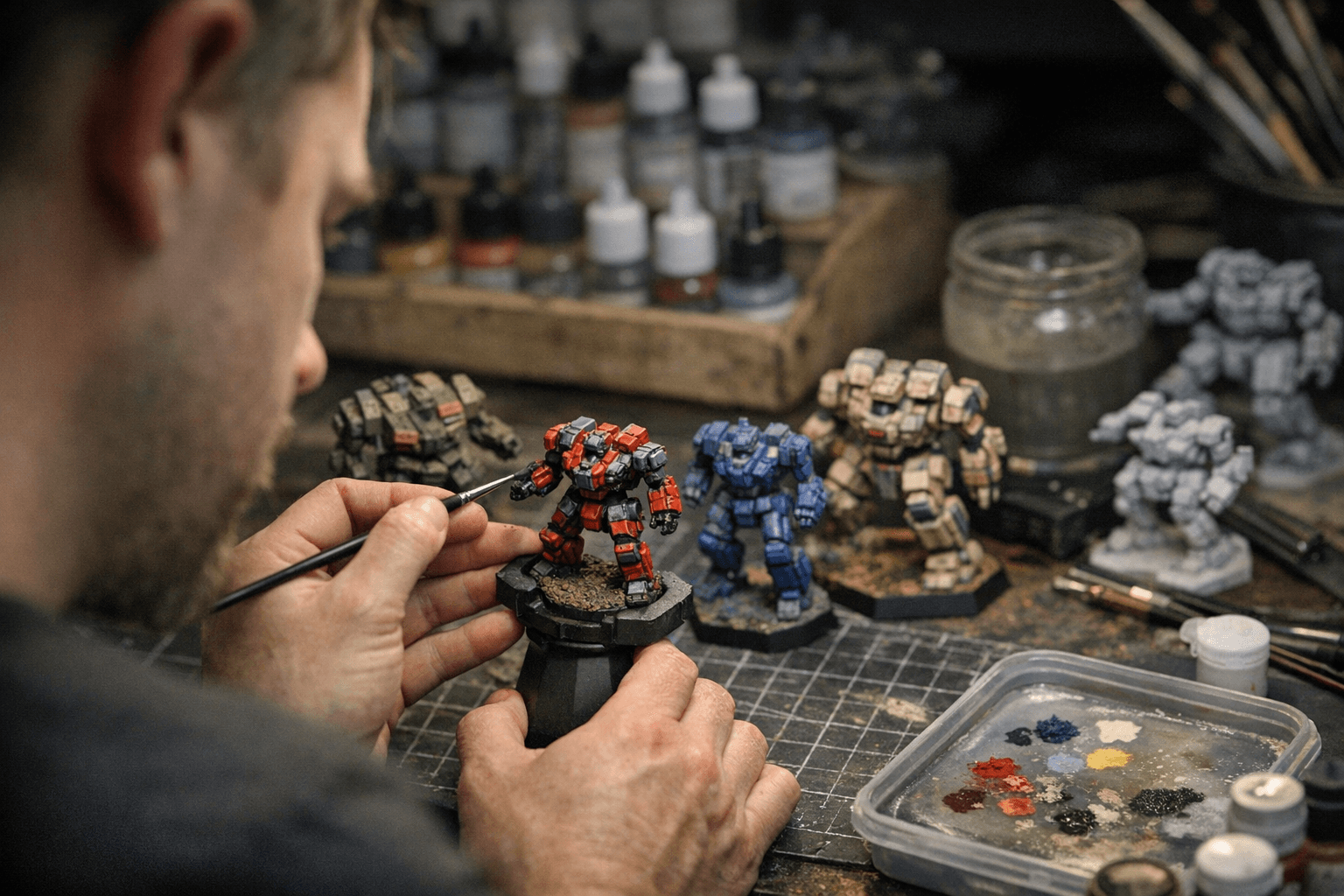
Painting your first Battletech force is one of those projects that looks deceptively simple from a distance. The mechs are chunky, the detail is readable, and the scale seems forgiving. Then you open the box, stare down a pile of unpainted plastic or resin, and realize you have no framework for where to even start. Kreighton Long, writing for No Dice No Glory, went through exactly that process and documented it honestly, which makes his walkthrough worth studying whether you're eyeing your first Battletech set or you've been circling the game for a while and haven't pulled the trigger on painting.
Starting from scratch with kit decisions
The first real challenge Long tackles is the decision-making that happens before a single brush touches a model. Kit selection matters more in Battletech than in some other miniature games because the game spans a wide range of official and unofficial miniature formats, from the flat cardboard standees included in starter sets to the plastic minis in the Clan Invasion box to full metal castings from Iron Wind Metals. Each of those presents a different surface, a different level of prep work, and a different expectation for how paint will behave.
For a first-time painter coming at this from the Battletech side rather than the miniature painting side, that variety can be genuinely paralyzing. Long's approach of documenting the rationale behind his choices gives readers a decision tree they can actually follow rather than a list of gear recommendations without context. Understanding why you're choosing a particular primer, a particular basing approach, or a particular color scheme matters as much as knowing what the product is.
Process over product
What separates a useful beginner walkthrough from a gear review is the sequence. Miniature painting rewards deliberate process: primer before base coat, base coat before wash, wash before highlight. But the sequence alone doesn't tell you how to handle the specific geometry of a Battletech mech, which tends toward flat armored panels interrupted by vents, joints, and weapon housings. Those flat panels are an opportunity for edge highlighting and subtle blending, but they're also unforgiving if your base coat is uneven or your primer pooled in a recess.
Long's step-by-step format addresses the actual mechanical challenge of moving from raw miniature to finished piece on a mech-specific body type. That kind of specificity is what makes a walkthrough genuinely useful. Generic advice about thin your paints and use a wet palette applies everywhere; advice about how to approach the broad torso panels on a Battletech Atlas or handle the leg joints on a Timber Wolf is what you actually need when you're standing at your painting desk.
Color scheme and faction identity
Battletech has a rich lore of House colors, Clan markings, and mercenary unit insignia, and for a new painter it's easy to either ignore all of that and just pick colors you like, or get so deep into lore accuracy that you freeze up before painting anything. The practical middle ground is to pick a scheme that reads correctly on the table at game distance, uses a limited palette you can execute cleanly, and gives you room to add detail as your skills develop.
Long's documentation of his color choices as part of a first-time project is particularly relevant here because it demonstrates the kind of scoped ambition that actually gets minis finished. A Battletech lance is typically four mechs. Four mechs, painted to a consistent tabletop standard with a coherent color scheme, will look dramatically better on the table than twelve mechs base-coated and abandoned. Getting four done builds the muscle memory and the reference points you need before scaling up.
Basing and finishing
Basing is where a lot of Battletech painters, especially those coming from wargaming backgrounds where the mech is the whole story, underinvest. A clean mech on a bare plastic base reads as unfinished at any table. Simple basing, whether that's texture paint, sand and static grass, or a more elaborate urban rubble scheme, provides the visual anchor that makes the mech read as part of a coherent force rather than a loose collection of models.
The finishing decisions, varnish type, whether to use a gloss coat before weathering, how much wear and battle damage to suggest, are also worth deliberating before you start rather than after. Matte varnish over an unprotected paint job is good practice for any miniature that will see regular table use. Battletech mechs take handling during play, and a few minutes with a brush-on or rattle-can matte varnish saves you from watching your paint chip off during your third game.
Why this walkthrough is worth reading
The value of Long's piece isn't that it's the definitive Battletech painting guide. It's that it's an honest first-person account of someone working through the same decisions you're facing, published just days ago on No Dice No Glory on March 10, 2026. That recency matters because the Battletech miniature landscape has shifted considerably over the past few years, with Catalyst Game Labs expanding their plastic range and the community growing well beyond its older grognard base into a much broader hobbyist audience.
A first-timer painting now is working with different materials and in a different community context than someone who painted their first BattleMechs a decade ago. Long's account is situated in that current moment, which means the kit recommendations and the process observations reflect what's actually available and what the current player base is actually doing.
The step-by-step format also means you can return to it mid-project when you hit a wall on a specific problem, rather than having to re-read an entire article to find the relevant section. For a hobby project that might stretch across several evenings of painting time, that kind of reference utility is genuinely practical. Battletech's mechs have enough visual personality that a well-executed paint job pays off every time they hit the table.
This article was produced by Prism’s automated news system from verified source data, official records, and press releases, then run through automated quality and moderation checks before publishing. The system is built and supervised by the people who set the standards it runs under. Read our full AI policy.
Did this article answer your question?