First-Timer Tackles Battletech Wolf's Dragoons Set with Practical Results
Kreighton Long's first Battletech paint job on the Wolf's Dragoons set proves you don't need experience to get practical, satisfying results.
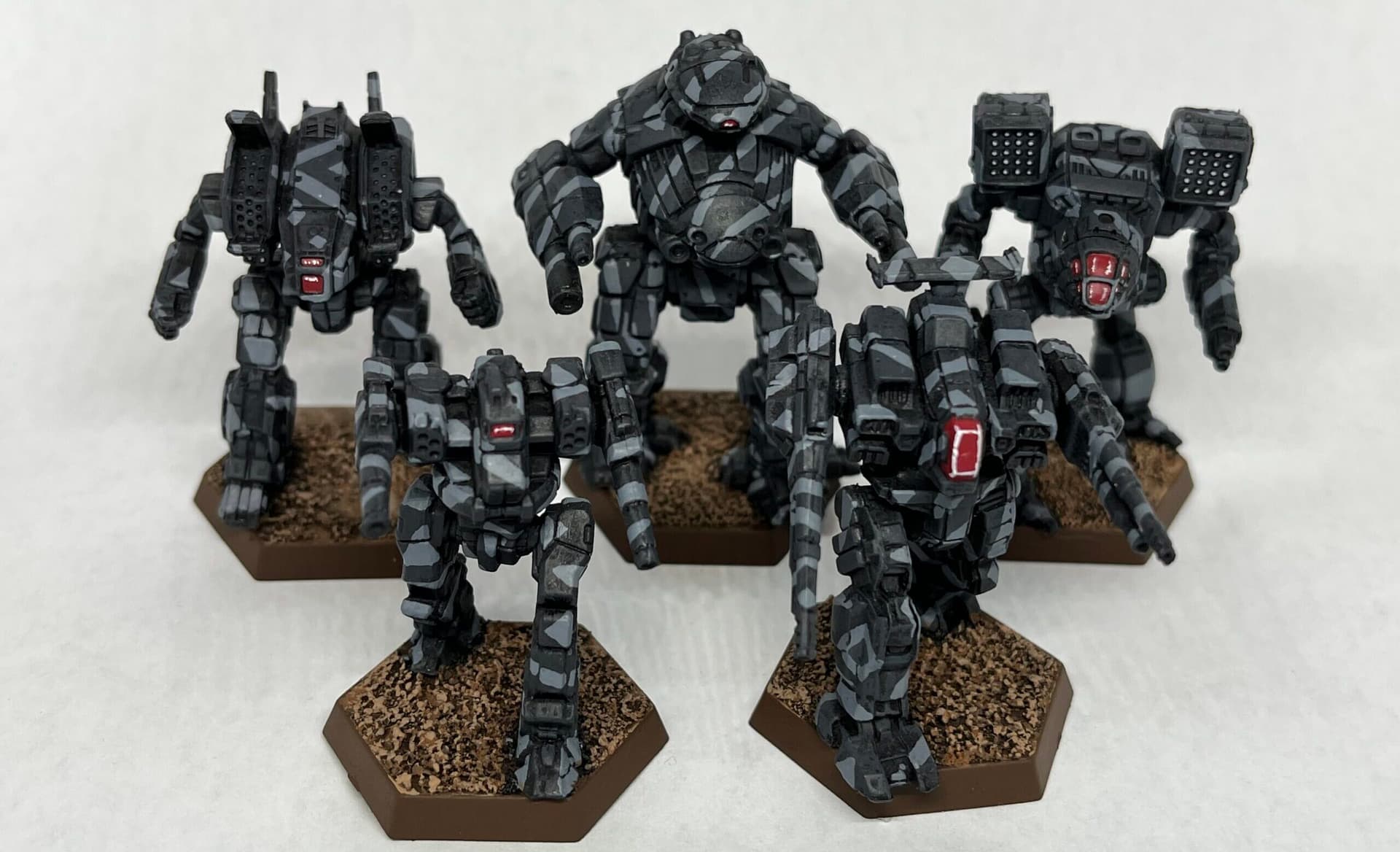
Picking up a Battletech set for the first time is a different kind of commitment than grabbing a single miniature off a shelf. You're looking at a box full of 'Mechs with angular geometry, tight panel lines, and a distinct aesthetic that rewards a certain kind of disciplined, methodical approach. Kreighton Long, writing on No Dice No Glory, dove straight in with the Wolf's Dragoons set as a complete first-timer, and the result is exactly the kind of honest, practical documentation that new painters actually need to read before they start making mistakes that cost them time and frustration.
Why the Wolf's Dragoons set is a reasonable first choice
The Wolf's Dragoons set is a logical entry point for a newcomer to Battletech painting. The miniatures carry a consistent visual identity tied to one of the franchise's most recognizable mercenary units, which gives you a ready-made color reference before you've even cracked a pot of paint. That kind of built-in theme matters when you're learning, because the decision fatigue of choosing a color scheme from scratch is a real obstacle. Having the lore do that work for you means you can focus your energy on technique rather than aesthetics.
The set also gives you a variety of 'Mech silhouettes to work across, which is genuinely useful for a first project. You'll encounter flat armor plates, mechanical joints, weapon barrels, and cockpit canopies all on the same sprue, and each surface type teaches you something different about how paint behaves.
Starting out: the practical realities of a first session
Going in without prior experience painting Battletech miniatures means confronting a few things the box art won't tell you. The scale and the material both demand a primed surface before you touch a brush to the model. Skipping primer on Battletech plastics is one of the most reliable ways to end up with paint that chips or peels after handling, and no amount of varnish rescues a paint job that didn't adhere properly at the base layer.
Thin coats are the other foundational habit you have to build from the start. The angular surfaces on Battletech 'Mechs have a way of exposing thick, globby paint immediately, pooling in recesses and obscuring the detail work that makes the miniatures worth painting in the first place. Two thin coats will always outperform one heavy coat, even when the first thin coat looks frustratingly incomplete on the model.
Working through the Wolf's Dragoons color scheme
The Wolf's Dragoons palette is built around a recognizable combination of dark grays, blacks, and red accent markings, with a look that reads as professional and battle-worn rather than parade-ground clean. For a first-timer, that's actually forgiving: dark base colors hide minor inconsistencies in coverage, and the red accents give you defined, limited areas to practice edge highlighting or careful brush control without committing the whole model to a technique you're still learning.
Blocking in the base colors across the whole unit before moving to any detail work keeps the project from becoming overwhelming. Painting one 'Mech completely before touching the others tends to cause tonal drift between models, where each successive miniature ends up slightly different in hue because you've adjusted your paint-to-water ratio or switched to a different batch of paint. Treating the full set as a single assembly-line project produces a more coherent result on the table.
Washes, drybrushing, and where first-timers should focus their effort
A dark wash, something in the brown-black range like Agrax Earthshade or a comparable product, does enormous work on Battletech miniatures. The mechanical detail on these 'Mechs is designed to catch wash and define itself, and a single well-applied wash pass can make a basic two-coat paint job look like it took significantly more effort and skill than it did. Apply it over the whole model, let it flow into the recesses naturally, and resist the urge to manipulate it too much while it's wet.
Drybrushing for edge highlights is the other technique that delivers outsized returns for the time invested. A light gray or off-white dry brush across the raised edges of armor panels catches the light and gives the model a sense of three-dimensional volume that flat base coats alone can't produce. For first-timers, a stiff, slightly worn brush works better here than a pristine detail brush.
Basing and finishing the set
Bases matter more in a unit cohesion context than they often get credit for. Matching the basing scheme across all the Wolf's Dragoons models is what turns a collection of individually painted 'Mechs into a set. Even a simple approach, a textured paste, a drybrush of light earth tones, and a few static grass tufts, accomplishes that goal without requiring specialized materials or advanced technique.
A matte varnish as a final coat protects the work and eliminates the inconsistent sheen that often appears across a miniature after washes and glazes have dried at different finishes. Gloss varnish under the matte layer gives decals and transfers, if you choose to use them for unit markings, a smooth surface to adhere to without silvering.
What a first-timer's results actually demonstrate
Kreighton Long's approach to the Wolf's Dragoons set on No Dice No Glory is worth reading specifically because it doesn't pretend the results are flawless. A practical, first-person account that acknowledges the learning curve is more useful to someone picking up their first Battletech box than a tutorial that assumes a level of brush control you haven't built yet.
The honest takeaway is that Battletech 'Mechs are forgiving subjects for new painters in the right ways. The industrial aesthetic accommodates imperfection. A scratch, an uneven edge highlight, a slightly thick basecoat, all of it reads as battle damage on a 'Mech in a way it simply doesn't on a fantasy character miniature. That's not a reason to paint carelessly, but it is a reason to start painting without waiting until you feel ready.
This article was produced by Prism’s automated news system from verified source data, official records, and press releases, then run through automated quality and moderation checks before publishing. The system is built and supervised by the people who set the standards it runs under. Read our full AI policy.
Did this article answer your question?