GamingTrend paints Star Wars: Legion AAT Battle Tank for tabletop play
The AAT Battle Tank looks intimidating in gray, but GamingTrend turns it into a clean, weathered tabletop piece with a smart subassembly plan.
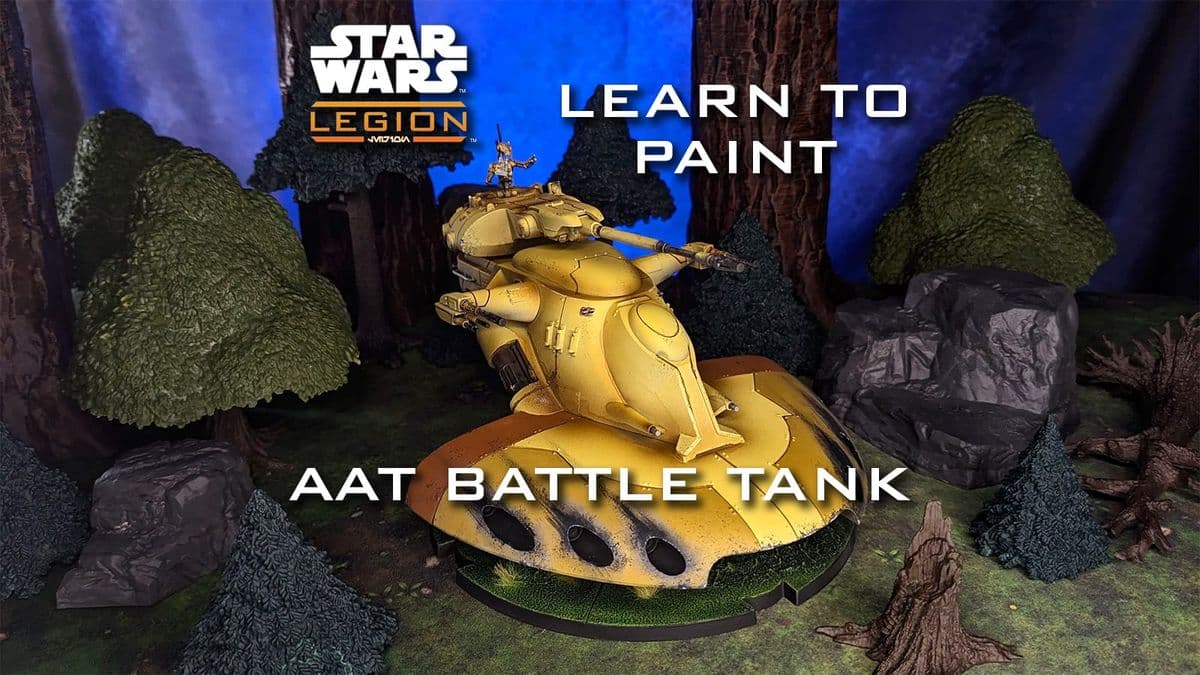
Alec Kozak’s AAT Battle Tank guide is built around the most useful promise a big Star Wars: Legion vehicle can make: get it from gray plastic to a convincing tabletop centerpiece without turning the build into a weekend-long headache. That matters here because the AAT is exactly the kind of armored brute that can look flat and toy-like if you rush it, but it also has enough shape, lore, and surface variation to reward a disciplined paint plan.
Why the AAT is such a strong paint project
The AAT is one of the most recognizable machines in the Separatist lineup, and StarWars.com describes it as a repulsorlift-heavy assault tank used by the Trade Federation and Separatist forces, crewed by battle droids. That immediately gives you a practical painting advantage: this is not a blank slab of armor, it is a vehicle with a clear identity, a defined war machine silhouette, and a history tied to the Trade Federation and the Confederacy of Independent Systems.
The tank’s Naboo connection helps too. StarWars.com’s Theed imagery gives the model instant visual context, because AATs rolling into the city during the blockade and invasion of Naboo are one of the defining images of the prequel-era battlefield. On the tabletop, that translates into a model that carries story even before you paint a single panel line.
What the reissue gives you
Atomic Mass Games’ reissue, SWQ33, is explicitly the same miniature as SWL64, but with updated packaging and cards in the new SWQ multilingual format. The pack includes 1 miniature, 1 base, 1 unit card, 3 upgrade cards, 1 punch sheet, and 1 insert, and AMG classifies it as a Heavy unit expansion. That makes it easy to read the release as part of the wider Legion refresh rather than a one-off product shuffle.
That wider context matters for your hobby desk. AMG’s April 2025 Legion update pushed the line toward updated card formats and multilingual packaging, so the AAT’s return fits the same system-wide direction. If you are building around the Separatist Alliance Starter Set or padding out an existing droid force, the tank lands as a current, supported piece rather than a dusty relic from an old shelf.
Build it like a painter, not just like a player
The most painter-friendly assembly advice in the guide is simple: keep the removable flight stand separate so you can store and transport the tank safely, and so the model can be detached later without damage. That is the kind of small decision that saves you from broken joins, chipped paint, and a lot of regret after your first game night.
The guide also points out that some of the older and newer Legion kits differ in engineering, and those small improvements can make the build far less frustrating than the original release. Fantasy Flight Games’ original announcement for the AAT Trade Federation Battle Tank Unit Expansion, first shown on February 10, 2020 and released on June 5, 2020, also noted that the kit could be built with the hatch closed or with a B1 Battle Droid operator visible. That choice matters for your paint stages, because the open build asks for more interior attention, while the closed hatch gives you a cleaner armored profile.
If you are new to large vehicle projects, this is where the guide’s broader hobby advice comes in. It points you back to GamingTrend’s general miniature-preparation guidance and tool recommendations, which is exactly what you want when you are dealing with a model that rewards careful seam work, dry-fitting, and a little patience before primer ever touches it.
Break the tank into paintable stages
The easiest way to keep an AAT from becoming overwhelming is to divide it into stages instead of trying to finish it all at once. Start with the subassemblies you can reach cleanly, then move to the hull, then the smaller details, and finish with weathering and any final touch-ups after the model is fully together. That approach keeps the process fast enough for tabletop use while still giving the tank enough depth to read as a real combat vehicle.
The AAT is especially suited to that kind of workflow because its scale and armored surfaces naturally separate into distinct visual zones. The large body wants smooth, even coverage, while the weapon housings, seams, and recessed areas are where you can add contrast. On a vehicle like this, a little structure goes a long way: if you know where the shadows live before you paint, the model stops feeling flat almost immediately.
Weathering is what keeps it from looking like a toy
This is the stage where the AAT really earns its keep as a hobby piece. A clean coat alone will make it look assembled, but weathering is what makes it look deployed. Chipped edges, grime in panel lines, soot around heat-prone areas, and dusty staining on the lower surfaces can turn a bright plastic shell into a believable frontline assault tank.
Because the AAT is repulsorlift-heavy rather than a tracked vehicle, you do not need to lean on heavy tread mud to sell the effect. Instead, focus on the practical wear a floating armored tank would collect: scuffed corners, operational dirt, and the kind of dulling that comes from repeated battlefield use. That is how you get the tabletop-ready look Kozak is aiming for without pushing the model so far that it turns into a display piece nobody wants to handle.
A tank with real rules weight, not just visual presence
The AAT is worth the paint time because it is not only iconic, it is mechanically relevant. AMG forum rulings have already touched on how it interacts with AI, Direct, and Barrage keyword questions, which tells you this is a vehicle that matters in actual Separatist list play. You are not just painting a shelf ornament here, you are finishing a Heavy unit that still has a place in the way Legion gets played.
That combination of lore, current packaging, and game relevance is why the AAT works so well as a painting guide subject. It is big enough to intimidate you in gray, but structured enough to reward a disciplined build, a clean primer pass, and weathering that looks like it belongs on a war machine rolling out of Theed. Once you break it into stages, the tank stops looking like a problem and starts looking like one of the easiest big wins in the Separatist arsenal.
This article was produced by Prism’s automated news system from verified source data, official records, and press releases, then run through automated quality and moderation checks before publishing. The system is built and supervised by the people who set the standards it runs under. Read our full AI policy.
Did this article answer your question?