Goonhammer reviews Tesseract Miniatures' compact new brush line for painters
Tesseract’s new brush line is intentionally small, and that is its selling point: everyday control for painters who want performance, not brush-cabinet clutter.
Why this compact launch matters
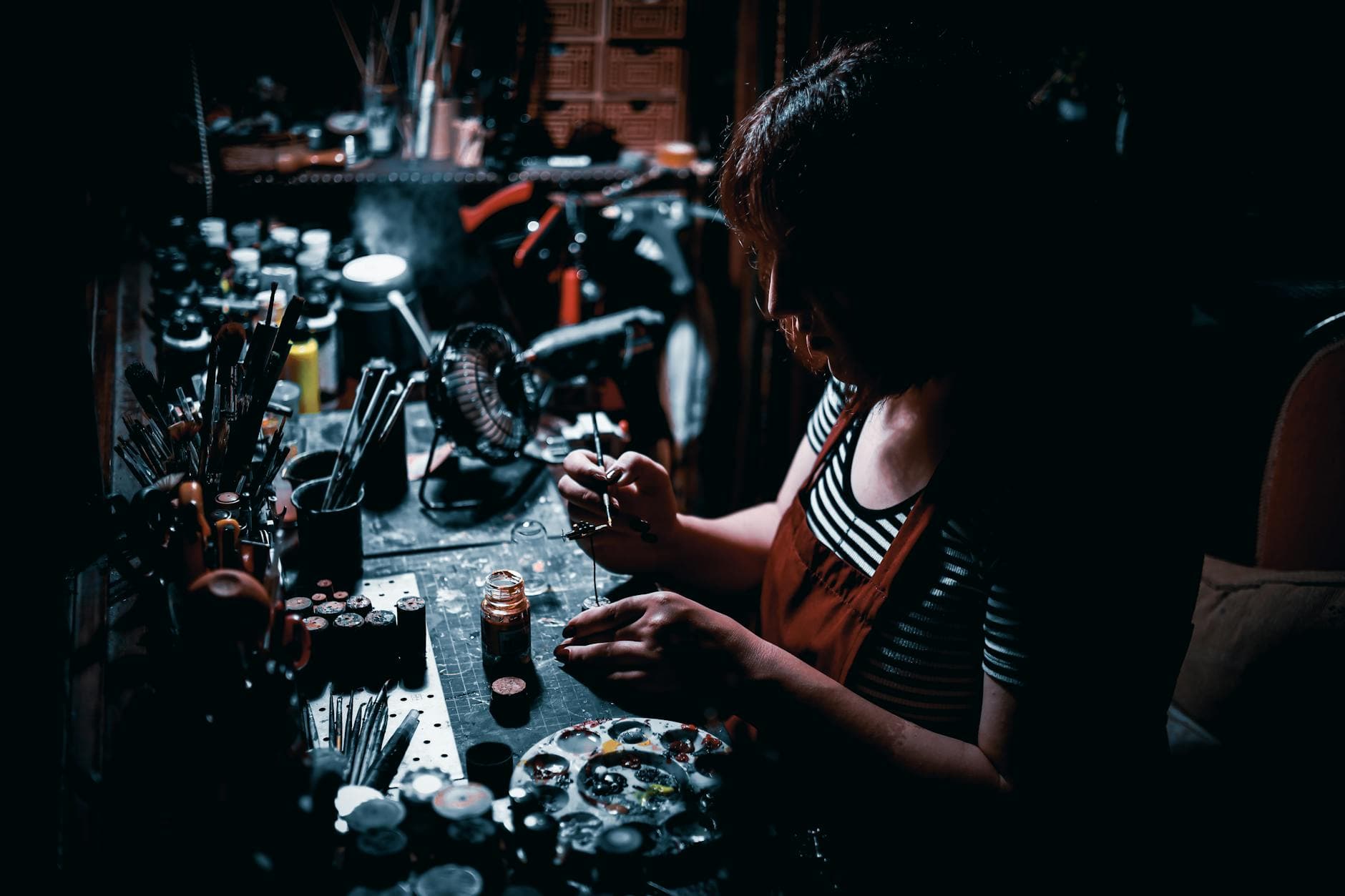
If you already own a couple of premium sables, the question is not whether another brush line exists. It is whether a smaller brand can actually earn a place at the painting desk by doing the boring, important work well: holding a point, snapping back cleanly, and feeling right during a long session of layering and edge highlights. That is the real test for Tesseract Miniatures’ new line, and it is exactly why the review lands for miniature painters who care more about how a brush behaves in hand than about hype.
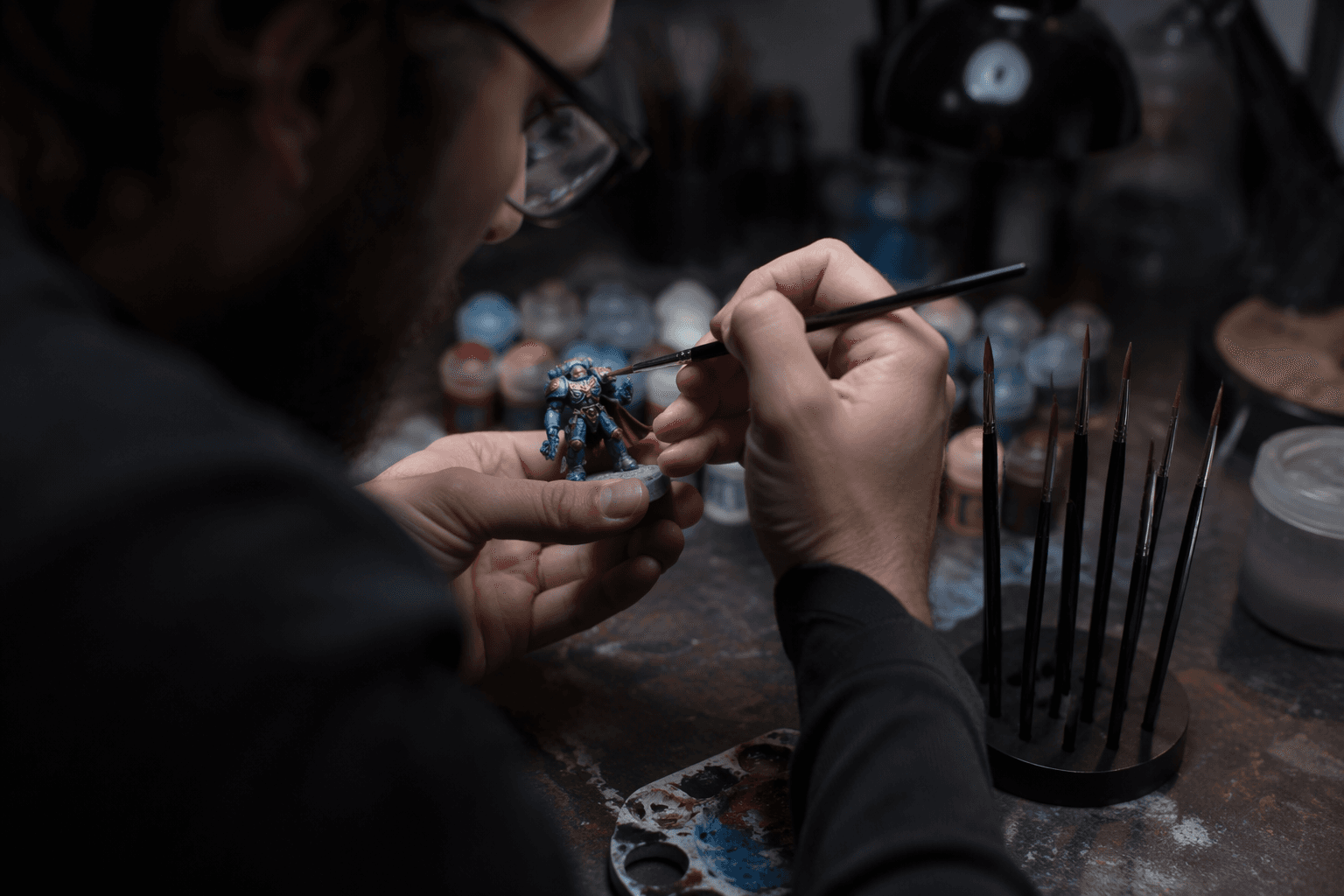
Tesseract is not some faceless art-supply giant. It is a commission painting studio in Leicestershire run by Stu, which gives the whole launch a different feel from a mass-market brush drop. You are looking at a painter making brushes for other painters, and that matters when the line is this focused.
A deliberately tight range
Tesseract has kept the range compact on purpose. There are three sable round brushes and six soft drybrushes, which it calls Ticklesticks, rather than a sprawling catalog full of near-duplicates. That kind of restraint tells you the brand is aiming at real hobby use, not SKU inflation.
The round brushes are sold as a set or individually, and the drybrushes come either as a set or as a bundle with the full range. The presentation reinforces that identity, too, with a magenta-and-teal colorway that is memorable without being gaudy. In a market where a lot of brush launches look interchangeable the moment the packaging comes off, that visual signature is a small but smart signal that Tesseract wants to be recognized, not hidden on a pegboard.
The pricing backs up the focused approach. The Outpost lists the round brushes as The Workhorse at £13, The Lil’ Guy at £12, and The Big Chungus at £14.50. The Ticklesticks drybrush set is listed at £30, while a complete nine-brush collection sits at £56. That is not bargain-bin pricing, but it is also not the kind of eye-watering number that usually comes with a boutique brush badge.
What the range is trying to compete with
The interesting part of the story is that Tesseract is stepping into a lane already owned by names painters know by heart. Goonhammer frames premium options like Winsor & Newton Series 7, Artis Opus, and Raphaël as similarly high-quality and similarly priced, which is exactly why a smaller line has a chance if it can deliver comparable control without the prestige markup feeling.
That premium space has real history behind it. Winsor & Newton says the standards for Series 7 were set in 1866, when Queen Victoria ordered the finest watercolor brush in her favorite size, No. 7. Raphaël’s 8404 Kolinsky line is marketed as a precision option prized for fine details in watercolour, miniature painting, and calligraphy. Those are the brush lines that have become shorthand for “serious painter brush,” so any newcomer has to answer a simple question: does it earn that kind of trust, or just borrow the language?
Tesseract’s advantage is not that it tries to out-legend those brands. It is that it appears to be aiming at the practical middle of the hobby, where painters need a brush that can push opaque basecoats, carry a controlled line for trim, and still survive a night of drybrushing terrain or vehicles without feeling like a disposable tool.
What these brushes are for at the bench
This line makes the most sense when you stop thinking about it as a prestige purchase and start thinking about it as a working kit. The round brushes should be judged on whether they can handle layering without splaying, hold a sharp enough point for eye dots and other detail work, and give you enough spring for edge highlights without feeling nervous or brittle in the hand. That is the kind of performance that matters when you are moving between infantry, characters, and the occasional display piece in the same week.
The Ticklesticks drybrushes are just as important, because drybrush quality is one of those things people ignore until they use a bad one. A good soft drybrush needs the right balance of softness and control so it can catch texture on armor, fur, rubble, or weathering without leaving chalky streaks all over the model. If Tesseract has built this range around that kind of everyday task, then the line has a real niche: not glamorous, but immediately useful.
The retailer writeup gives that idea some early outside support. The Workhorse is described there as one of the best all-purpose miniature brushes it has used, and the Big Chungus is said to have become a go-to brush. That is the kind of language painters pay attention to, because “all-purpose” and “go-to” are not marketing fluff in this hobby. They mean a brush that keeps finding its way back into your hand because it solves more problems than it creates.
The real value is in the footprint
The strongest argument for Tesseract’s line is not that it beats every famous brush on the market. It is that the footprint is small enough to be intelligible. Three sables and six drybrushes is a clear, usable range, and the pricing suggests you can buy into it without feeling like you have committed to a giant system you may not actually need.
That is where the launch has a genuine opening. A lot of painters do not need a wall of brushes. They need one reliable workhorse, one smaller detail brush, one larger option for broader passes, and a drybrush set that does not fight them. If Tesseract can stay consistent across that spread, then it is not trying to replace the old standards so much as earn a seat beside them.
In the end, that is the appeal of this launch. Tesseract is not asking painters to buy into a legend. It is asking them to pick up a compact set, test the point, feel the snap, and decide whether a studio-built brush line can do the same job as the old premium names without all the ceremony.
This article was produced by Prism’s automated news system from verified source data, official records, and press releases, then run through automated quality and moderation checks before publishing. The system is built and supervised by the people who set the standards it runs under. Read our full AI policy.
Did this article answer your question?