How to get back into miniature painting without starting over
Pick one model, a few paints, and a short session: the easiest comeback is the one that gets you painting again without rebuilding your whole hobby desk.
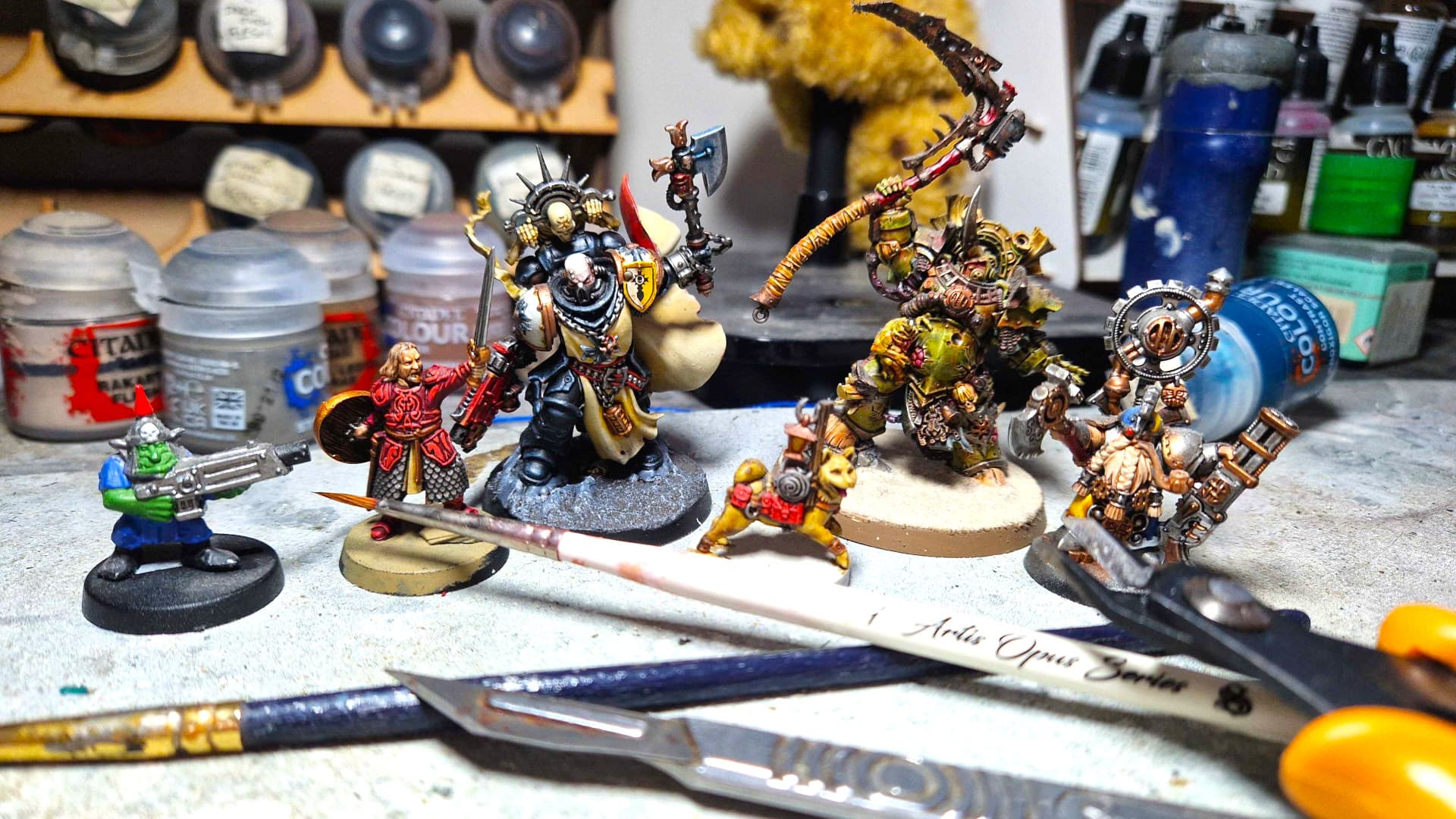
The easiest way back into miniature painting is not to rebuild your desk. Pick one model, pull out a tiny paint range, and aim for a short session that ends with something visibly better than bare plastic. That is the whole trick: lower the pressure, get a win on the board, and remember why the hobby felt good before it started feeling like homework.
Start with one model, not the whole pile
If your bench is full of half-finished squads, resist the urge to “get organized” before you paint. A comeback works best when you treat it like a restart of the habit, not a restart of the entire collection. One model is enough, especially if it has a few readable details like a helmet, a crux, a plasma pistol, or a big cloak edge that will show off a simple finish fast.
Warhammer Community has long framed painting as a creative, relaxing part of the hobby, and that matters here. The goal is not to prove you still remember every trick in the book. The goal is to get paint on plastic, enjoy the feel of it again, and leave the session wanting another one.
Use a tiny paint selection on purpose
The fastest way to turn a return to painting into a chore is to spend an evening sorting bottles. Keep it brutally simple: a few primary colors, one or two metallics, and a wash or two will get you much farther than a full rack of options you do not need yet. That kind of slimmed-down set is especially useful if your old paints are a mix of partial sets, old caps, and colors you barely remember buying.
Citadel Colour and Warhammer Community both push that modular, practical mindset. Shade, layer, and basecoat can be combined into a flexible workflow, and Contrast paints can collapse basecoating, shading, and sometimes layering into one or two coats. If your main obstacle is getting restarted, that kind of efficiency is not a shortcut, it is the point.
A small comeback palette can look like this:
- one main armor color
- one skin or cloth color
- black or dark neutral
- a metallic
- a wash
- a light color for quick highlights
That is enough to get a model across the finish line without spending half the night deciding between six nearly identical blues.

Choose techniques that give visible results fast
When you are rusty, the first session should reward you early. Drybrushing and layering are the two most useful tools here because they create depth and highlight definition without demanding that you nail every advanced method on day one. Drybrushing is blunt, yes, but it is brutally good at making texture pop. Layering does the quieter work, tightening up edges and giving the model shape without turning the whole thing into a contest piece.
Warhammer Community’s painting coverage keeps coming back to the same practical fundamentals, including edge highlighting, layering, and drybrushing. That is not an accident. These are the techniques that let you finish something cleanly even when your brush control is a little rusty and your patience is not what it used to be.
If you want the fastest possible return on effort, use the old standbys in this order:
1. Basecoat the major areas with solid coverage.
2. Shade the recesses or let Contrast paint do more of that work for you.
3. Drybrush the texture or upper surfaces.
4. Add one clean highlight pass where the light would actually hit.
That sequence gets you a miniature that reads well at arm’s length, which is exactly where a lot of gaming models live.
Know what kind of painter you are right now
Adam at Warhammer Community broke painters into two useful camps: Last Minute Painters and Plan and Paint Painters. That distinction is helpful because getting back into the hobby is not about becoming a different person. It is about figuring out which mode fits your life this week.
If you are a Last Minute Painter, you need a model that can be made table-ready without a deep time commitment. If you are a Plan and Paint Painter, you probably want a slightly more methodical session, but you still do not need to treat the comeback like an army commission. Either way, the same rule applies: one miniature, one sensible palette, one clear finish line.

A comeback does not need a shopping spree
A lot of lapsed painters stall because they think a fresh start requires fresh everything. It does not. You do not need to rebuild the whole desk, replace every brush, or buy twenty colors just to prove you are serious again. The more useful move is to refresh only what will help you paint this week.
That approach matches the broader shape of the hobby right now. ICv2 estimated North American non-collectible miniatures sales at about $525 million in 2023, $570 million in 2024, and about $585 million in 2025, a 7.3 percent increase from 2024. Miniatures were also the largest hobby-games category to show growth in 2024. In other words, the category keeps moving because it is still built around people actually painting and gaming, not around owning the largest unopened pile.
Warhammer Community’s Million Miniatures Challenge says the same thing in a more visible way. The pledge levels were 25+, 50+, or 100+ miniatures by May 9, which is a neat reminder that momentum is built out of reachable goals, not heroic overhauls.
Make the first session short enough to finish
The best first session back is the one you can actually complete. Set up a single model, lay out only the paints you decided on, and give yourself a fixed block of time. If you finish the basecoat and one layer of highlights, that counts. If you get through drybrushing and a wash, that counts too.
The emotional win matters as much as the paint job. When you come back after drifting away, the danger is not bad technique, it is pressure. The hobby feels best when it feels workable, and Warhammer Community’s painting advice has always leaned in that direction: practical, skill-building, and forgiving enough to meet you where you are.
The right comeback is not a grand relaunch. It is one model, a handful of paints, and a session that ends with a miniature that looks alive enough to make you want to keep going. That is how you get back to the desk without starting over.
This article was produced by Prism’s automated news system from verified source data, official records, and press releases, then run through automated quality and moderation checks before publishing. The system is built and supervised by the people who set the standards it runs under. Read our full AI policy.
Did this article answer your question?