Print Minis expands Risor Ventway with modular sci-fi terrain options
Risor Ventway gets a smarter modular expansion, with road tiles and bounty hunters that turn a sci-fi table into a fast, paintable project. The whole drop is built to work as one connected board.
The Ventway as the new table anchor
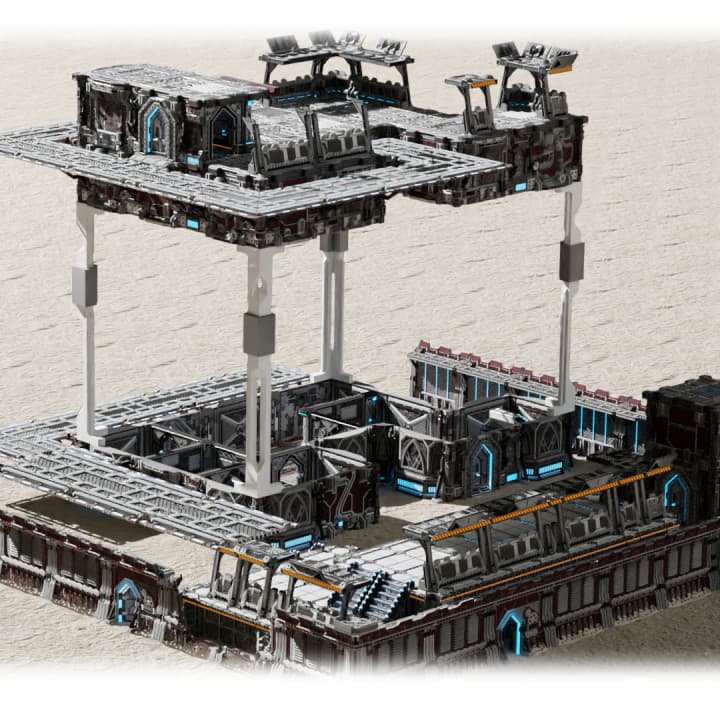
The smartest part of Print Minis’ May drop is that it does not behave like a random pile of STLs. The expanded Risor Ventway, the new Risor Road Tiles, and the Koskinen family bounty hunters all plug into the same table-building language, so you can paint them as one coherent project and get a playable sci-fi board out of it fast.
The Ventway is the clear centerpiece. The May 11, 2026 post adds a new square entrance and three variants, Plasma Bank, Archway, and Tall Gate, which gives you real choices in how that piece reads on the table. It is still rooted in the April 2026 Ventway kit, the one that could be built as a Giant Fan or an Iris Door, so this is an expansion of the original modular idea rather than a replacement.
That matters because the Ventway is built to be reused. Print Minis says it is compatible with both Risor District and Zone Selvik, and that makes it much more than a one-off industrial prop. Zone Selvik sits in Mortuus Secunda, Print Minis’ industrial heartland, so the Ventway naturally belongs in a dense factory board, a transit choke point, or the kind of half-sealed corridor that makes a skirmish table feel like a real place.
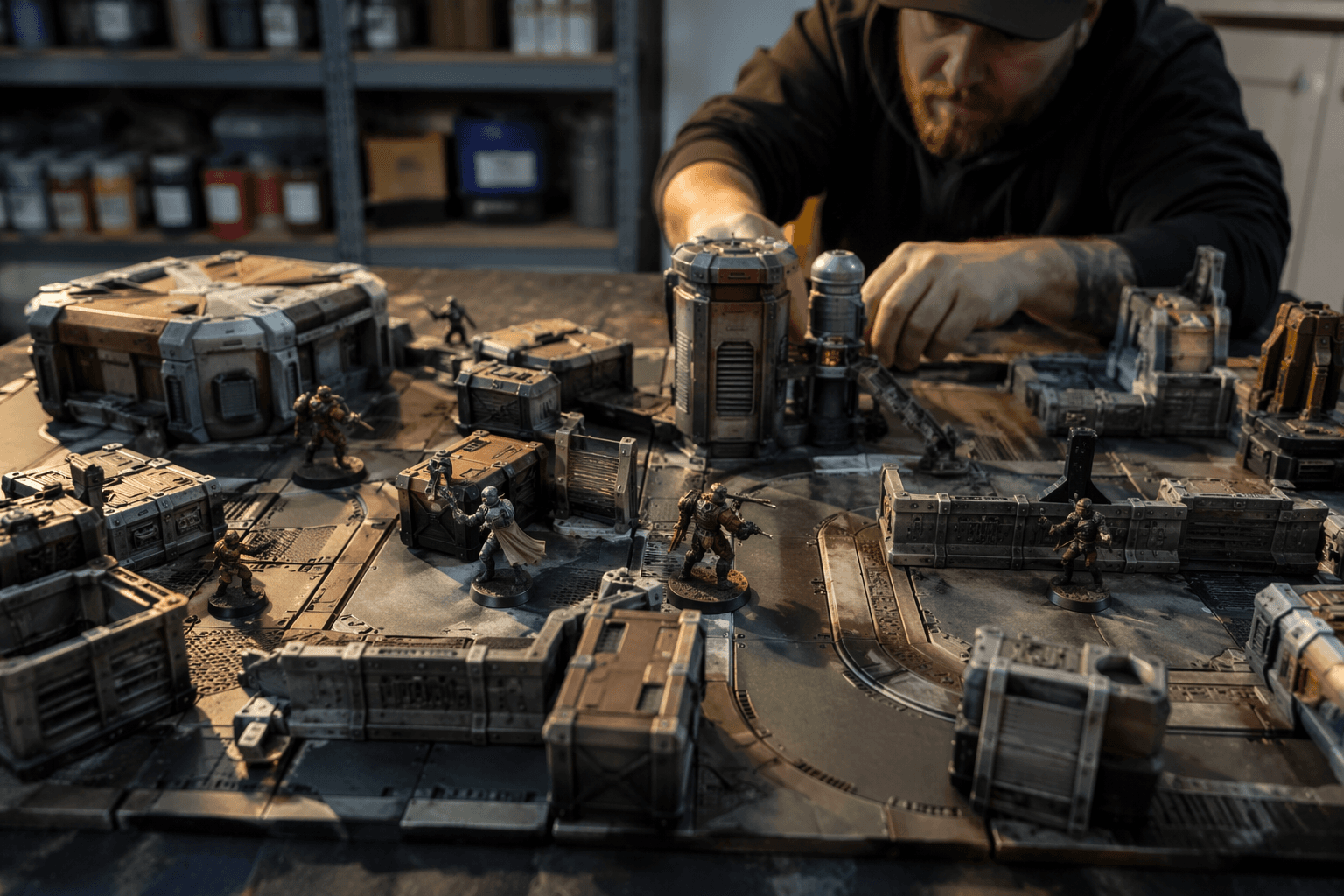
If you want to paint it efficiently, this is the kind of kit that rewards batch work. Build the square entrance, the original module, and the new variants together, then treat them as a family: one base metal recipe, one rust language, one glowing accent for the Plasma Bank version. That keeps the table consistent while still giving each option a readable silhouette.
Road tiles that turn scenery into routes
The Risor Road Tiles are the other practical win in this release. Print Minis says the set has 11 different tile pieces, and the system is meant to create moving road layouts rather than a fixed strip of scenery. You can assemble two linked 12-by-12 tiles or push it into a four-tile route, which is exactly the sort of flexibility that makes a table feel built, not just placed.
That flexibility is what makes the set useful beyond a single scenario. A four-tile route can become a shipping lane, an industrial access road, or the spine of a narrative board, while the two 12-by-12 options are handy for skirmish games that need streets and lanes without swallowing the whole table in terrain. If you build display boards, the road tiles also give you a way to suggest motion, traffic, and industrial flow without needing a huge collection of matching terrain.
Print Minis previewed the road tiles the previous month, then uploaded them in both resin and FDM versions. The resin pieces were hollowed on the back and split into four parts for printing, which is the sort of practical detail that matters when you actually want to get them off the build plate and onto a board. If you are painting for quick tabletop impact, treat the road tiles like infrastructure first: keep the road markings restrained, then use grime, oil staining, and edge wear to make the layout feel lived in.
Koskinen family bounty hunters as color accents
The character side of the release is smaller, but it gives the table a much-needed flash of personality. The Koskinen family set consists of two bounty hunter characters, and Print Minis describes them as having a loose snowy aesthetic blended with a noble aesthetic, “kind of like the old Viking kings.” That mix is ideal if you want models that look more like named figures than generic mercenaries.
One of the figures was revised with a large robotic arm and bear crest, and that is exactly the kind of change painters notice right away. A robotic limb breaks up a silhouette, while the bear crest gives you a clear spot for heraldry, weathering, and a little contrast color that reads across the table. In a release full of terrain modules, those figures become the visual punctuation marks.
This is where the hobby payoff gets nice and practical. Paint the bounty hunters as accent pieces against the cooler industrial board, and the whole release starts to look intentional. Snowy armor, cold metals, worn leather, and a controlled pop of color on the crest or weapon casing will make them stand out against the Ventway and road sections without fighting the scenery for attention.
Why the modular approach keeps paying off
Print Minis has been pushing cross-compatibility for a while, and this release makes that strategy easier to see. The Risor District terrain kit 2.0 replaced the original Risor District 1.0 version from July 2023, and Print Minis says the updated system is fully cross compatible with ZM scenery. Zone Selvik’s modular platforms and supports also connect directly to Risor District, so the terrain line is set up as a linked ecosystem instead of a pile of unrelated buildings.
That is why this May drop feels useful to existing buyers as much as to new ones. Print Minis says many of its monthly kits are cross-compatible with past releases, and the company’s Tribe subscription is $12.50 per month for weekly STL releases. In other words, the Ventway expansion and the road tiles are not isolated purchases, they are new pieces in a board you can keep extending month after month.
The best way to read the release is as a terrain project with built-in painting payoff. Start with the Ventway as the focal structure, add the road tiles to define movement, then use the Koskinen family to drop a little character and color into the scene. That is how a modular sci-fi release stops being a catalog update and becomes a table you actually want to finish, paint, and put on the board.
This article was produced by Prism’s automated news system from verified source data, official records, and press releases, then run through automated quality and moderation checks before publishing. The system is built and supervised by the people who set the standards it runs under. Read our full AI policy.
Did this article answer your question?