Rising Titanium Dioxide Costs and Plant Closures Threaten Hobby Paint Prices
Venator Germany is closing TiO2 plants in Duisburg and Krefeld; three Chinese price hikes in March mean white paint and primer prices could rise within 12 weeks.
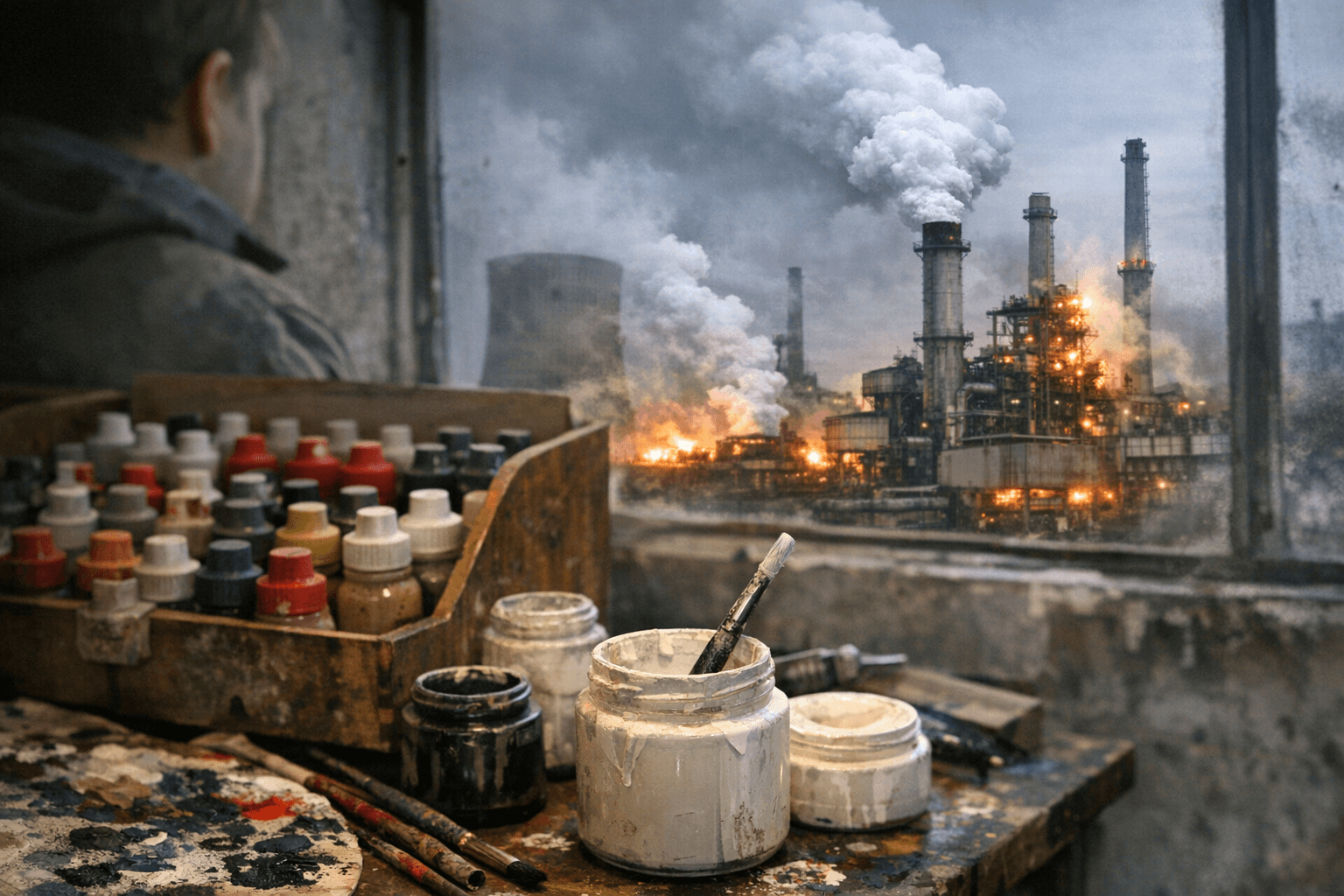
Venator Germany announced plans to close titanium dioxide production at its Duisburg and Krefeld facilities on March 27, capping a month in which Chinese TiO2 producers pushed through three separate price increases. Industry trackers recorded the sharpest cluster of adjustments between March 24 and 27, and trade reporting described it as the fastest and most concentrated price hike cycle the sector has seen in recent years. For miniature painters, it is worth paying attention: titanium dioxide is the raw material behind nearly every white, off-white, and light grey in your paint collection.
TiO2 is not an abstract industrial input for this hobby. It is the pigment that makes white hobby paints opaque, that loads grey and white spray primers, and that gives bone and ivory shades their covering power. Virtually every bottle labeled white, off-white, or pale grey, whether from Citadel, Vallejo, Scale75, or an independent maker, relies on it heavily. Primers and texture pastes carry an even higher pigment load.
The upstream pressures compound each other. Trade reporting cited tightness in sulfuric acid supply, driven partly by scheduled maintenance windows at key processing facilities, alongside broader feedstock pressure from titanium ore. Those inputs were already squeezing producers before Venator Germany's Krefeld and Duisburg closures removed further European capacity from the market.
The retail ripple typically takes four to twelve weeks from a pigment price move to reach hobby store shelves. That gap is where preparation matters. White and off-white paints are the obvious concern, but primers may be more exposed: grey and white spray primers are high-TiO2 products sold at thin margins, and small independent paint makers carry the least buffer against a market-wide cost surge. Unlike large manufacturers, a small-batch studio sourcing pigment for a few thousand bottles has no purchasing scale to hedge against moves like this. Some may quietly substitute alternative TiO2 grades or adjust formulations while larger pricing decisions work through the chain.
If your recipes depend on a specific white, buying a backup bottle now is cheaper than scrambling later. The substitution options are real: artist-grade titanium whites from Golden, Liquitex, or Winsor and Newton are available in larger tubes, cost-effective per milliliter, and mix cleanly into acrylic hobby recipes when properly thinned. Warm off-whites like Vallejo Ivory or Citadel Wraithbone cut the TiO2 load without sacrificing opacity on warm-toned undercoats. For true whites over dark primers, laying in a grey mid-tone first and applying white in thinner coats reduces how much you burn through per model.
TiO2 price volatility has historical roots in energy costs, environmental regulation, and ore supply cycles, and the miniature-painting community has felt those echoes before in quiet price bumps and reduced bottle sizes. What makes this March episode different is the convergence: three hikes from Chinese producers in a single calendar month, simultaneous European restructuring taking capacity offline, and tightened inputs across sulfuric acid and titanium ore hitting at the same time. Manufacturer communications about pricing adjustments or product changes over the next few weeks will be worth reading more carefully than usual.
This article was produced by Prism’s automated news system from verified source data, official records, and press releases, then run through automated quality and moderation checks before publishing. The system is built and supervised by the people who set the standards it runs under. Read our full AI policy.
Did this article answer your question?