Sergio Calvo spotlights faces as miniature painting's most rewarding detail
Sergio Calvo’s face lesson shows why tiny features carry huge tabletop impact. Better eyes and skin make a miniature read as a character, not just a model.
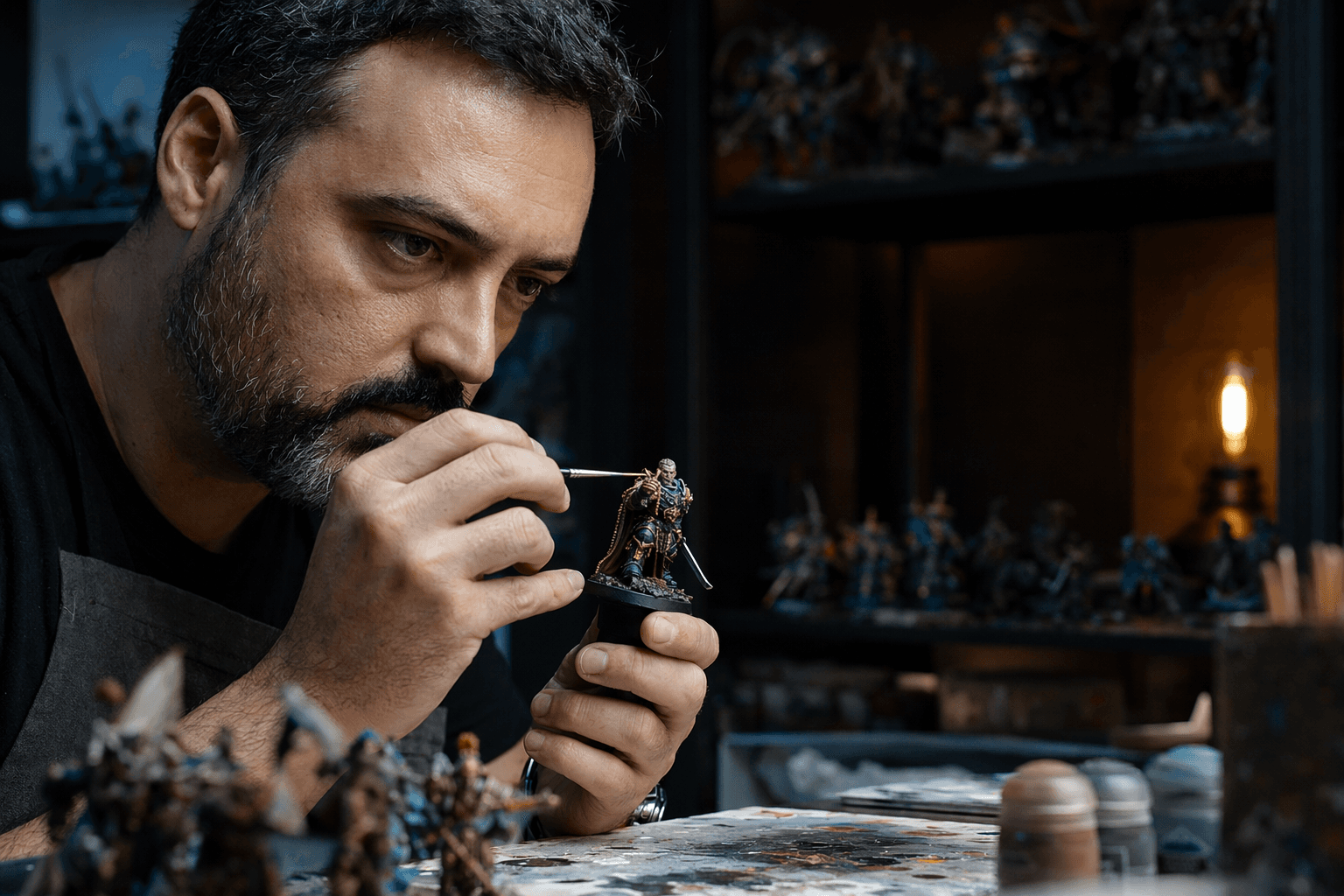
Sergio Calvo keeps landing on the part of the miniature that changes everything: the face. That is why his latest tutorial connects so quickly, because it treats one of the smallest jobs on the bench as the detail that decides whether a model feels alive.
Faces are where the model starts speaking
Warhammer’s own painting resources have been saying this for years in plain terms. Faces are “the natural focal point” of a model, the place the viewer’s eye goes first, and skin has a bigger impact on the overall look than almost any other technique. The eye-painting guide pushes that idea even further, calling eyes one of the smallest parts to paint and one of the most commonly asked-about details.
That is the useful lesson hiding inside Calvo’s tutorial. You do not need to chase competition-level perfection on every fold of cloth or every gem lens before you get to the part that actually carries expression. If the face reads well, the whole miniature gains presence, and everything else on the model gets an easier job.
Why Calvo’s voice carries weight
Calvo is not approaching this as a casual demo painter. He says he has been a professional miniature painter and teacher for more than fifteen years, and his studio focuses on teaching and commissioned painting for companies and collectors. On his YouTube channel, he puts the number even higher, saying he has been painting professionally for 18 years.
That matters because his teaching is built around the same worlds many painters live in every week. His channel focuses on Warhammer miniatures, Dungeons & Dragons-style roleplaying miniatures, Age of Sigmar, and sci-fi and superhero figures. In other words, he is speaking to the exact range of projects that fill real hobby desks, from rank-and-file troops to single centerpiece characters.
His official tutorial shop reinforces that this is a long-running teaching practice, not a one-off insight. It lists dozens of video tutorials and painting guides, which gives his face lesson the feel of a recurring classroom idea: break the problem down, paint it step by step, and make the hardest part feel manageable.
What to steal from the face-first mindset
The best thing to take from Calvo’s approach is not a demand for flawless pupils or hyper-real pores. It is the habit of putting your effort where the miniature will be read first. Faces deserve the cleanest planning, the steadiest hand, and the most patience, because they are where expression lives.
A practical face-first workflow looks like this:
- Paint the face early enough that the rest of the scheme can frame it instead of competing with it.
- Build skin with controlled, incremental layers, the kind of patient approach that miniature-painting guides keep returning to.
- Keep eyes readable rather than overworked, since they are tiny, easy to lose, and notorious for punishing one extra brush stroke.
- Treat contrast around the face as a storytelling tool. A strong skin tone, a crisp brow, or a clean eye line can make a helmeted warrior, a wizard, or a sci-fi hero feel distinct at tabletop distance.
That approach fits the broader hobby lesson hidden in Calvo’s video and in the Warhammer guides that echo it. You are not painting faces because they are easy. You are painting them because they carry the emotional signal of the entire miniature.
Why the community is responding
The tutorial’s reception says the same thing in numbers. The post has drawn 330+ likes and 20+ reposts, which is a healthy signal for a painting lesson in a community where most people scroll quietly. The response has centered on a simple idea: small details make the biggest impact.
That reaction also fits how face and eye content tends to travel through the miniature-painting world. Painters know the thrill of a clean eye line, a smooth skin transition, or a face that suddenly makes a champion look defiant instead of generic. Those are not abstract improvements. They are the moments when a model stops reading like a finished object and starts reading like a character with intent.
Calvo’s place in the scene helps explain why the lesson lands. Frontier Wargaming notes that he has done box art for several CoolMiniOrNot releases and painted work for Black Sun Miniatures, which puts him in the orbit of well-known studio and display work. When an artist with that kind of background turns around and points to faces as the most rewarding detail, the advice does not sound aspirational. It sounds like the shortest path to making your own miniatures hit harder.
That is the quiet power of Calvo’s face lesson. The face is still the smallest part of the model, and eyes are still the tiniest marks on it, but they are also the first thing that makes the whole piece feel human. Get that right, and the rest of the miniature finally has someone to belong to.
This article was produced by Prism’s automated news system from verified source data, official records, and press releases, then run through automated quality and moderation checks before publishing. The system is built and supervised by the people who set the standards it runs under. Read our full AI policy.
Did this article answer your question?