StarCraft Terran Medics bring white-armour nostalgia to the tabletop
The Terran Medic is a painter’s gift: white armor, crisp medical markings, and a clean support-unit silhouette that makes nostalgia feel fresh on the tabletop.
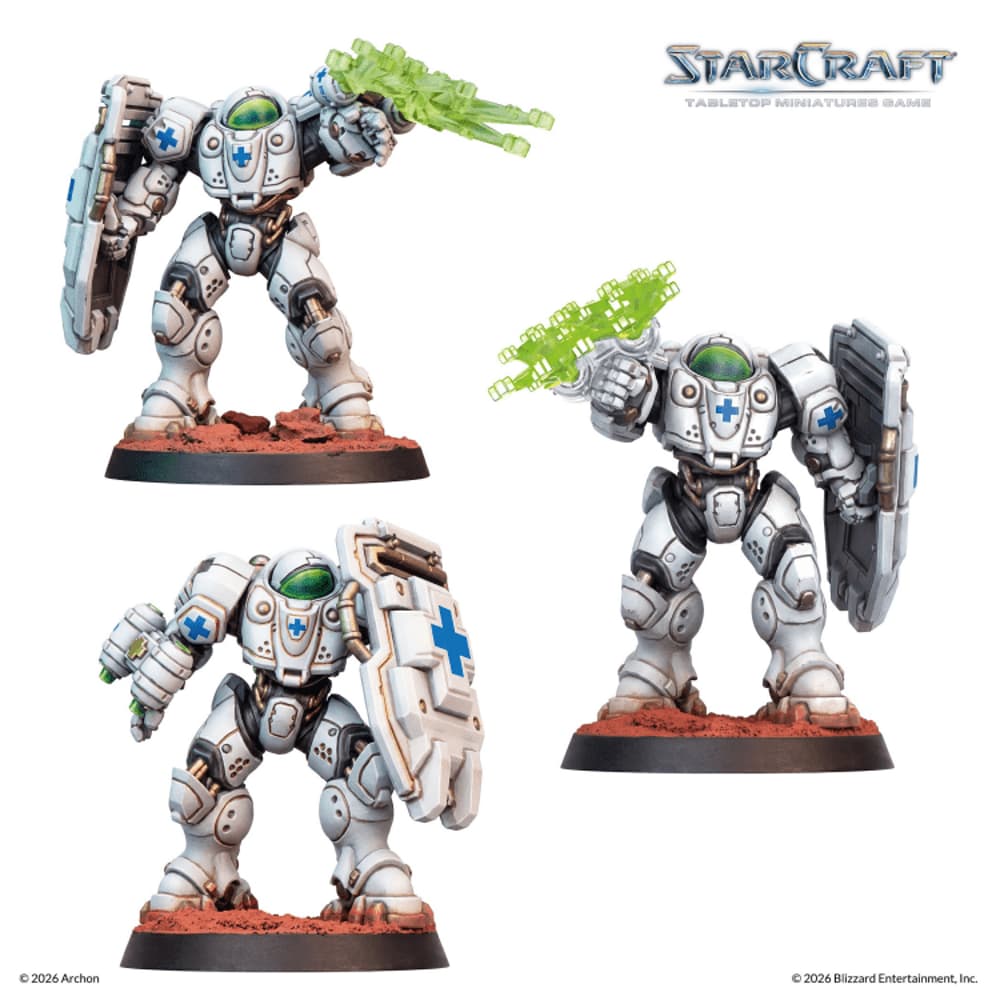
The Terran Medic is one of those StarCraft models that looks straightforward until you sit down with a brush. White armor, bright support markings, backpack hardware, and compact sci-fi paneling give it a very different painting problem than the usual Terran bruiser, and that is exactly why it stands out. It is a miniature that has to read as protection, utility, and pure StarCraft nostalgia all at once.
Why the Terran Medic is a painter’s piece
The Medic was never meant to be a frontline brawler, and that identity is baked into the sculpt. Classic StarCraft documentation frames it as a support unit whose main job is healing Terran infantry, with Brood War-era notes adding restoration, Optic Flares, and broader biological support. On the tabletop, that matters because the model is visually coded as battlefield triage rather than brute force, which makes the white armor and medical details do more work than raw weapons ever could.
That is the fun of painting it. You are not just painting another power-armored trooper, you are painting the unit that keeps the Terran line alive. The shape language has to say support at a glance, and the miniature does that through clean armor plates, a backpack that feels functional, and enough spot color to keep the model from disappearing into a sea of marine red or dark mechanical trim.
From Brood War white to the tabletop sculpt
The original StarCraft and Brood War versions leaned hard into pale Terran power armor, with team colors showing up on the shoulder pads, backpack, shield, and lower armor plates. StarCraft II reworked the concept, and the tabletop Medic is based on that campaign version, while still preserving the white-armour identity that players remember. The result is a miniature that feels familiar, but not like a direct copy of the old sprite art.
That distinction matters for painters because the model gives you a cleaner read than a busy line trooper. The white field is large enough to reward careful shading, but the armor is still broken up by the kind of small components that make selective color placement shine. If you want the model to feel more like classic Brood War, lean harder into distributed team colors. If you want it to match the campaign-inspired tabletop sculpt, keep the white dominant and use color as punctuation rather than the main event.
The StarCraft TMG line also uses a fairly consistent model scale, which means not every game element will necessarily show up as a miniature right away. That makes the Medic especially useful as a benchmark for what the range is trying to express in plastic, since it has to carry a lot of faction identity without relying on extra visual gimmicks.
What comes in the box
The Medic expansion set is compact, but it is loaded with the useful bits you expect from a modern tabletop release. The pack includes 3 miniatures, 3 32mm bases, 2 cards, and 1 assembly manual. The official downloads page also includes a dedicated Terran Medic file, which gives the unit a proper place in the line rather than treating it like a throwaway support add-on.
Archon Studio’s official partnership with Blizzard Entertainment, announced on March 26, 2025, set the stage for the StarCraft tabletop miniatures game to launch in 2026, with board games to follow in 2027. The StarCraft TMG site describes the line as the first official StarCraft release in years, and retail listings have placed the Medic expansion in the spring-to-summer 2026 window, with prices commonly landing in the mid-$20s to low-$30s depending on retailer and preorder timing. That is exactly the sort of release context that makes a support sculpt feel important, because it is one of the first proof points for how the range will handle nostalgia and readability.
How to paint the white armor without losing the model
The Medic rewards restraint more than flash. White armor is unforgiving, but it is also the best way to make the model feel clinically clean and unmistakably Terran. If you keep the panels smooth, the edges sharp, and the color placement disciplined, the whole miniature will feel more advanced than a busier scheme crammed with effects.
A practical approach looks like this:
- Build the white as a real surface, not a flat coat. The armor should read as panels, not primer.
- Keep the team colors tight and deliberate. Shoulder pads, backpack elements, shield details, and lower plates are the places that do the visual heavy lifting.
- Use the backpack reactors and medical gear to break up the silhouette. Those small mechanical areas are where a dark metallic or cooler tone can anchor the model.
- Resist the urge to over-weather it. The Medic works because it looks like support equipment that is still in service, not battlefield wreckage.
For darker Terran forces, the model becomes even more flexible. Goonhammer’s take makes the useful point that if you are building Alpha Squadron or another darker scheme, you can swap in gunmetal or a stronger contrast color so the Medic feels less like a bright outlier and more like part of the same army. That is the real value here: the miniature can still read as a Medic even if you move away from the pure white presentation, as long as the armor stays clean and the medical identity stays visible.
What this unit teaches you for other clean-armored support models
The Medic is a good paint study because the lesson transfers far beyond StarCraft. Any clean-armored support unit, whether it is a sci-fi apothecary, battlefield medic, or command-side support trooper, lives or dies on controlled white, crisp panel separation, and a disciplined accent palette. The same instincts that make the Terran Medic work, smooth armor, readable markings, and one or two decisive spot colors, will carry straight over to other systems.
That is why the model feels so rewarding on the desk. It is not the flashiest Terran unit, and it is not trying to be. It is a compact lesson in how to make white armor, medical markings, and clean sci-fi surfaces look intentional instead of sterile. Once the last highlight lands, the Medic stops being just a callback to Brood War and starts looking like a very modern miniature in its own right.
This article was produced by Prism’s automated news system from verified source data, official records, and press releases, then run through automated quality and moderation checks before publishing. The system is built and supervised by the people who set the standards it runs under. Read our full AI policy.
Did this article answer your question?