Tabletop Battles breaks down a practical paint scheme for Ork Goffs
Goffs are the Ork clan where black armor has to do real work, and Tabletop Battles' recipe shows how to make it read cleanly on the table.
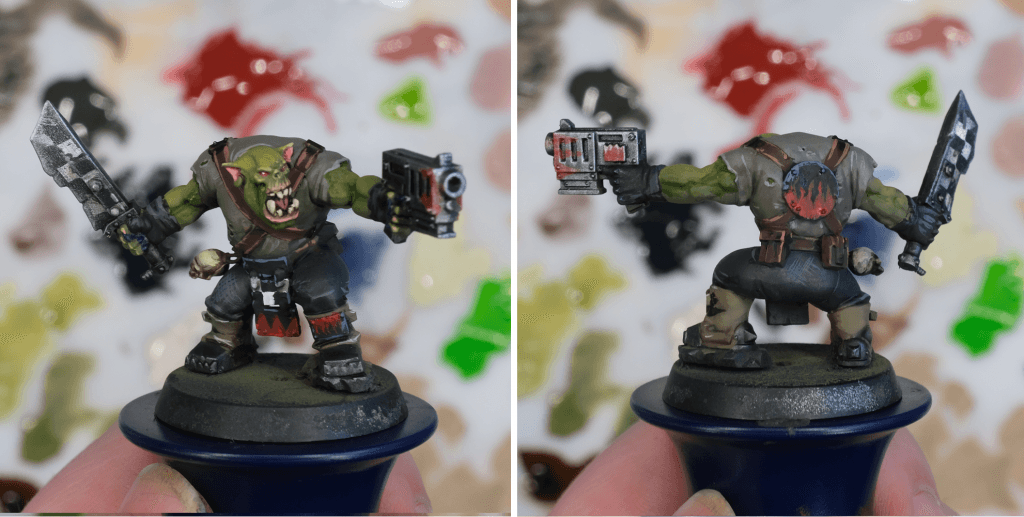
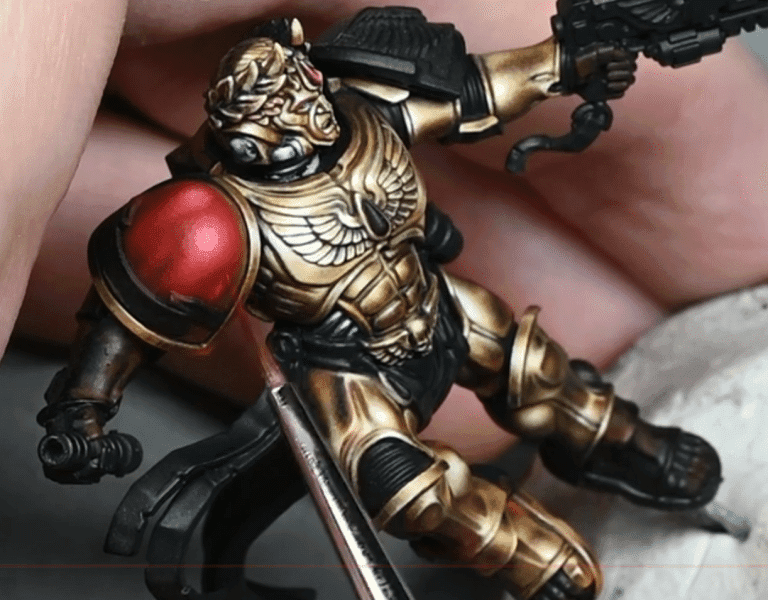
Black armor, horned helmets, and black-and-white markings are the visual core of Ork Goffs. Tabletop Battles’ How To Paint Everything: Ork Goffs, by keewa, landed on July 6, 2026 as a practical recipe for turning those elements into a force that reads clearly from across the table.
Why Goffs are the right Ork clan for a practical scheme
Warhammer’s Orks are a brutal xenos race that live for the next fight, loot other species’ technology, and swarm into a Waaagh!, so a Goff army is never just about neat edge highlights. It is about making that brawler identity visible on every Boy, Nob, and boss model. The Goff look gives you a clean visual grammar: black armor, horned helmets, and hard black-and-white patterns that instantly separate them from the brighter, more ramshackle Ork clans.
The clan already has strong visual recognition outside the painting desk. The Goff Ork Boy product copy uses the same cues, and the Goffs range in the broader Warhammer collection reinforces the same black-clad identity. The 2024 Codex: Orks goes even further, with 152 pages of background, artwork, and galleries of painted miniatures that show how much mileage the faction gets from a few repeatable visual rules.
How the scheme makes black armor read
Black is a trap color if you treat it like a shortcut. If every panel is the same flat dark tone, the model collapses into a silhouette and all the work disappears at arm’s length. A Goff recipe solves that by giving black armor enough structure to catch light, while surrounding it with high-contrast details that keep the eye moving: white checks, pale glyphs, weathered metals, and enough skin tone to break up the mass.
That is why a Goff scheme works so well for batch painting. You are not trying to reinvent every model, just repeat a small set of decisions until the mob looks unified. The best versions of the scheme make the black armor the anchor, then use spot contrast where it counts most, on shoulder plates, helmets, weapon casings, and icon panels. Once those pieces are handled consistently, the army looks deliberate instead of unfinished.
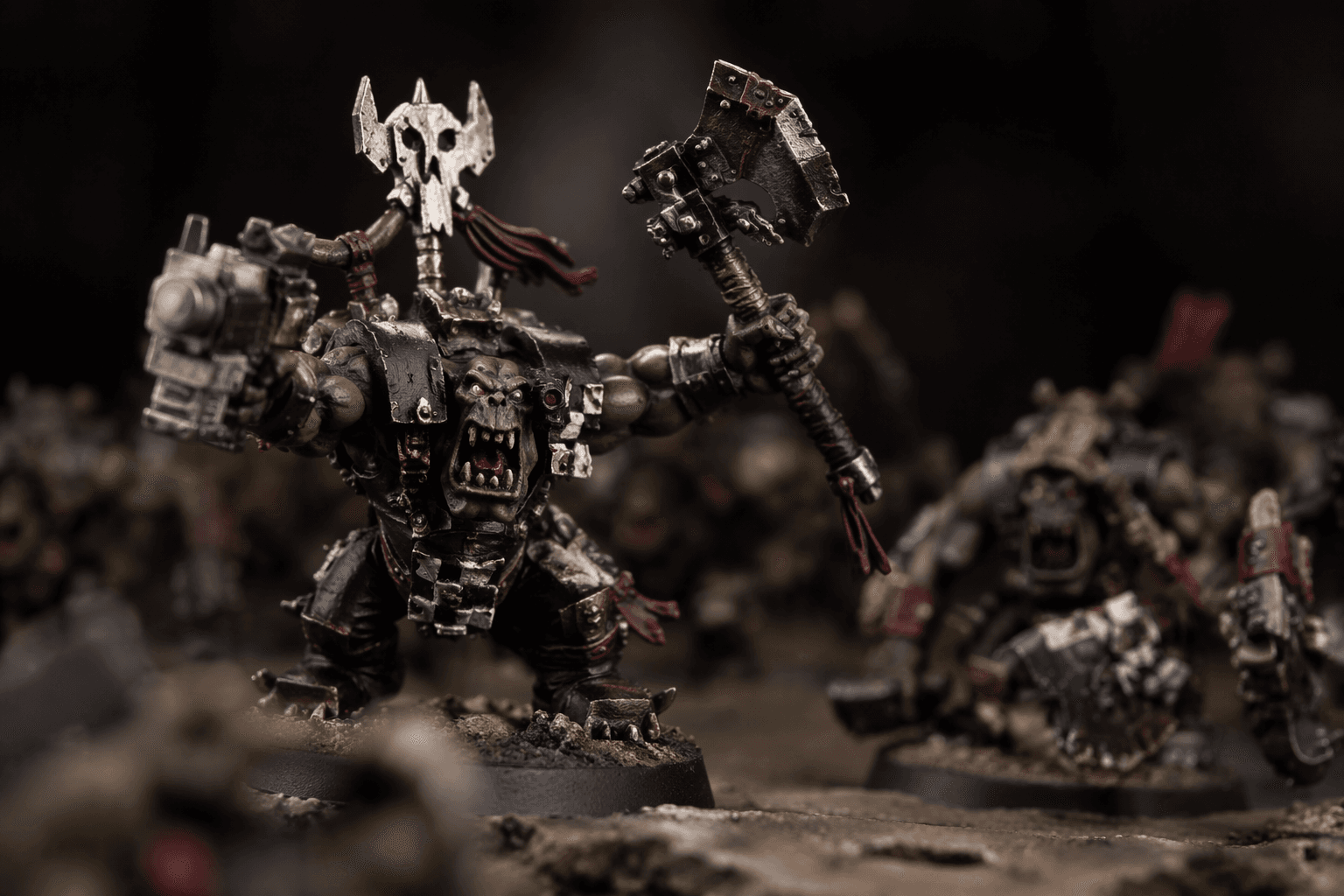
The other advantage is speed. Orks are usually painted in numbers, not as isolated display pieces, so a recipe that can survive 20 Boyz, a Nob, and a character without needing a new trick every time is doing the real job. Goffs are one of the best clans for that because the visual language is already rigid enough to support repetition.
What is worth copying, simplifying, or swapping
The most useful thing in a Goff scheme is the discipline of contrast. Keep the black armor, keep the black-and-white checks, and keep the grimy metal, because those three elements carry the clan identity. If you cut them, you do not really have Goffs anymore, just Orks wearing dark paint.
- Copy the contrast points. Checks, white markings, and bright edge details give black armor a place to stop looking flat. Use them on the most visible surfaces first, like shoulder pads, helmets, and banner pieces.
- Simplify the pattern work. You do not need full checkboards on every model. A single checked pad, knee, or glyph panel can carry the whole unit if the rest of the army repeats the same black-and-white language.
- Swap display-level weathering for faster grime. Ork armor always benefits from dirt, chips, and worn metal, but you can get the same table impact with a few controlled weathering passes instead of treating every plate like a showcase piece.
- Use skin and metal as your relief valves. Ork flesh, guns, and scrap-built weapons break up the heavy black mass without fighting the scheme. That keeps the models readable even when the armor is the dominant color.
- Reserve the hardest work for the leaders. The Nob or warboss can carry the most checks, the sharpest highlights, and the richest weathering, while rank-and-file Boyz stay lean and repeatable. That keeps the army coherent without burning you out.
If you are trying to move faster, the easiest simplification is to treat the checks as accents instead of a wallpaper pattern. A single checked surface, plus a few white clan marks and one or two strong contrast areas, does more for the army than overworking every panel. The same goes for hazard stripes: use them sparingly where they add Orky attitude, not everywhere just because they are available.
Why this guide lands in a busy hobby run
Tabletop Battles published the Goff piece alongside a Blood Axes painting guide dated July 8, 2026 on its Ork tag page and a StarCraft Zerglings piece dated July 7, 2026 on its How to Paint Everything category page.
A black-heavy army is easy to start and hard to finish, especially once every panel starts looking the same under bad lighting or at the end of a long batch session. A focused Goff scheme gives you a repeatable answer to that problem: black armor, checks, and grime.
This article was produced by Prism’s automated news system from verified source data, official records, and press releases, then run through automated quality and moderation checks before publishing. The system is built and supervised by the people who set the standards it runs under. Read our full AI policy.
Did this article answer your question?