Uzbek Miniature Art Exhibition Opens at Shanghai Art Collection Museum
Six Uzbek artists brought Behzod-tradition work to Shanghai's SACM on March 25, carrying gold-powder techniques and arabesque borders with direct payoff for mini painters.
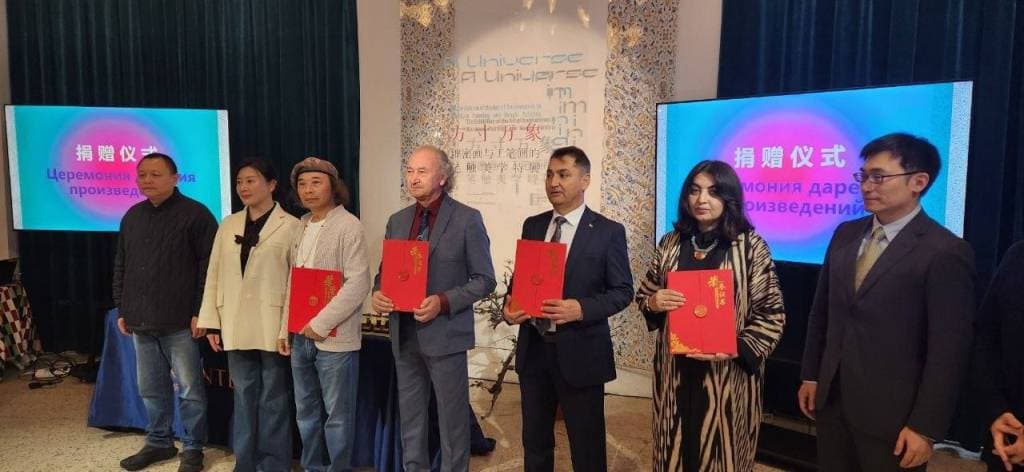
Six artists carrying works from the Kamoliddin Behzod Museum of Oriental Miniature Art brought Uzbekistan's miniature tradition to the Shanghai Art Collection Museum on March 25, and the visual vocabulary they brought with them is one mini painters will recognize immediately: tight pattern density, controlled gold work, and borders so deliberate they look like they were ruled by hand.
The delegation was led by Akmal Nur, Chairman of the Uzbekistan Arts Academy, who spoke at the SACM opening and framed the show's purpose directly, emphasizing Uzbekistan's commitment "to preserving the traditions of the great artist Kamoliddin Behzod and advancing modern miniature art." Nur was joined by Professor Zukhra Rakhimova and art historians Asalkhon Rakhmatullayeva and Zilola Asqarova, giving the show an educational backbone alongside its cultural diplomacy mission.
The artists represented cover both established and emerging generations. Davron Toshev, Khayriddin Mukhitdinov, and Behzod Khojimetov appear alongside three younger painters: Saida Jalilova, Bakhtiyor Dedashev, and Sherzod Arifbayev. Together they represent the central tension of modern Uzbek miniature: how closely do you hold the canon when your name is literally Behzod?
For figure painters, the Behzod tradition is a masterclass in controlled restraint that rewards close study. Kamoliddin Behzod (c. 1450–1536) built compositions around four techniques that translate almost directly to scale painting.
Pattern density is the first and most visible: Behzod-tradition interiors fill every architectural surface with geometric tilework and arabesque overlays, the kind of density you replicate on a cloak lining by working wet-in-wet with a size 000 round, building repeating lozenges in thinned paint before the base coat loses its tooth. Fabric rendering in this tradition means every garment carries visible structure, with the weave direction implied through brushstroke angles rather than highlighted; the technique maps directly onto painting silk robes on 75mm scale busts.
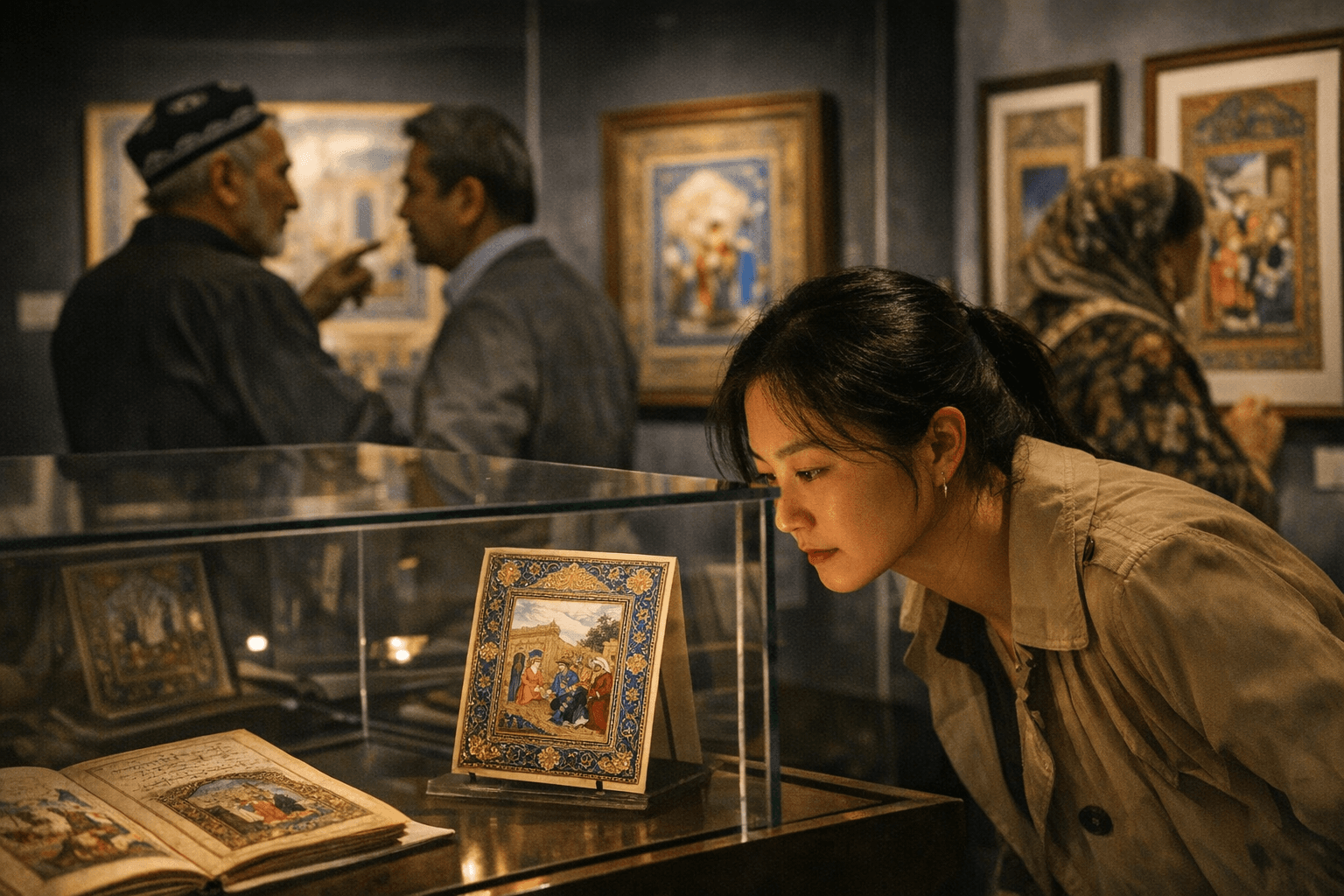
Gold accents in Uzbek miniature are not highlights dropped on at the end. They are ground-level color decisions: gold and bronze powder mixed with cherry or apricot glue were used to build the actual painted surface in the classical lacquer tradition. For scale painters, this is a prompt to treat metallics as a base layer on shield bosses, trim work, and dome architecture rather than a finishing wash. Border design follows strict regional logic: the Samarkand school worked red circles and black floral patterns as border identifiers, a principle that translates cleanly to shield rim decoration and base toppers where a 2mm band of repeating pattern reads as heraldry at arm's length.
The bring-home palette from the Behzod tradition runs lapis lazuli blue, saffron ochre, vermillion red, oxidized gold, and ivory white, anchored by dark umber in shadow wells. The motif vocabulary is arabesque scrollwork, interlocking geometric borders, floral rosettes, and vine tendril repeats.
If the SACM show produces a printed catalogue, that document will serve as a direct sourcebook for anyone working on Central Asian-themed dioramas, Timurid heraldry, or high-detail portrait busts. Watch the Uzbekistan Arts Academy's communications for touring dates and publication details.
This article was produced by Prism’s automated news system from verified source data, official records, and press releases, then run through automated quality and moderation checks before publishing. The system is built and supervised by the people who set the standards it runs under. Read our full AI policy.
Did this article answer your question?