WargamesCrew’s Chewa Lieutenant blends ceremony, rank, and battlefield presence
The Chewa Lieutenant is basically a paint-scheme blueprint: ceremony, rank, and heavy Lionheart armor hand you metallics, freehand, and contrast from the first glance.
A command figure you can paint from across the table
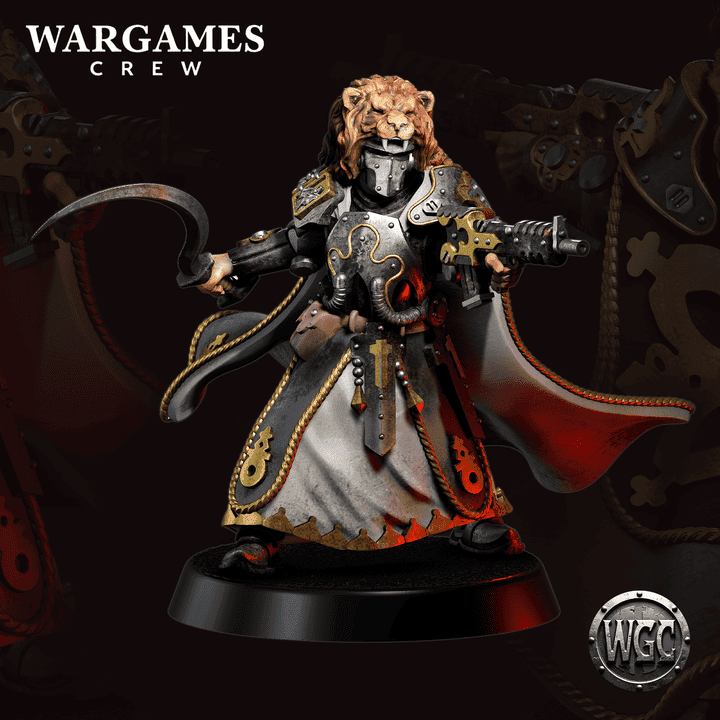
The Chewa Lieutenant’s biggest strength is that the concept art already behaves like a finished paint guide. Before the miniature even exists in hand, the silhouette tells you where the eye should go: broader shoulders, thicker plating, reinforced power units, ceremonial ironwork, and a heavy blue cloak that pushes the figure beyond ordinary battlefield equipment into something that reads like authority made visible.
That is exactly why this release feels so painter-friendly. The model is not just armored, it is layered with opportunities for metallics, freehand, edge highlights, and weathering. You get hard steel, soft cloth, etched plates, signal lamps, vox relays, speaking tubes, and banner mounts all competing in the same space, which makes the lieutenant a natural centerpiece for anyone who likes to build a scheme around contrast rather than relying on flat armor panels.
Heavy Lionheart Armor, and why it matters visually
WargamesCrew places the Chewa Lieutenant inside the Abyssinian Colonial Phalanx and identifies Heavy Lionheart Armor as the heaviest expression of authority in that force. That matters because it changes how you should think about the miniature before paint ever touches plastic. This is not a rank insignia hidden on a shoulder pad; this is a moving command post, designed to be read instantly in a crowd of infantry, heavy weapons, and support silhouettes.
For painters, that kind of design is pure fuel. Heavy armor invites polished metals, heat staining, chips, and grime, while the ceremonial elements call for cleaner treatment and controlled brightness. The trick is to let the armor look burdened by war but still unmistakably elevated, so the lieutenant keeps his command presence without losing the grounded, field-worn character that makes Trench Crusade work.
Ceremony built into every surface
The concept art gives you more than a soldier with status markers. It gives you a whole language of rank. The blue cloak is embroidered with scripture, regimental honors, and family symbols, and that alone creates a roadmap for freehand and color separation. Long cloths, etched plates, signal lamps, vox relays, speaking tubes, and banner mounts all reinforce the idea that this figure is carrying the culture of the faction as much as its weapons.
That is where the miniature becomes especially tempting for display painters. You can push the cloak toward deep, saturated blues, then use brighter metallic accents and cleaner edge highlights to keep the armor from disappearing into the cloth mass. The freehand work on the embroidery offers a natural focal point, while the smaller mechanical details can be picked out with sharper contrast so the eye travels from sacred tradition to industrial war gear in one pass.
Why the figure feels like a true battlefield centerpiece
The post makes the role of the Chewa Lieutenant very clear: he does not merely fight. He advances at the center of the formation, absorbs fire, issues orders through thunder and chaos, and turns fear into obedience. That battlefield identity changes how the model should be finished. This is not a hidden support piece tucked behind the line; it is the figure your army is expected to rally around.
The quote, “If I stand, the Empire stands with me,” captures that function perfectly. It tells you how the miniature should feel on the table: upright, imposing, and impossible to ignore. If you want that mood to land in paint, the strongest choices will be the ones that separate command from clutter, such as bright heraldic details against dark armor, cleaner cloth treatment against worn steel, and deliberate highlights that make the lieutenant stand out even in a dense formation.
The Abyssinian context gives the design its weight
Part of what makes this concept art so effective is that it sits inside a setting with real narrative density. Trench Crusade is a skirmish-scale tabletop miniatures game set in a horrifying alternate timeline of World War I, and Abyssinia is one of its major lore pillars. The official lore frames the faction as part of an Africa shaped by war, religion, and imperial conflict, which is why the Chewa Lieutenant feels rooted in a living culture rather than a generic sci-fi army.
That historical texture matters too. Abyssinia is a historical term associated with Ethiopia and the Ethiopian highlands, and the name “Chewa” carries resonance because Chewa regiments were a feudal noble warrior class of Imperial Ethiopia. Even the title structure adds weight, since “Negus” means king in Ethiopian Semitic languages. Those layers give the faction a sense of hierarchy and legitimacy that painters can echo through heraldry, insignia, and disciplined color placement.
How the wider range frames the release
The Chewa Lieutenant is not an isolated showcase piece. WargamesCrew’s Abyssinian Colonial Phalanx category already includes Chewa Guard, Chewa War-Priest, Chewa-Lieutenant, Abyssinian Colonial Phalanx Regulars, command options, upgrade heads, Heavy Machine Lionhearts, Field Engineers, and Medics. That range says a lot about how the army is being built: not as a single hero sculpt, but as a coherent faction with command, support, and heavy-armored identities that all speak the same visual language.
The lieutenant is listed at $19.99 on the Wargames Crew site, and it is also presented as a fully printable 3D object on MyMiniFactory. There, the figure is described as embodying the discipline and authority of the empire’s frontier legions, and as being chosen through years of service, resilience, and faith in the imperial cause. That makes the rank feel earned, not decorative, which is exactly the kind of story that makes a miniature more satisfying to paint because every detail feels like part of a larger hierarchy.
Planning the palette before the model arrives
If you are thinking about this piece as a paint scheme blueprint, the smartest move is to decide early where the hierarchy sits in the palette. The cloak wants to be rich and ceremonial, the armor wants to be heavy and authoritative, and the smaller technology details want enough brightness to keep the eye moving without stealing the spotlight from the rank markers. That balance is what will make the lieutenant read as both sacred and industrial.
The Chewa Lieutenant works because it gives you a clear painting problem with a strong payoff: how do you make a figure look like command, faith, and battlefield pressure all at once? The answer is already built into the concept art, in the scripture on the cloak, the weight of the Lionheart armor, and the command hardware hanging off every surface. That is why this release lands so hard before the sculpt even hits the workbench: it tells you exactly where the gold, the weathering, and the freehand need to go.
This article was produced by Prism’s automated news system from verified source data, official records, and press releases, then run through automated quality and moderation checks before publishing. The system is built and supervised by the people who set the standards it runs under. Read our full AI policy.
Did this article answer your question?