Warhammer Community Gloomspite Gitz art shapes moody miniature painting inspiration
Gloomspite Gitz art has shifted from pure cave gloom to a wider faction identity, giving painters clearer choices for classic, modern, or hybrid schemes.
A faction built from mood first
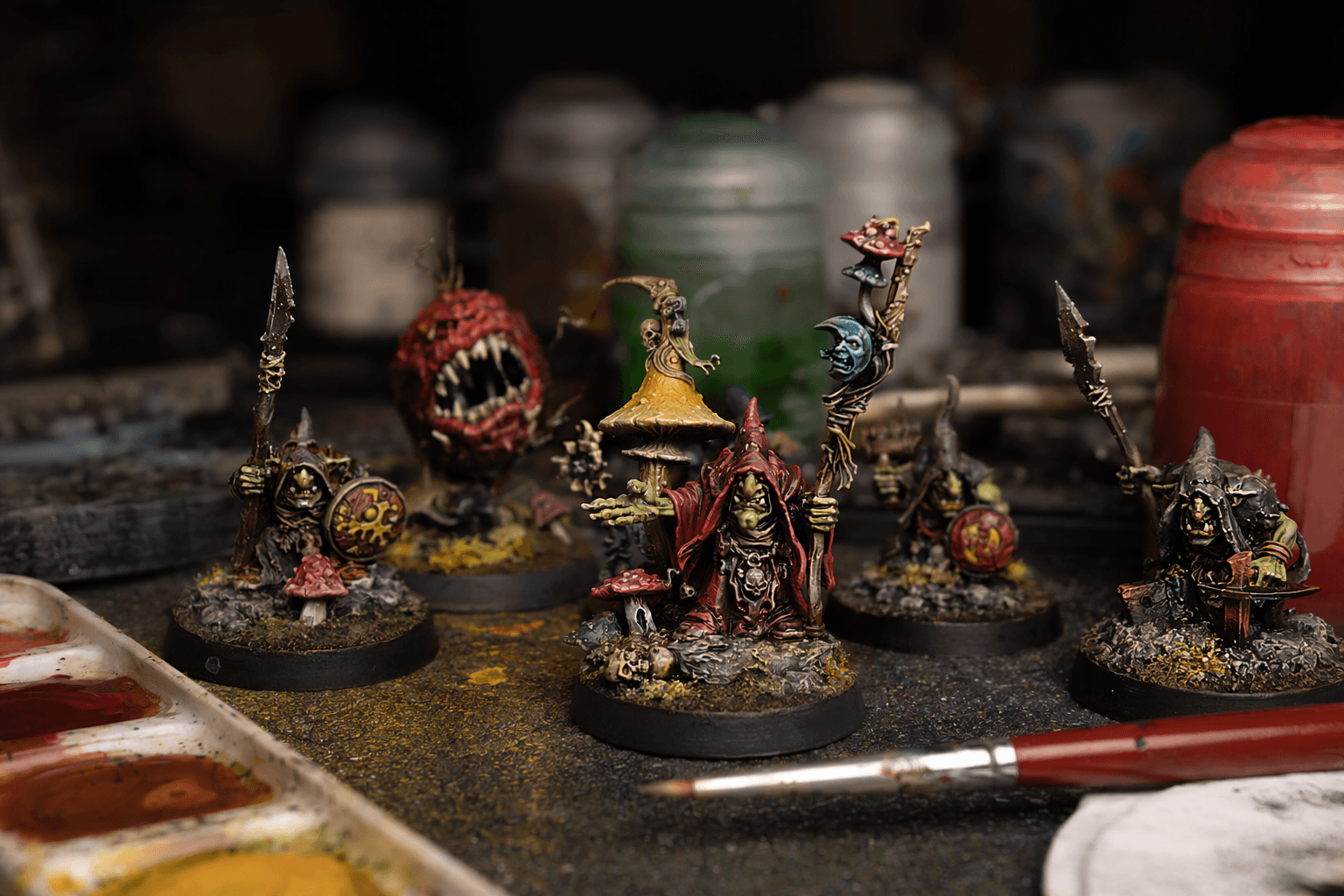
The new Gloomspite Gitz art retrospective matters because it reminds painters that this army has always been about atmosphere as much as armor plates and weapon counts. Warhammer Community frames the Gitz as "a cunning and vindictive army of vicious grots and troglodytic monsters" that swarm up from the depths under the sinister Bad Moon, and that description does a lot of work for your paint scheme before a brush ever touches plastic. If the faction is meant to feel like something lurking in the caves of the Mortal Realms, then your palette, texture, and lighting need to carry that story.
That is the real value of the feature. It does not hand out a step-by-step tutorial, but it does reinforce the visual language that makes Gloomspite Gitz instantly readable on the table: fungus, slime, moonlight, chaos, and the uneasy contrast between lurid skin tones and gloomy underground settings. For painters, that is a practical prompt, not just lore flavor.
What the older Gitz look still teaches
The older visual cues around the faction lean hard into the dank, subterranean side of the army. Grots, squigs, and troggoths are presented as things that crawl out of darkness, so classic Gitz schemes often work best when they feel damp, dirty, and slightly sickly rather than clean or saturated. Think cave walls, moldy browns, bruised purples, murky greens, and the kind of moonlit contrast that makes a unit look like it has spent years under rock instead of under sunlight.
Texture matters just as much as color here. Older Gitz art suggests rough, pitted skin on troggoths, ragged cloth, fungus caps, slimy highlights, and basing that looks wet or crusted with muck. If you want a classic style, lean into those old visual cues and make every surface feel like it has been touched by rot, damp air, and Bad Moon weirdness.
- muted, swampy greens instead of bright neon skin
- dirty bone, tarnished metal, and soot-dark shadows
- glossy slime, wet basing, and fungal growths
- moonlit edge highlights that make the model feel like it is emerging from a cave mouth
A strong classic Gitz scheme usually emphasizes:
That approach fits the traditional identity of the army perfectly. It also gives you a lot of room to unify mixed units, since Moonclan grots, squigs, Spiderfang, and troggoths can all share the same deep, underground mood even when their shapes vary wildly.
How newer art broadens the palette
The newer material around Gloomspite Gitz widens the faction without losing its identity. Warhammer’s recent coverage shows that the army now stretches across Moonclan grots, squigs, troggoths, Spiderfang, and Gitmob, and that breadth changes how painters can approach the army. The Gitmob in particular pushes the faction into a faster, brighter, more open visual lane, with the 2024 retrospective describing them as the latest incarnation of the faction and as sun-worshipping speed-freaks from the Hyshian plains.
That is a big shift in visual language. Where the older Gitz look is cave-first and moon-drenched, the newer Gitmob imagery opens the door to hotter yellows, dustier tans, harsher highlights, and more aggressive contrast. The Snarlfang-riding Gitmob now join their moon-worshipping cousins in Battletome: Gloomspite Gitz, and that means the faction can support both subterranean gloom and sun-blasted motion in the same collection.
The 2025 battletome reinforces that broader identity. Warhammer describes Battletome: Gloomspite Gitz as a 122-page rules supplement with inspirational background material, warscrolls, matched-play and narrative rules, and a self-contained Spearhead section with gameplay and hobby advice. That combination tells you exactly how Games Workshop now expects the faction to be used: not as one narrow goblin theme, but as a full visual toolkit with multiple painting directions.

Classic, modern, or hybrid: choosing your Gitz look
The smartest way to use the retrospective is to decide what kind of story your army should tell before you choose paints. A classic Gitz force should feel like it lives under stone, a modern force can feel sharper and more graphic, and a hybrid force can combine both moods to keep the army cohesive while still showing off different subfactions.
- deep cave shadows and heavy mood
- fungal, moldy, and swampy color choices
- a battered, grimy finish that makes every model look ancient
A classic scheme works best if you want:
- cleaner contrast between skin, armor, and cloth
- more readable unit separation at arm’s length
- brighter faction identity, especially for Gitmob and Snarlfang riders
A modern scheme works best if you want:
A hybrid scheme often gives the best tabletop result. Use the classic cave palette for Moonclan grots, squigs, and troggoths, then let Gitmob units break that darkness with sun-faded cloth, ochre armor, and more energetic highlights. That lets the army feel like one ecosystem rather than a pile of disconnected paint projects.
Turning official art into useful paint decisions
The key takeaway from the retrospective is that official Warhammer imagery is not just decoration. It shapes how the army is supposed to feel, and that makes it a practical reference when you are deciding on glow effects, basing, weathering, and skin tones. If the Bad Moon is a "malevolent planetoid" that moves almost at random through the void and spreads destructive magic across the Mortal Realms, then your glow source should feel unstable, unnatural, and slightly sickly rather than polished and magical in a high-fantasy way.
- use cold moonlight on one side of the model and warmer fungal glows elsewhere
- weather troggoth skin with bruised shading and uneven texture
- make cave basing feel coherent with damp earth, fungus, and broken stone
- keep goblin swarms visually linked through shared shadow tones, even when unit colors vary
That affects real hobby decisions:
The 2024 battletome coverage also matters here, because it shows the new book includes extensive background lore, artwork, and miniatures. That is the kind of release that gives painters permission to think in terms of faction identity, not just individual model color. The 2025 pre-order coverage added another useful signal by highlighting a special edition of Battletome: Gloomspite Gitz and a unique cover art edition, both of which underline how central the visual presentation has become to the army’s appeal.
In the end, the retrospective works because it gives painters a clean way to read the faction. Older Gitz art points to darkness, slime, and underground menace. Newer art opens the door to sun-chasing Gitmob energy, broader color variety, and sharper silhouette work. Put those together, and Gloomspite Gitz becomes one of the easiest armies in Warhammer Age of Sigmar to personalize without losing the core mood that makes it unmistakable on the table.
This article was produced by Prism’s automated news system from verified source data, official records, and press releases, then run through automated quality and moderation checks before publishing. The system is built and supervised by the people who set the standards it runs under. Read our full AI policy.
Did this article answer your question?