Warhammer’s Cogfort teases colossal Cities of Sigmar centerpiece and new rules
The Cogfort looks built for painters first: huge stone plates, chainwork, and siege-grade grime point to a centerpiece with real conversion and weathering payoff.
Why the Cogfort matters before the rules land
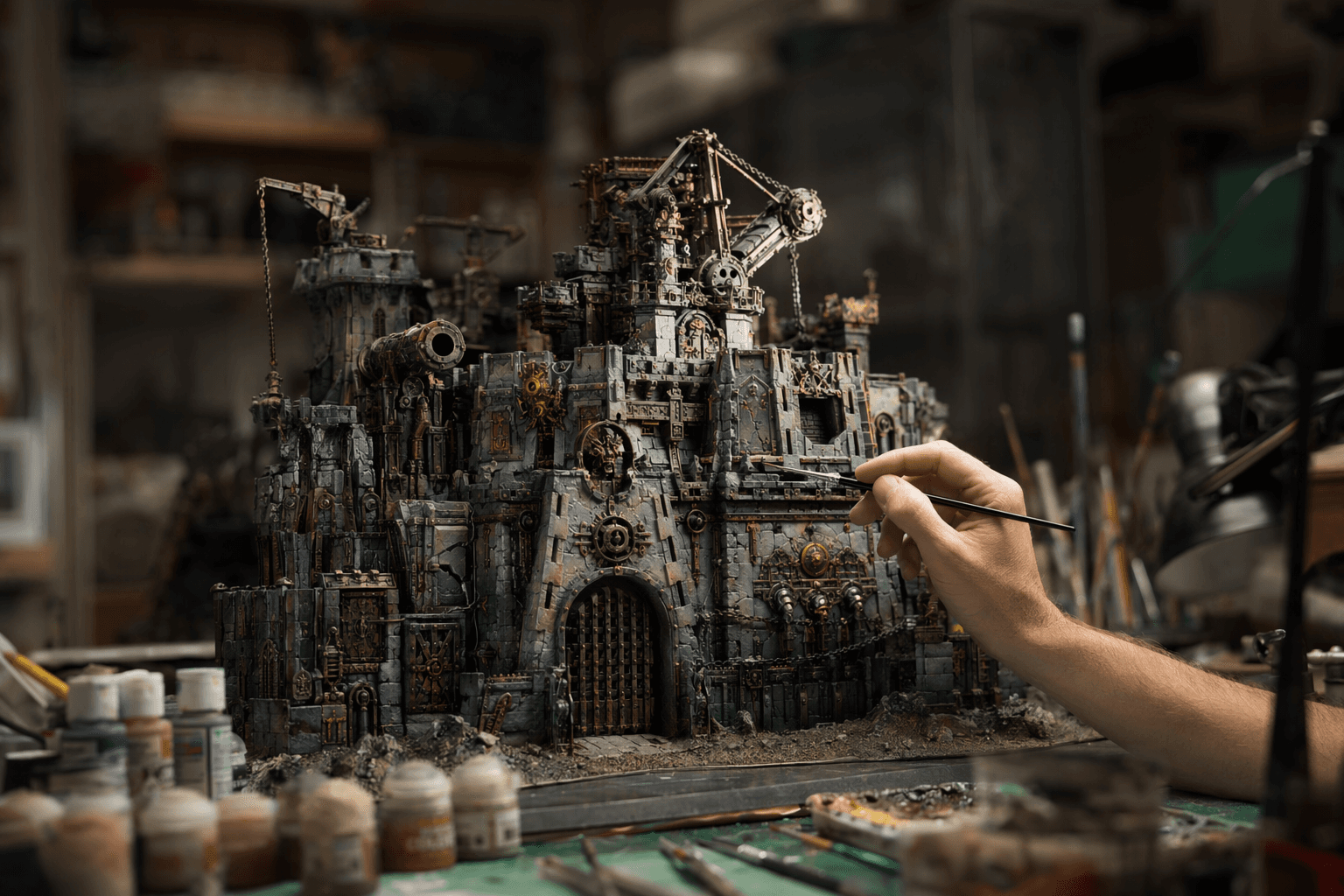
The new Cogfort reads like the kind of centerpiece that changes a Cities of Sigmar display the second it hits the desk. It is not just another “big model” tease, but a walking fortress of stone and steel with enough visible machinery to reward every layer of paint, from broad armor blocking to tiny rust streaks in the joints.
What makes the reveal especially useful for painters is how much the design already tells you about the finished kit. The Ironweld Arsenal machine is built to look like a living battlefield asset, not a ceremonial statue, which means the best paint plan will lean into wear, repairs, and the sense that a crew has been maintaining it in the field for years.
A model that already tells a story
Warhammer Community’s Cogfort explainer finally gives a shape to something readers had only seen mentioned in battletomes and rulebooks for years. That matters because the model arrives with a long runway of expectation, and the design language pushes it away from generic fantasy engine territory and into something that feels specific to the Mortal Realms.
The article describes the Cogfort as an enormous walking fortress of stone and steel, and that single phrase is already a hobby brief. Stone panels suggest mineral textures, chipped edges, and dusty lower surfaces, while the steel sections invite layered metals, heat discoloration, soot, and the kind of grime that collects where plates grind against one another.
The real painting opportunity is the silhouette. A machine this large asks for contrast between heavy mass and thin mechanical detail, so the eye has something to land on at tabletop distance and something to discover up close. That usually means a strong body color, disciplined trim placement, and a weathering plan that makes the form readable even before anyone notices the tiny bolts.
What the mechanics imply for paint planning
The lore details are useful here because they describe parts you can already imagine highlighting. The Cogfort’s pilot, often called the puppeteer, controls the machine through activation chains, and those chains are one of the most obvious places to build a focal point. They are described as weak points even though they are forged from rare metals, which is exactly the sort of contradiction painters can exploit with contrast: brighter metallics interrupted by soot, grease, and stress marks.
The legs are another gift. Tendon-chains on a colossal walker practically demand directional weathering, with dirt, oil, and scraped edges building up around the load-bearing areas. If you want the model to look like it has crossed a battlefield rather than just stepped onto it, the lower limbs are where the story starts.
The explainer also notes that the crews live in cramped internal quarters and that these machines are maintained in the field. That pushes the Cogfort away from pristine parade-piece logic and toward an operational war machine. A painter can reflect that with patchwork repairs, mismatched metal tones, and selective chipping that suggests constant service rather than abandonment.
Two patterns, one clear centerpiece
The follow-up article gives the model a little more structure by saying there are two main Cogfort patterns, including the Cannonade Cogfort. That is exactly the sort of detail painters should care about early, because variant weapon loadouts often define where the visual weight of a kit sits.
The Cannonade Cogfort’s godbreaker cannon was originally designed to bring down Mega-Gargants and other behemoths, which tells you the machine is supposed to feel genuinely siege-grade. Big artillery usually benefits from a slightly harsher finish than the rest of the model: darker heat staining around the barrel, powder residue, and enough grime around the mount to make the weapon feel used, not decorative.
If the other pattern emphasizes a different battlefield function, then color blocking becomes even more important. Shared clan colors, panel markings, and a consistent metal recipe will help tie the army together while leaving room for each pattern to read clearly at a glance.
The rules preview signals table presence, not just display value
The upcoming rules are as important as the sculpt tease for anyone planning a force around the kit. Warhammer Community says more information is coming, including an Iron March Army of Renown for armies built around lots of Cogforts, plus Regiment of Renown rules that let one slot into any Age of Sigmar army.
That matters because it confirms the model is being positioned as a piece with real list-building impact. When a kit can anchor its own themed army and also travel into other forces, it usually has enough presence to justify a major paint investment, especially if you want the model to hold up as the visual centerpiece of a broader collection.
The rules terms also help frame how collectors will approach it. Warhammer Age of Sigmar battle profiles define Regiments of Renown as pre-built regiments of legendary units that can be allied into armies, while Warhammer Studio has described Armies of Renown as self-contained thematic rule sets. In hobby terms, that means the Cogfort is being treated both as a splashy allied option and as the kind of model that could shape an entire army identity.
How the preview should shape your paint scheme
The safest and smartest approach is to paint the Cogfort like it belongs to a cohesive industrial culture rather than as a one-off spectacle. Cities of Sigmar already thrives when fantasy armor, civic heraldry, and blackened machine parts all sit together cleanly, so the Cogfort should echo whatever visual language you use on infantry, artillery, and characters.
- one dominant stone tone for the fortress body
- a secondary steel recipe for mechanical sections and the leg assemblies
- a restrained accent color for banners, markings, seals, or hazard details
- heavy weathering focused on the feet, joints, chainwork, and weapon housing
A strong plan would include:
That combination will make the model feel like part of the same army while still letting it dominate the table. The more you treat the machine as a siege vehicle that has marched through mud, ash, and broken masonry, the more believable it becomes.
Why this reveal hits harder than a normal preview
The Cogfort is landing in the middle of a broader Cities of Sigmar reinforcements wave that also includes Gate Gargants and new characters, which helps explain why it stands out as the centerpiece everyone will remember. In a wave like that, the big walker has to do more than add another stat block. It has to define the visual temperature of the release.
The timing also lands inside Games Workshop’s public push toward one million miniatures painted in 2026, which gives the whole reveal a subtle hobby-first energy. A model this large does not just ask for a paint job, it asks for a plan, and that is part of the appeal. The Cogfort is the kind of kit that can anchor an army, sharpen a city’s industrial identity, and reward every hour spent on edge highlights, rust filters, and careful basing.
For painters, that is the real headline. The Cogfort does not merely promise a new unit for Cities of Sigmar. It promises a project with enough scale, structure, and battlefield character to justify the long, satisfying work of making a fortress look alive.
This article was produced by Prism’s automated news system from verified source data, official records, and press releases, then run through automated quality and moderation checks before publishing. The system is built and supervised by the people who set the standards it runs under. Read our full AI policy.
Did this article answer your question?