Warhammer+ spotlights Wētā Workshop’s Mephiston statue, sculpting and paint craft
Wētā Workshop’s Mephiston statue turns the spotlight on scar-by-scar sculpting and a clean-white armour masterclass every painter can use now.
Wētā Workshop’s Mephiston statue raises the bar
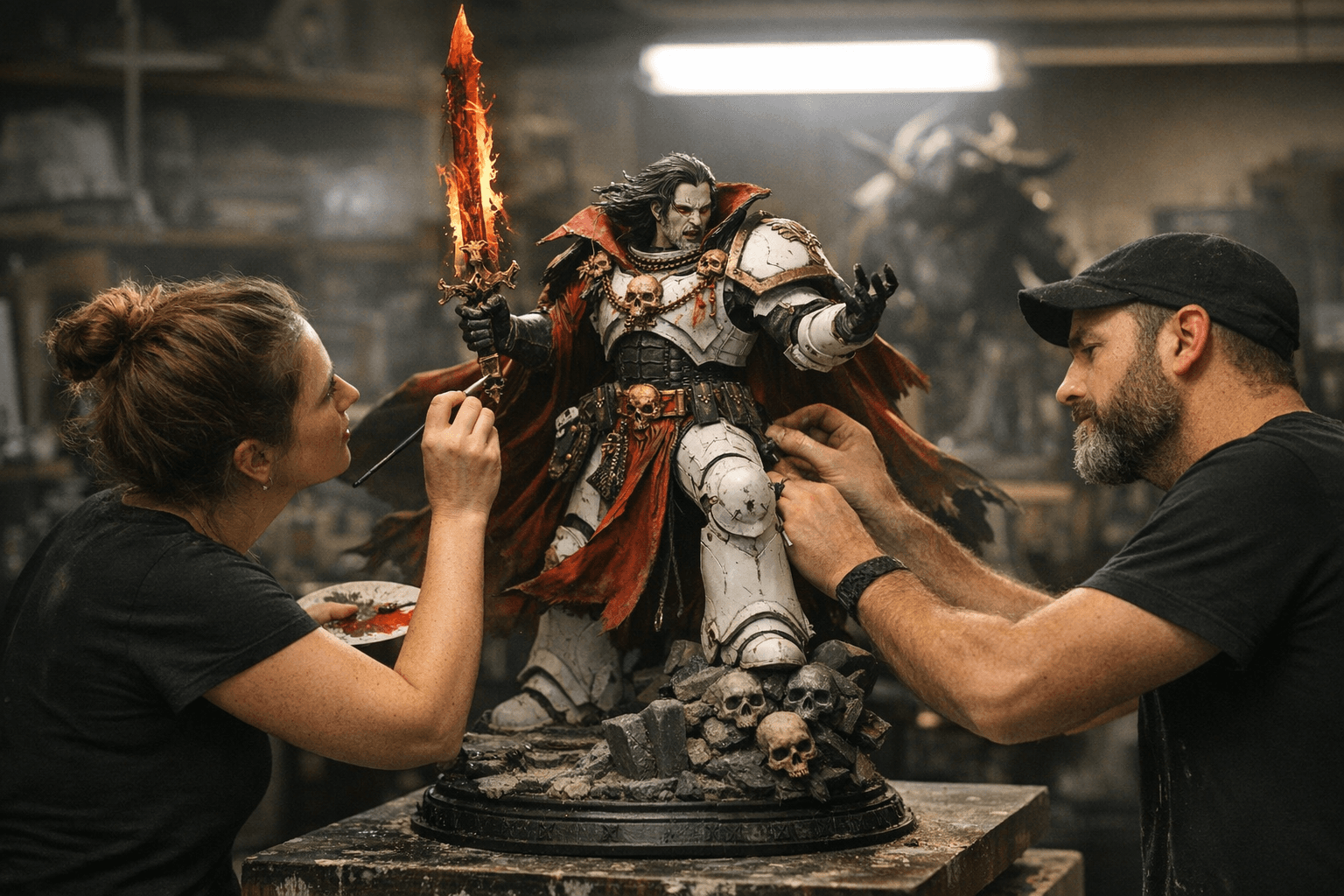
Wētā Workshop is the headline here, and that matters if you care about how far Warhammer sculpting can be pushed before paint even enters the picture. Jules German’s chat about the new Mephiston statue frames it as more than another display piece, with the Blood Angels’ Chief Librarian set on the steps of the Arx Angelicum and presented as the latest 1:6 scale character statue in a growing licensed line.
That scale changes the conversation for painters. At 1:6, every scar, wrinkle, and hard edge has to read cleanly from a distance, but also reward close inspection, which is exactly why this piece feels relevant to miniature painters as well as collectors. The statue becomes a reminder that the best display models do not rely on size alone, they rely on texture, silhouette, and a story that is visible in the face, armour, and pose before a brush ever hits the surface.
What the sculpting process teaches you
The most useful takeaway from the Wētā conversation is the emphasis on sculpting every scar and wrinkle. That is not just a studio brag, it is a practical lesson in how surface detail carries weight on a finished model. When a sculpt is built around micro-texture, paint has to support it rather than flatten it, which is why subtle shading, controlled highlights, and selective contrast matter so much on premium figures.
Mephiston’s pose on the steps of the Arx Angelicum also gives you a clear visual lesson in narrative painting. A model that looks grounded in a place, not just placed on a base, instantly feels more alive. If you are painting a Blood Angels character, that is the kind of cue worth copying: frame the miniature so the base, armour, and pose all point toward the same story, instead of treating the figure as a separate object from its environment.
Wētā’s growing Warhammer line is now a real collector ecosystem
Mephiston is not arriving in isolation. Warhammer Community has already shown the wider shape of the Wētā Workshop partnership through Lieutenant Titus, Skragrott the Loonking, Abaddon the Despoiler, Celestine the Living Saint, and even 1:6 Space Marine helmet replicas. That breadth tells you the collaboration is being built as a serious premium range, not a one-off showcase.
Lieutenant Titus was unveiled at Warhammer World, which helped establish the idea that these statues are meant to sit alongside the wider hobby culture rather than apart from it. Skragrott’s arrival extended that line even further, and the helmet replicas pushed the concept into premium hobby-room furnishings. For painters, that matters because it signals how strongly the Warhammer visual identity is being protected across display pieces, collectibles, and miniatures alike.
The payoff is clear: if you study one of these statues, you are studying the same design language that influences the characters on your desk. Armor plates, face detail, chapter iconography, and material contrast all have to survive the jump from a gaming miniature to a large-format display object. That makes Wētā’s work useful reference material, not just expensive shelf candy.
How We Roll adds context you can actually use
The roundup does not stop at sculpture. How We Roll sits down with Warhammer Studio writers Andy and David to talk about how new characters, locations, and events are added to the setting while keeping faction identity intact. That is valuable context if you like understanding why a model looks the way it does, or why a faction gets a certain visual treatment over another.
This kind of behind-the-scenes format works because it links lore decisions to the models you paint. A Blood Angels centerpiece like Mephiston is not just about a striking sculpt, it is also about preserving the chapter’s identity, its gothic intensity, and its heroic menace. When you know how studio writers think about adding material to the setting, it becomes easier to choose colors, weathering, and base details that reinforce the miniature’s place in the universe.
The white-armour masterclass is the most immediately usable part
The most directly practical part of the Warhammer+ bundle is Warhammer Colour Masterclass, which this time focuses on painting the cleanest, brightest white armour possible. That is a familiar problem across the hobby, especially on models where white has to look bright without turning chalky, dusty, or flat. It is also the kind of challenge that separates a quick tabletop finish from a display-ready result.
The lesson lands because white armour is not an abstract exercise. It is the finish that has to survive the harshest lighting, the most scrutiny, and the busiest visual battlefield in the setting. Warhammer Community has repeatedly returned to white-paint and colour-masterclass content for a reason: white is hard, but when it works, it makes a miniature snap into focus immediately.
Three practical takeaways follow from that focus:
- Keep the brightest white for the final highlight pass, so the armour still feels luminous instead of overworked.
- Use shade placement to define panel shape, not to dirty the whole surface, because crisp white depends on controlled contrast.
- Let edges and raised details do the storytelling, since white armour looks strongest when every line supports the silhouette.
That approach fits any model you want to stand out on the tabletop, but it is especially relevant for iconic factions that depend on pristine panels and strong faction identity.
Warhammer TV is being sold as a hobby tool, not just entertainment
All three shows sit inside the Warhammer TV seasonal slate available to Warhammer+ subscribers, and that framing is important. Warhammer Community has positioned the service as something that should “shine a light on every aspect of the Warhammer hobby,” which is exactly how this roundup feels in practice. You get sculpture context from Wētā Workshop, worldbuilding context from Andy and David, and a paint lesson that can be applied immediately.
That combination makes the Mephiston feature more than a simple subscriber recap. It shows how premium Warhammer content now moves across the whole hobby, from design thinking to display-level sculpting to practical brushwork. For miniature painters, the biggest takeaway is simple: the smartest hobby media does not just show you what is coming next, it shows you why it looks the way it does, and how to make your own models sharper because of it.
This article was produced by Prism’s automated news system from verified source data, official records, and press releases, then run through automated quality and moderation checks before publishing. The system is built and supervised by the people who set the standards it runs under. Read our full AI policy.
Did this article answer your question?