Warhammer 40,000 redefines objectives, terrain areas now decide control
Objectives now live inside terrain, so every ruin, bunker, and relic matters. Build for readability now and the next edition's missions will play cleaner.
The old token game is over
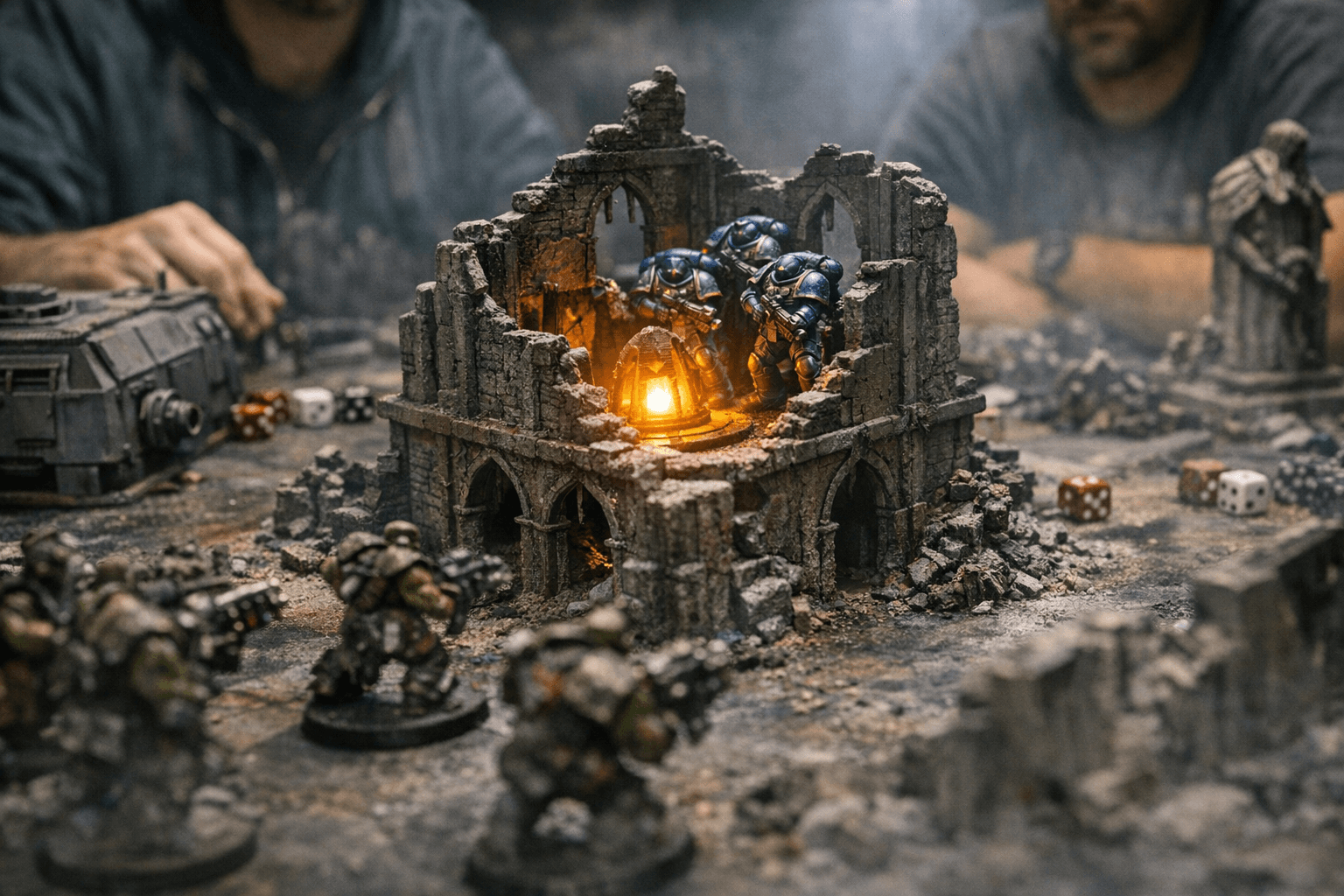
The biggest change here is not a tiny mission tweak. Most objectives are now claimed by controlling a terrain area instead of camping beside a circular marker, which means the thing you build and paint matters as much as the number you paint on the board. Warhammer Community has already made the point plain: the circular objective-marker era is done, and the fight in the 41st millennium is being pushed toward bunkers, ruins, relics, and other real pieces of battlefield scenery.
That matters because Games Workshop is tying mission design, army building, and terrain together more tightly than before. The new edition is being sold as a more narrative, balanced, and exciting experience, current codexes stay valid at launch, and there are over 70 Detachments waiting on day one. If you are planning hobby projects for the next edition, you are no longer painting generic markers for a side note of the game. You are building the visual center of the mission itself.
Make objectives read at a glance
If objectives are terrain now, they need to be legible fast. A good objective piece should tell both players, from across the table, exactly where the fight is happening and why it matters. That means strong silhouettes, obvious color contrast, and one or two visual anchors that pull the eye to the claimable area, whether that is a bunker entrance, a shrine icon, a reactor core, or the heart of a ruined courtyard.
This is where hobby planning changes immediately. A flat token can get away with looking like a marker; a terrain objective cannot. You want your objective pieces to be visibly tied to the army or the board, but still finished quickly enough that you are not spending a month on each one. A repeatable recipe helps here: the same rim color, the same weathering pass, the same spot for a faction icon or hazard stripe, and the same basing language across the table.
The other practical shift is scale. Some missions use five objectives and others use six, so you need enough pieces to support a full spread without turning every game into a custom display board project. If you are building for the next edition, make the pieces modular and make them fast.
Terrain is now doing more of the work
The updated terrain rules make objectives feel less like abstract counters and more like actual ground worth taking. Many objectives now offer cover to the units claiming them, so the models sitting on the point are not left hanging in the open like easy casualties. That is a big deal for how you model and paint those areas, because the point is no longer just a flat footprint. It is a defended location, and your scenic choices should make that clear.
Hidden changes the picture again. Infantry, Beasts, and Swarms that do not shoot can use Hidden inside a terrain area, and those units are only visible to enemy units within their detection range, usually 15 inches, if they did not shoot in the current or preceding player turn. Cover also changes meaning in the new edition: it is now a -1 penalty to the opponent’s Ballistic Skill rather than a bonus to the save. Most terrain remains Obscuring too, so line of sight still breaks around the battlefield in a way that rewards careful layout and better-built scenery.
For the hobbyist, that means terrain pieces need cleaner geometry than ever. If your ruin is meant to define an objective area, the borders have to be obvious enough that players can tell where the zone begins and ends. If your board uses trees, scrub, low walls, or rubble, the footprint has to be physically clear even when the model count gets dense.
Big models are part of the objective game now
This is also where larger kits become more interesting. Vehicles and monsters can be much more viable objective holders because they can claim terrain areas more safely than before. They do not use terrain area cover in quite the same way infantry does, but they can still hide behind ruins, trees, and rubble and benefit from cover in the usual sense. With most terrain staying Obscuring, even a bulky model has places to matter if the scenery is built well.
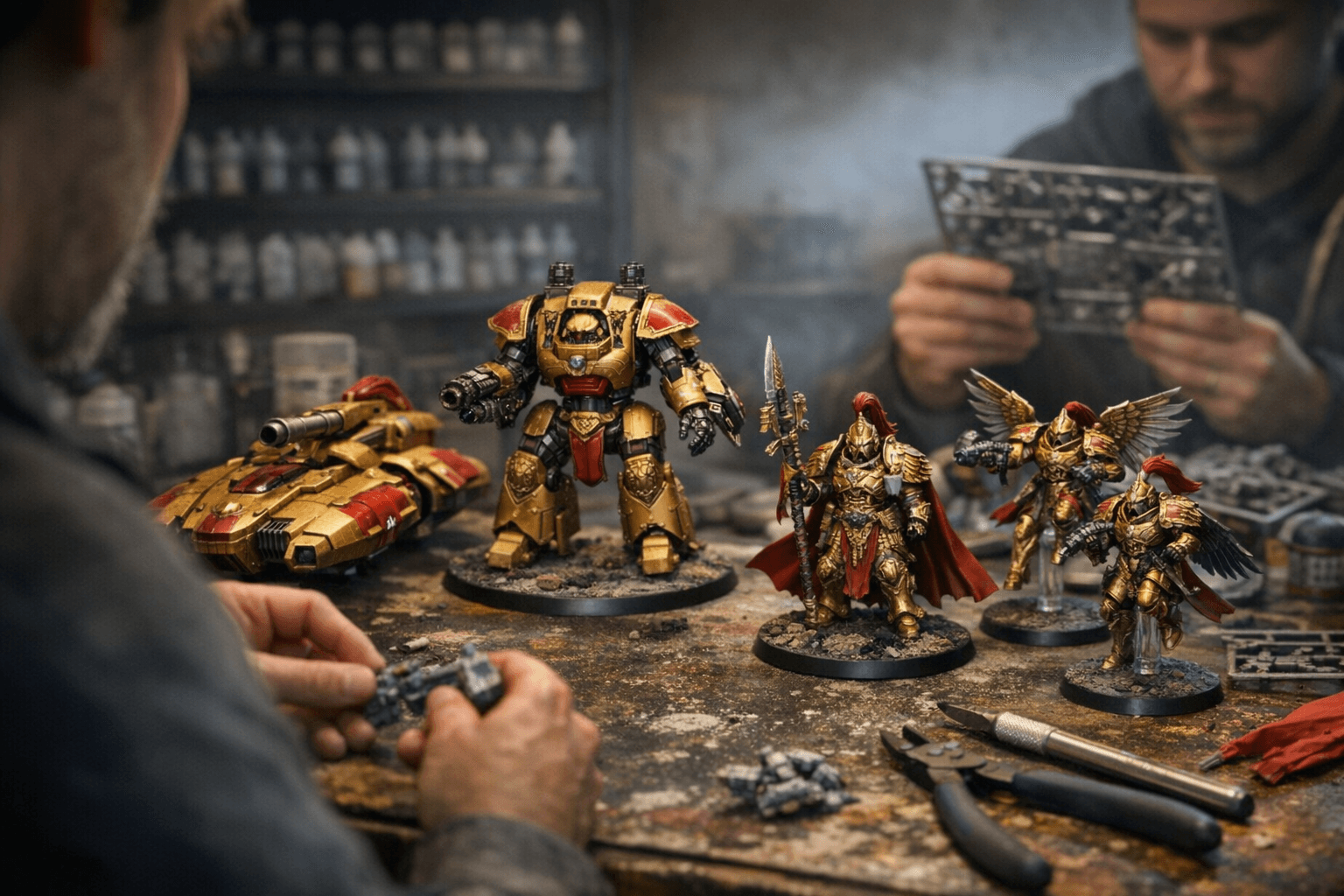
There is a hobby consequence here that is easy to miss: your terrain should be friendly to big bases, not just infantry bases. If you build around tiny foot troops only, your objective pieces will feel awkward the moment a monster or tank tries to contest them. Leave room for a large hull to sit naturally behind a ruin corner, make the scatter around the area believable, and do not clutter the capture zone so much that the biggest models look stranded.
What this means for your paint queue
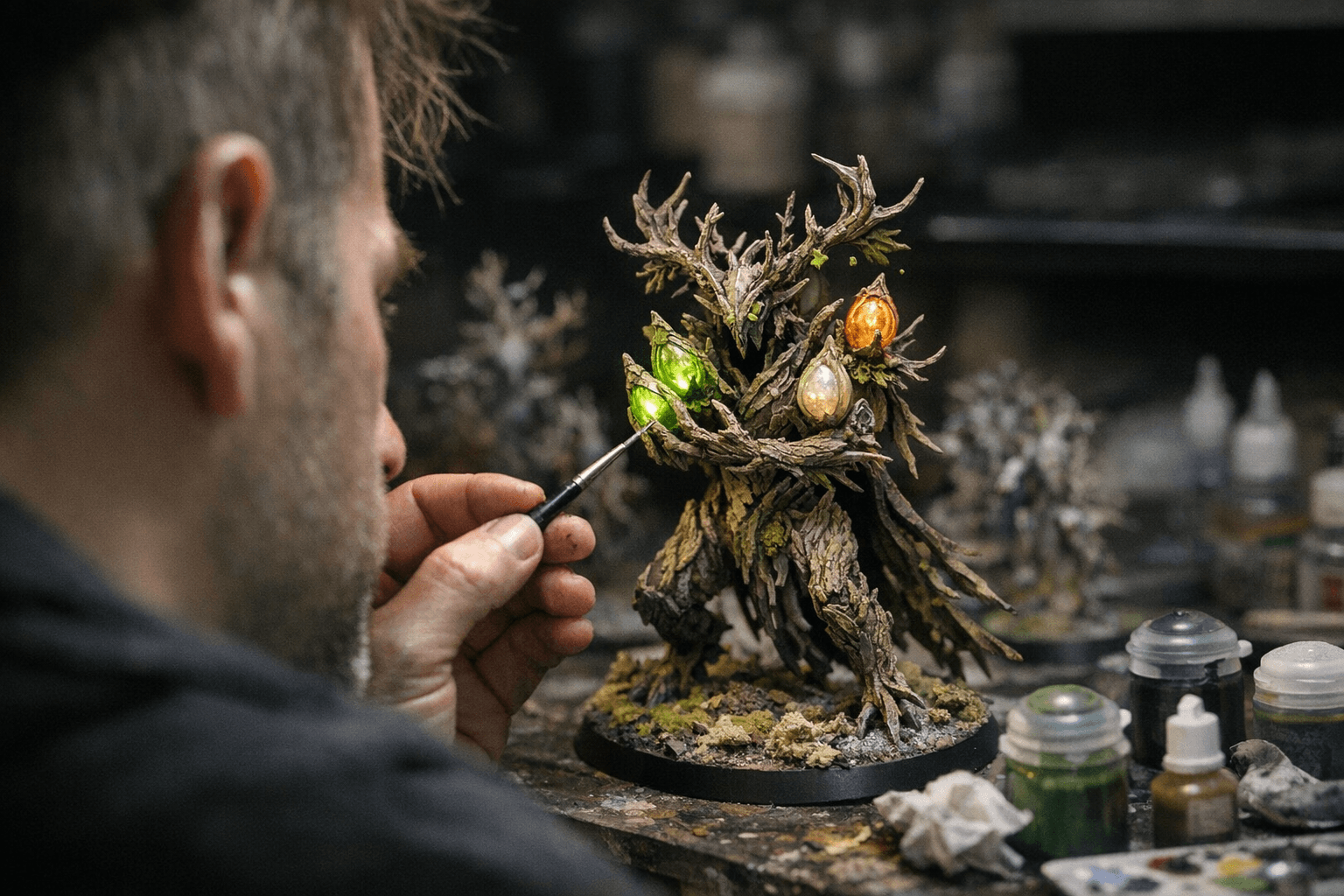
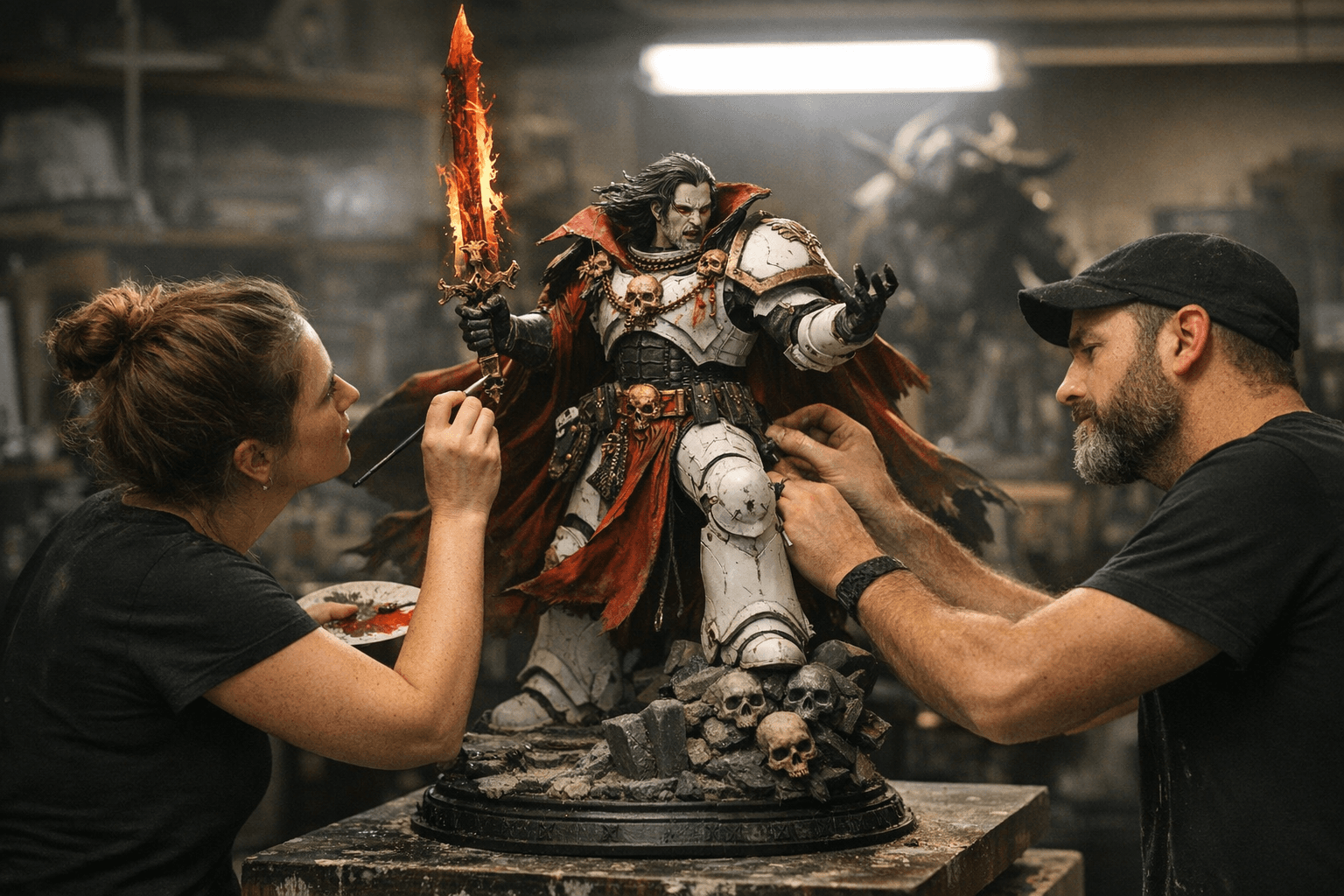
The smartest move now is to treat objective terrain as a small project line of its own. Do not save it for the end of an army. Paint it in batches, keep the palette coherent with the force or board, and use one or two high-contrast details that sell ownership fast. You are aiming for something that looks finished at arm’s length, not something that only shines in photos.
A practical approach looks like this:
- Build one visual language for the whole board, then repeat it on every objective piece.
- Use faction colors sparingly on rims, seals, screens, banners, or hazard stripes so the point reads instantly.
- Keep the footprint clean enough that five-objective and six-objective missions both play smoothly.
- Save a few converted markers or 40mm bases for missions that still call for them.
That last point matters because the new edition is not abolishing every kind of marker. It is shifting the center of gravity toward terrain, with objective areas doing the heavy lifting. If you already have converted tokens, they are still useful when a mission wants them, but the real work now lives in the scenery.
Tournament tables are already pointing the way
Competitive play has been leaning this way for a while. The Chapter Approved Tournament Companion includes 20 recommended tournament rounds and terrain layouts for Strike Force games, and it is the official way to play at most Games Workshop matched-play events. That does not just affect judges and TOs. It tells you what kind of tables the game expects to see, and it makes terrain quality a core part of the experience rather than background dressing.
That is why this change feels bigger than a rules update. The battlefield itself is becoming the mission. If you build your objectives to be readable, tied to the setting, and quick to finish, you are not just keeping up with the next edition. You are making the table look like the 41st millennium finally caught up with the way people actually want to play it.
Know something we missed? Have a correction or additional information?
Submit a Tip