Weaver Courts overhaul revives Conquest’s seasonal elf faction
Weaver Courts’ overhaul turns a fiddly elf army into a painter’s priority, with clearer season cues, simpler token work, and a fresh reason to rebuild the shelf.
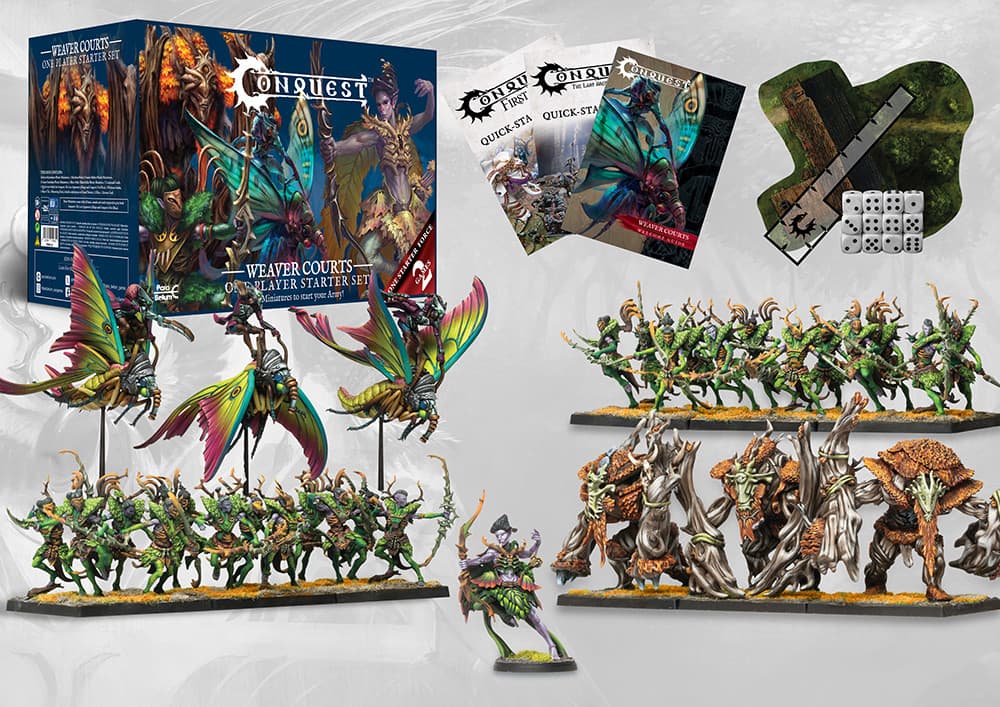
The overhaul that moves Weaver Courts back to the front of the paint queue
Para Bellum’s Weaver Courts update does something hobbyists feel immediately: it changes which models look worth building, repainting, and putting back on the table first. A faction that arrived in late 2025 as Conquest: The Last Argument of Kings’ tenth army, then sat a little behind stronger releases like Yoroni, suddenly has a clearer identity and a much stronger reason to draw fresh attention from collectors.
That matters because this is not just a rules refresh. It is the kind of mid-cycle shakeup that turns a shelf faction into a weekend project, especially when the new mechanics are tied so closely to seasonal presentation, token tracking, and warlord-driven army identity.
Why the Weaver Courts suddenly feel like a hobby project again
The Weaver Courts have always been a visually rich faction, and the lore gives painters a strong starting point. Para Bellum framed them as fey-touched Sidhe exiles, estranged cousins to the Spires who rejected Biomancy in favor of Life-Binding. On the table, that has always translated into insect-like limbs, woodland armor, plant-based weapons, and insect mounts, which is exactly the kind of silhouette that rewards a tight color story and careful basing.
The update gives that style more purpose. Deadlytrout’s Goonhammer coverage describes the overhaul as a rare mid-cycle change from Para Bellum, and the practical effect is simple: if the army is more viable, more players will build it, paint it, and revisit it. That creates the familiar hobby ripple where old starter boxes come off the shelf and once-questionable projects become centerpieces.
The seasonal system now drives the army’s identity
The headline mechanical change is the seasonal structure, and it is also the biggest painter-facing hook. In the September 1, 2025 teaser, Para Bellum laid out the Cycle of Seasons and said a warlord’s seasonal court determines the starting season for round one. After that, the cycle advances in a fixed order, Spring, Summer, Autumn, Winter, then back to Spring, which makes the army feel like a living rhythm instead of a pile of isolated rules.
The updated reading of that system is easy to understand at the painting desk. Winter pushes dread, Spring favors speed, Summer hits hard, and Autumn leans into morale pressure. That gives you four immediate visual directions for the same faction, whether you want icy blues and desaturated cloth, fresh spring greens, sunlit golds, or rusted orange autumnal tones across a single force or split across subunits.
That seasonal clarity is the sort of thing hobbyists latch onto fast. A faction with distinct seasonal roles becomes a perfect excuse for color-coded heraldry, basing that matches the chosen court, and army refresh projects that let you repaint trims, capes, foliage, and mounts without rebuilding everything from scratch.
Seeds went from bookkeeping burden to hobby accessory
The other major change is the Seed system, and this is where the update really improves the day-to-day tabletop experience. In the original teaser, a regiment could hold up to two Seed markers, players were told they could use colored dice to track them, and if the Cycle of Seasons advanced while an enemy had two seeds, those seeds could Bloom into a season-specific effect. That is flavorful, but it also created a lot of tracking overhead.

Para Bellum’s April 14, 2026 teaser acknowledged exactly that problem, saying community response showed the seasonal mechanics and Seed system were too cumbersome and demanded more bookkeeping than their impact justified. The company’s goal was to preserve what made the faction unique while making it work with “more with less.”
For painters and converters, that simplification is quietly useful. A cleaner system encourages cleaner table presentation, which means custom tokens, themed dice, magnetized markers, or basing accents that make seeds visible at a glance. If you like your army to look as organized as it plays, this is the kind of rules update that justifies a full marker set as much as a new paint scheme.
What to buy, build, and repaint first
If you are triaging a Weaver Courts project right now, start with the models that make the seasonal identity obvious. Characters and warlords matter more under the rework, so the most visually distinctive leader is the best first build, especially if you want your chosen season to read from across the table. After that, pick the units that are season-specific, because they will anchor the army’s personality and give the rest of the force a visual language to follow.
A practical hobby priority list looks like this:
- Build and paint the warlord first, with the season you want to emphasize baked into the palette.
- Finish one core regiment with clear seed-tracking space, so tokens and dice have a home.
- Repaint or rebase the most organic units next, since the faction’s plant and insect imagery benefits the most from a unified look.
- Add custom markers only after the main force is settled, so the tracking pieces match the final army scheme instead of fighting it.
The best part is that the army’s look already supports this kind of refresh. Because the Weaver Courts sit in that eerie space between fae court and living biome, even a partial repaint can make an old unit feel new again with nothing more than a seasonal base rim, brighter foliage, or a changed cloth accent.
The launch trail explains why this update lands so hard
The original rollout gave the faction real commercial weight. Para Bellum launched the Weaver Courts with a Supercharged Starter Set priced at $159.99, containing 31 miniatures plus dice, terrain, measuring sticks, and introductory guides. The company also planned 13 different Weaver Courts items across 2025, and one release note said the full wave began shipping on November 25, 2025.
That launch story ran through a lot of the hobby press. Geek Native, ICv2, Skirmish Games, and Goonhammer all tracked the faction’s debut and identity, with Andrew Girdwood, Jeffrey Dohm-Sanchez, and deadlytrout among the names attached to the conversation around the release. There was even a launch beat around Essen, Germany, where the faction’s debut helped frame it as a serious addition rather than a side project army.
Now the update gives all that early momentum a second life. Instead of being remembered as the faction with interesting lore and too much administration, the Weaver Courts now look like a living seasonal army that rewards clean basing, intentional color planning, and a few smart conversion choices. That is exactly the sort of mid-cycle overhaul that pulls a model range back off the shelf and into the center of the hobby desk.
This article was produced by Prism’s automated news system from verified source data, official records, and press releases, then run through automated quality and moderation checks before publishing. The system is built and supervised by the people who set the standards it runs under. Read our full AI policy.
Did this article answer your question?