Warhammer spotlights Spectre Squad paint schemes, from camo to covert conversions
The Spectre Squad showcase is a paint playground, not a single scheme. Camo, covert conversions, and narrative basing all work on the same stealthy Cadians.
Why this Spectre Squad showcase matters
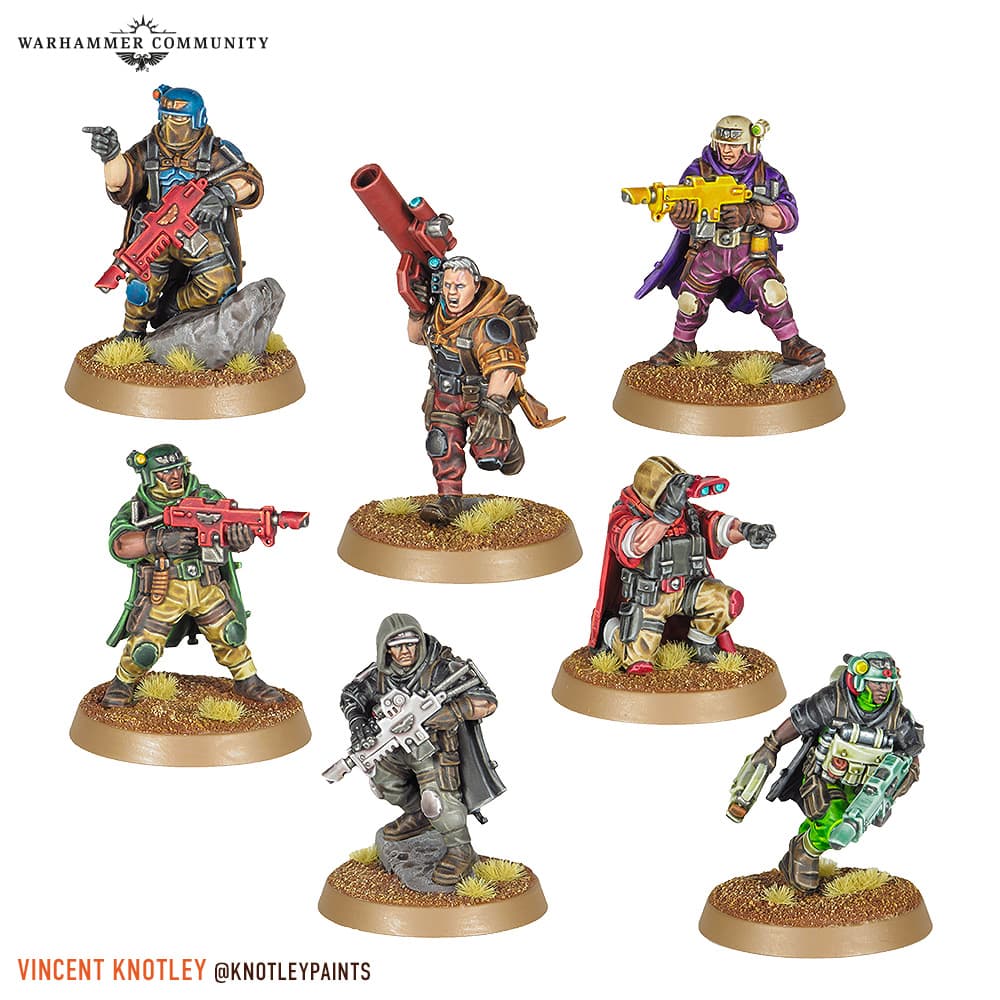
Warhammer Community’s Spectre Squad gallery lands with the kind of hobby payoff that actually sticks: it turns a new Kill Team release into a pile of usable painting ideas. Instead of pushing one studio-approved answer, the showcase treats the veteran Cadian scouts as a blank canvas for stealth, weathering, and character work, which is exactly what makes the kit feel worth buying and painting.
That matters because the Spectres are not being framed as a one-note infantry unit. Warhammer Community introduced them in the AdeptiCon 2026 reveal as veteran Cadian scouts with hard-won fieldcraft, and the later rules push put the Cadian Recon Squad at 80 points in Warhammer 40,000, sitting between a 10-man Cadian Shock Troops squad and Kasrkin in role and capability. In other words, this is a squad built for the kind of hobbying that rewards detail without demanding a display-piece finish on every model.
The paint schemes that make the box feel alive
The strongest thing about the gallery is the range. Some painters leaned hard into camouflage, building intricate patterns that match a specific imagined battlefield, while others stripped things back into smoother, simpler uniforms for a cleaner covert look. That contrast is the real lesson: the same kit can read as woodland scouts, urban infiltrators, or near-ghostly special forces depending on the palette and finish.
If you want the most table-ready route, the subdued end of the spectrum is the easiest win. Muted greens, ash greys, cold browns, and dark fatigues give the squad the sense of operating under cover, especially when the recess shading stays controlled and the highlights are kept narrow. If you want the unit to pop from a gaming distance, the gallery shows that you do not need to abandon stealth to do it; you just need one or two sharper accent points, like insignia, equipment edges, or lenses, to break up the silhouettes.
The bolder schemes are useful for a different reason. A few of the showcased forces went for more obvious camouflage or even a riot of colour, and that does something clever on the tabletop: it proves recon troops do not have to look drab to read as elite. If your army already lives in a grimdark palette, a brighter Spectre Squad can become the visual tell that these are specialists, not just another line squad in different helmets.
Conversions that sell the covert angle
The conversions are where this showcase gets especially practical. Warhammer Community called out builds using Tempestus Scions berets and Skitarii Ranger hooded cybernetic heads, and those are the kind of swaps that immediately change the squad’s identity. A beret makes the models feel more polished and disciplined; a hooded cybernetic head pushes them toward weird, half-hidden operatives with more of a covert-infiltration vibe.
That is the kind of customization this box invites. The base kit already sells the recon concept, but those small swaps help each operator feel individual without wrecking squad cohesion. If you are building the team for Kill Team, those head and hat changes also make a practical difference: they let you differentiate specialists quickly, which helps both painting and gameplay identification.
The lesson here is not to overbuild every model. The best conversions in a stealth unit are the ones that add a clear read at arm’s length. A beret, a hood, a different optic, or a more specialised weapon profile goes further than a pile of extra gubbins, especially when the whole squad needs to look like it can move in silence and still act as one unit.
Dioramas, lighting, and the case for narrative basing
A few painters pushed the concept further with mini dioramas and lighting effects, and that is where the Spectre Squad becomes more than just another infantry project. Lighting works particularly well on stealth teams because you can use it to imply a source without turning the model into a neon billboard. A muted glow under a hood, behind a visor, or bouncing off a weapon casing adds atmosphere without breaking the covert read.
Narrative basing matters just as much. The showcase’s urban and covert interpretations make a strong case for bases that match the squad’s mission: cracked concrete, debris, grates, pipework, or other compact city-fight details all reinforce the idea that these are elite scouts working ahead of the main force. Woodland or ash-waste basing can work just as well, but the key is consistency. The base should make the squad look like it belongs in the environment it is meant to disappear into.
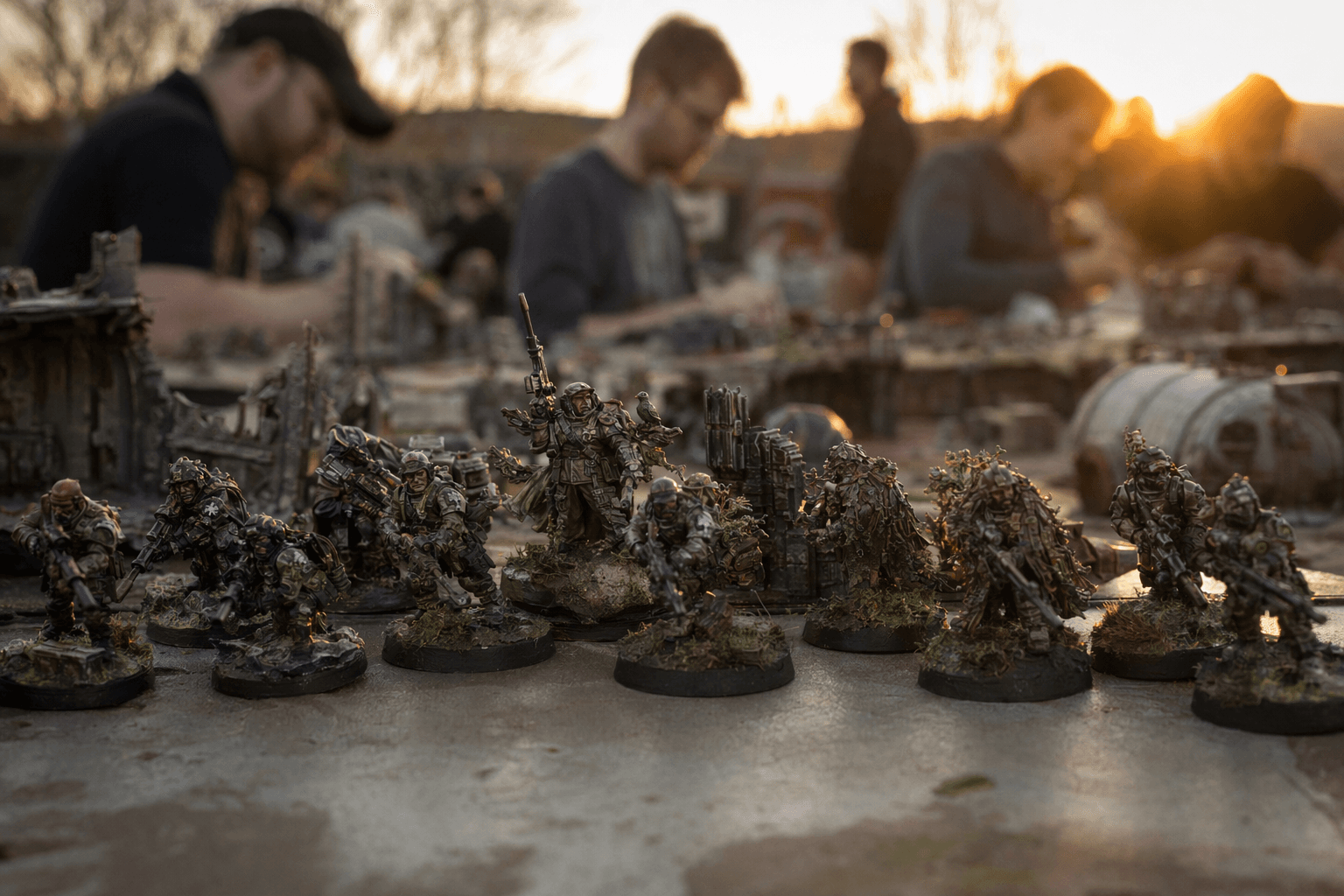
This is where the gallery becomes more than eye candy. It gives you permission to treat the base, the pose, and the finish as part of the same story. When the squad is built to feel like it has infiltrated a place rather than marched into it, the whole army gains a sharper identity.
Why the box supports the hobby project
The release itself backs up the hobby angle. Terror on Devlan is not a small character kit drop; Warhammer Community said the boxed set includes 10 Spectre Squad operatives, one Vox-Relay Beacon, the Red Terror, 10 Termagants, one Ripper Swarm, a 72-page dossier, 66 tokens, 27 mission-pack cards, and 40 Spectre Squad datacards. That is a full launch package, and the Spectres are clearly meant to be a centerpiece for people who want a squad they can build, paint, and actually use right away.
Warhammer Community also positioned the Terror on Devlan mission pack as designed for the Spectre Squad, while still usable with any kill team. That is an important detail for painters: the box is not just about a neat unit image, it is about giving that unit a battlefield identity. The painting showcase reinforces that identity by showing how different the same veteran Cadians can look once you lean into the recon brief.
What to steal for your own Kill Team
The easiest takeaways from the Spectre Squad gallery are practical, not flashy:
- Pick one environment first, then paint to match it. Woodland, urban, and ash-waste all work, but the palette should tell the same story as the base.
- Use camouflage only where it helps the silhouette. Overcomplicated camo can blur the model; controlled camo on cloaks, trousers, or shoulder panels does the job without muddying the read.
- Add one or two conversion cues, like Scion berets or Ranger-style hooded heads, to make the squad feel specialised.
- Keep the finish coherent. Smooth uniforms, weathered armour, and selective spot colours will usually read better than trying to make every surface shout.
- If you want drama, put it into the basing or lighting, not just the armour scheme. That keeps the stealth theme intact.
The big win here is that the Spectre Squad finally gives Cadian recon troops the kind of visual lane they deserve. They are built to feel like professionals sent ahead of the line, and the best community paint jobs understand that immediately: make them covert, make them individual, and make the battlefield look like it was already lost by the time the enemy noticed them.
This article was produced by Prism’s automated news system from verified source data, official records, and press releases, then run through automated quality and moderation checks before publishing. The system is built and supervised by the people who set the standards it runs under. Read our full AI policy.
Did this article answer your question?