World champion praises new Hedonites of Slaanesh battletome and models
Aymes turns the new Hedonites book into a painter’s brief: make it seductive, strange, and loud about personality.
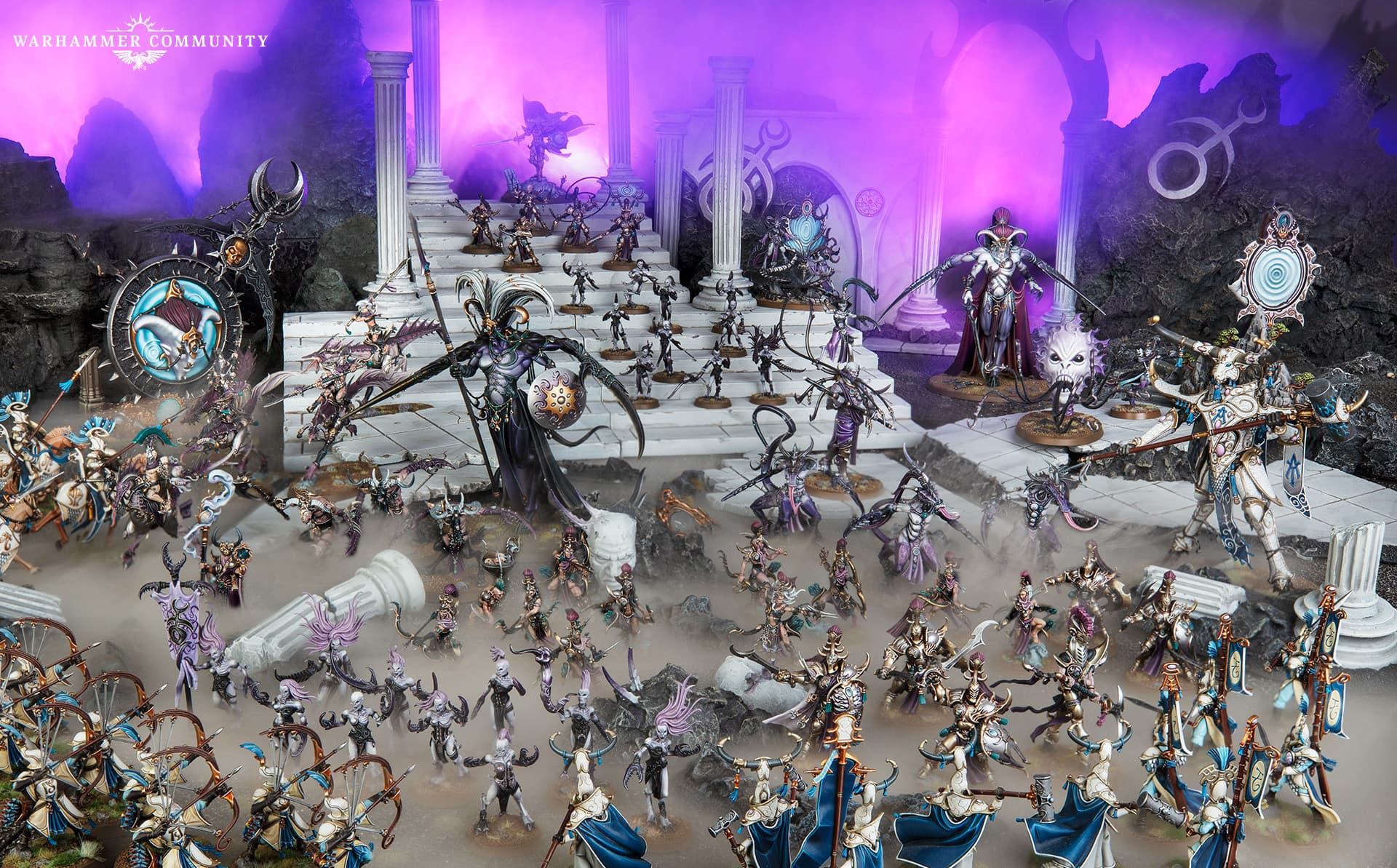
Jean-Baptiste Aymes returned to Warhammer in 2021 with Hedonites of Slaanesh. The current Age of Sigmar world champion reads them like a painter reading a silhouette: beautiful, attractive, and just unsettling enough to stick in your head. The army is still being sold to hobbyists as an identity first and a datasheet second.
What the army is really asking you to paint
Aymes frames the faction as a celebration of individuality and self-expression, which is the cleanest possible hobby cue for Hedonites of Slaanesh. This is not an army that rewards flat repetition or dead-same finishes across every unit. The existing Hedonites identity already splits into distinct styles, from the arrogant Pretenders to the fast-moving Godseekers and the uneasy alliances of the Invaders, with mortal Sybarites sitting alongside daemonic elements when you want them.
That gives you room to make decisions that feel personal instead of formulaic. A centerpiece hero can carry the loudest gold, the cleanest edge highlights, or the richest cloth; rank-and-file models can lean harder into skin tone variation, blacker shadows, or more restrained metallics.
Paragon is a rules idea that doubles as a visual one
The new battletome’s Paragon mechanic is the clearest sign that the book still wants to feel like temptation, reward, and risk. Paragons are elite units that get chosen at the start of the turn, and Slaanesh can strip that favor away if they fail to live up to the god’s fickle standards. The design even caps the battlefield at three friendly Paragons, which makes the most prized characters feel scarce instead of interchangeable.
If the army’s internal logic is built around being selected, adored, and then possibly discarded, the best-looking models in the force should not just be the biggest ones. They should be the ones you make visually unmistakable, with the most ornate trim, the sharpest color contrast, and the most deliberate finish on skin, armor, or weapon effects.
The new kits point you toward specific hobby choices
The Lord of Hysteria comes with a choice of two helmets and two weapon options, which lets you tune a centerpiece model toward elegance or menace before paint ever enters the picture. The Decadent Host battleforce includes five Slickblade Seekers, five Myrmidesh Painbringers, 10 Blissbarb Archers, three Slaangor Fiendbloods, the Blissbrew Homonculus, and Sigvald in one box.
That spread is useful because it naturally separates the force into paintable families. Seekers and Slickblade Seekers want speed cues, so your basing and directional highlights should make them feel in motion. Myrmidesh Painbringers and Sigvald are the place to go hardest on polish, lacquer, and mirror-bright metals. Blissbarb Archers and the Blissbrew Homonculus give you a chance to contrast lighter, more exposed flesh and cloth against the denser ornament of the elite units.
The Epicurean Revellers package brings together a Thricefold Discord, three Fiends, five Seekers of Slaanesh, and 20 Daemonettes, which is a very clear signal that the faction still wants daemonic elegance and speed to sit beside the more human side of the army. If you are building a display force, that mix makes it easy to keep one palette running across very different body types while still giving each unit its own surface language.
What the paint guide buried in the old book still gets right
The earlier Hedonites battletome preview called for unnatural flesh colours, gory details, ensorcelled armour with strange tints, and plenty of bling. That is still the most useful shorthand for the faction, because it tells you what should never look ordinary on these models. Flesh should look pushed, armour should look enchanted rather than merely metallic, and every unit should have at least one area that catches the eye from arm’s length.
The Pretenders are built around a hideously empowered general, the Godseekers around speed and aggression, and the Invaders around fragile alliances between warlords. If you treat those as hobby prompts, the army gets easier to plan: one force can be about a single overwhelming centerpiece, another about motion and forward pressure, and another about visual variety held together by a shared palette.
This article was produced by Prism’s automated news system from verified source data, official records, and press releases, then run through automated quality and moderation checks before publishing. The system is built and supervised by the people who set the standards it runs under. Read our full AI policy.
Did this article answer your question?