Beatportal spotlights Asna Asna’s raw African rhythms and rave politics
Asna Asna turns raw African rhythm into a club-ready political statement, and Beatportal’s radar puts her ahead of three other artists built for the floor.
Asna Asna’s music pulls the club back toward the drum, the body, and the source. Beatportal’s monthly On Our Radar snapshot uses her as its sharpest example of where minimal, percussion-led club music is heading now: harder, more personal, and impossible to separate from the politics behind it.
Beatportal’s radar starts with the drum
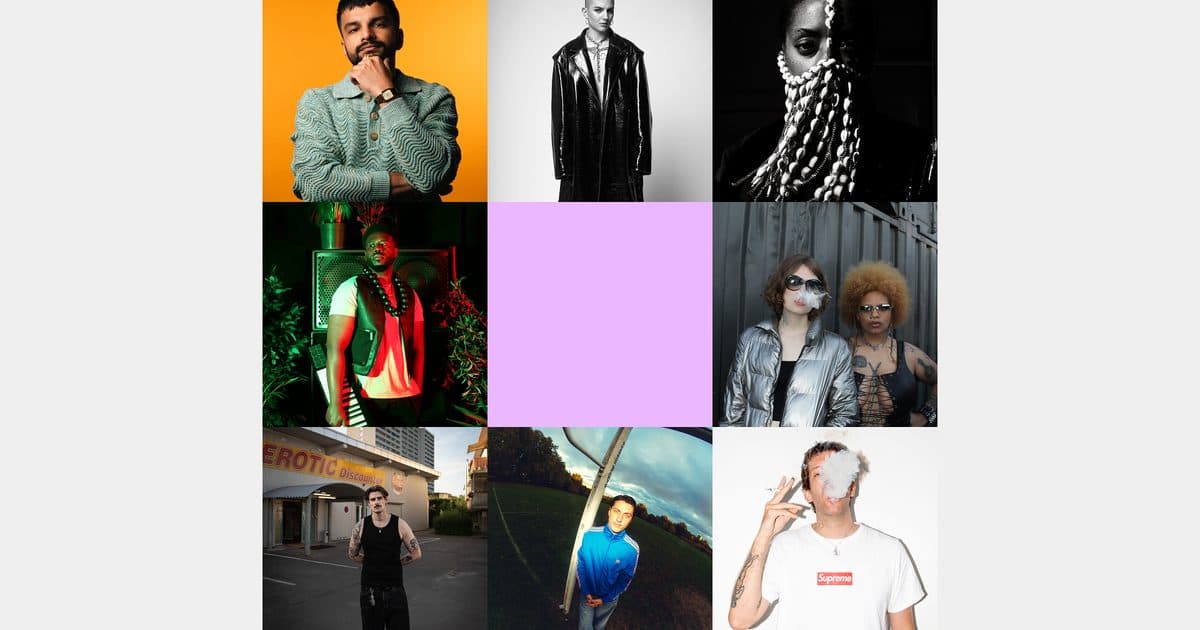
The June 2026 On Our Radar roundup is built like a monthly scouting report, not a casual playlist, and that framing matters here. Beatportal presents the series as a recurring look at DJs and producers it can’t get enough of, which means each artist is being chosen for a specific kind of forward motion rather than simple hype.
In this installment, Asna Asna is the one who feels closest to a breakout. Her work is not just club-functional, it is rooted in a clear artistic stance: raw African rhythms pushed through rave architecture without sanding off the edges.
Bring Back Rave In Town makes the statement concrete
The centerpiece is Bring Back Rave In Town, Asna’s self-released EP on Bandcamp from May 2026. It is a four-track set built around Djeka, Not Your Friend, Co Energy, and Cordão, and Apple Music lists it as a 2026 EP running 13 minutes across four songs.
What makes it hit is the method. Bandcamp frames the project as the result of a long process of research and experimentation aimed at reconnecting raw African rhythms with the essence of rave culture, and that idea comes through in the track design: tight, direct, and built for pressure rather than ornament.
Why Asna’s story lands beyond the headphones
Beatportal links the release to Asna’s frustration with labels that did not value African artists properly, which turns the EP into more than a strong club record. It becomes a response to gatekeeping, delivered through percussion, low-end weight, and a self-directed release strategy.
That is the part minimal-techno listeners will notice fastest. The music is not trying to explain itself with broad genre language; it moves with the certainty of something that knows exactly what it is, and why it needs to arrive on its own terms.
The live résumé already looks global
Asna’s momentum is not theoretical. RFI reported in 2023 that she was born in Abidjan to a Senegalese father and an Ivorian-Senegalese mother, and that she began DJing self-taught in Abidjan roughly eight years before that interview. The same background places her early international visibility at Trans Musicales de Rennes, Afropunk in Paris, Nyege Nyege in Uganda, and Atlas Electronic’s Boiler Room in Morocco.
Resident Advisor describes her sound as a fusion of African drum rhythms with deep basslines and bold electronic patterns, and her booking trail backs that up. She has already played Glastonbury, Fusion, ADE, Rec-Beat, Scopitone, and Paléo, with festival listings now showing Rave in Town dates at Les Escales in Saint-Nazaire on July 24, 2026, and Stereoparc on July 25, 2026.
Bryson Hill’s rise is built on label leverage
If Asna is the most immediate creative statement, Bryson Hill is the clearest example of infrastructure turning into momentum. The London-via-Sydney producer is being pushed through high-impact support from Chloé Caillet, Interplanetary Criminal, KETTAMA, Sam Alfred, MALUGI, and Ewan McVicar, while his Gudu Records release CLUB GUDU 009 and the CLUBGUDU EP help anchor his profile.
That matters because Gudu Records was founded by Peggy Gou in 2019, which puts Hill inside a label ecosystem with real global reach. His CLUBGUDU EP was slated for March 6, 2026, and Electronic Groove also noted his Cassette 97 single after that release, alongside tours of Australia with STÜM and Club Angel and a Hï Ibiza debut, all of which signal a producer already moving through the right rooms.
deBasement brings queer rave abrasion into the frame
deBasement, the Los Angeles queer and trans electropop-bass duo of Margo XS and Alli Logout, pushes the roundup into more confrontational territory. Beatportal’s description of the music as nasty, fun, sweaty, and overdriven lines up with how the project has been received by names like Bambii, Kim Petras, A.G. Cook, Juliana Huxtable, u.r.trax, and Nikki Nair.
Visionary Talent Group says the duo began in September 2024 and has already played Berghain’s Säule and Homobloc in Manchester, while a June 24, 2026 date is listed at Fuchs2 in Prague. The Line of Best Fit adds another layer by tracing the sound back to nightlife histories in New Orleans and Montreal, which gives the project a wider club memory than its bass-rattling surface might suggest.
Firungi turns identity into a club framework
Firungi completes the picture from Brooklyn, where Resident Advisor places him as an artist exploring modern identity through rhythm. Beatport describes him as an Indian American artist, designer, and nightlife developer, and the name itself means “foreigner” in Hindi, which makes the project’s identity work feel baked in rather than added after the fact.
He started the Firungi Funk event series in Seattle in 2021 before moving to New York in 2022, and his label work adds more structure to the idea. Putaria is listed as the fourth release on Fly Foreign Records, while The Foreigner is framed as a project about movement, memory, and identity through global club rhythm, the kind of concept that often translates well when percussion has to carry a set.
Why this roundup feels built for the minimal floor
Taken together, the four artists share a useful trait for minimal-techno sets: they treat rhythm as the argument. Asna’s drums, Bryson Hill’s peak-time pressure, deBasement’s overdriven club-pop, and Firungi’s diasporic rhythm studies all point toward tracks that can travel because they are built to function in a room first.
What makes Asna stand out is that her club utility comes with a sharper narrative than the others. The self-release, the grievance with labels, the African rhythmic core, and the way Bring Back Rave In Town compresses that idea into four tracks and 13 minutes give her the cleanest crossover path, especially now that the project is already moving from Bandcamp into summer festival slots. The drum is still the hook, but this time the politics give it its staying power.
This article was produced by Prism’s automated news system from verified source data, official records, and press releases, then run through automated quality and moderation checks before publishing. The system is built and supervised by the people who set the standards it runs under. Read our full AI policy.
Did this article answer your question?