Bike’s Fried A turns a live modular session into minimal techno document
A 37:32 modular take and a 34-second intro make Fried A feel less like an EP and more like a studio report from White Pillar Workshop.
A release that reads like a workshop file, not a club EP
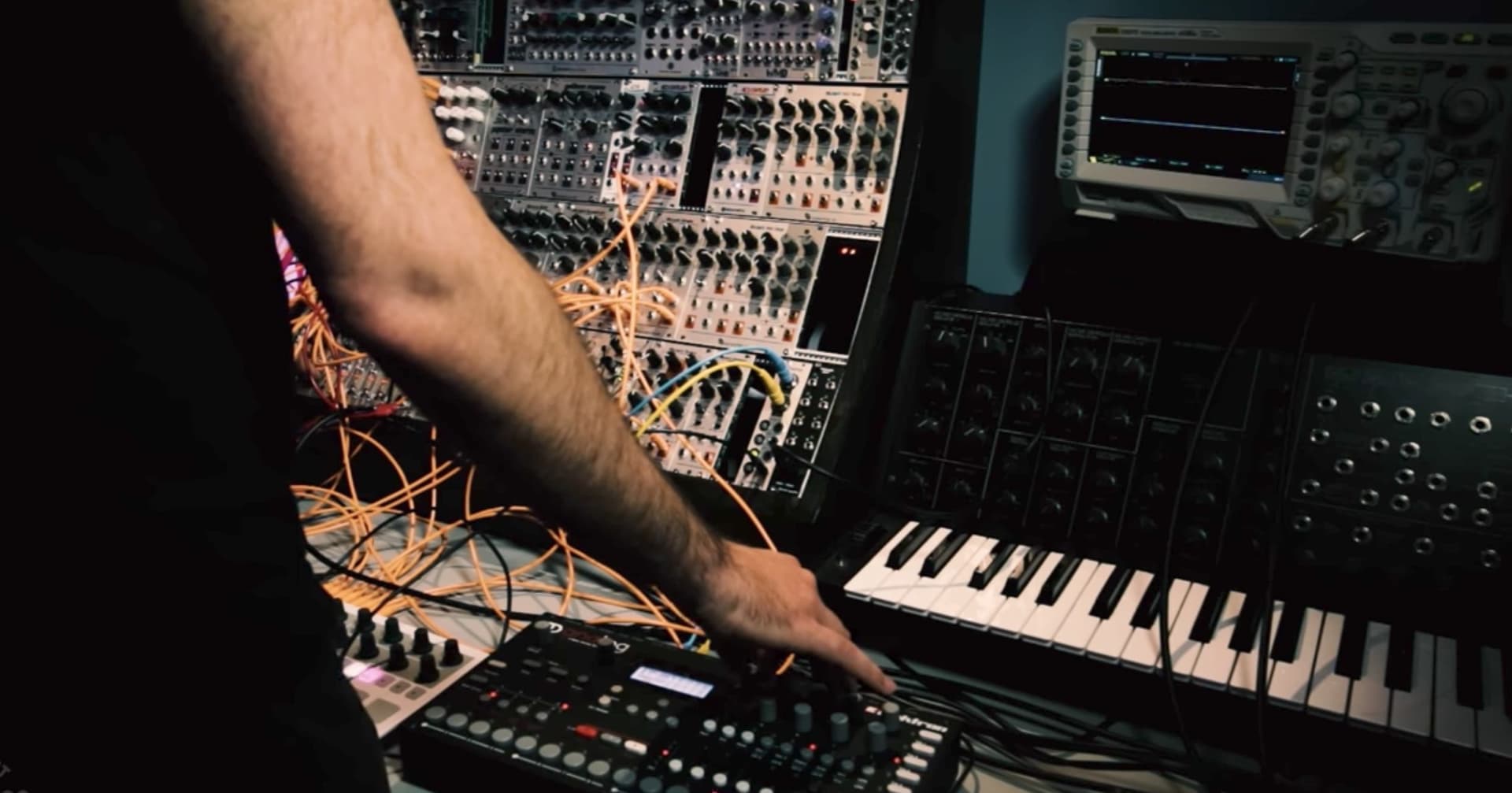
Fried A does not play by the usual minimal-techno rules, and that is exactly why it lands. Instead of a tidy stack of DJ tools, Bike gives you two tracks: a 34-second intro called Bias Flutes and a 37:32 live modular session called Fried A. That split alone tells you this is less about utility and more about process, the kind of document that preserves a system in motion rather than packaging up a few peak-time loops.
That matters because minimal techno has been drifting, in the best way, toward longer-form machine music that behaves more like a living structure than a sealed club product. Fried A fits that appetite perfectly. It sits in the overlap between minimal techno, electro, IDM, modular noise, industrial, acid, glitch, and braindance, and the release’s character comes from that tension: it is functional enough to sit inside the techno ecosystem, but strange enough to feel like a field recording from a private lab.
Why the long track is the point
The main piece is not built around quick payoff. It unfolds as a 37-minute live modular session recorded on September 16, 2025 at White Pillar Workshop, then released on May 1, 2026 as Milieu Music number MML205A. That gap between capture and release matters, because the record feels curated as an artifact, not rushed out as content. The label description says the material explores feedback paths reshaped into percussive systems, and that is the right lens for hearing it: the motion comes from engineering choices, not from a conventional arrangement of kicks and breakdowns.
If you are used to minimal techno as a toolset for mixing, Fried A pushes in another direction. It asks you to listen to how the system behaves over time, how texture accumulates, how a signal chain can become rhythm, and how a live rig can generate its own internal logic. That is the real appeal here. The music is not trying to out-slick a DJ edit; it is trying to make the machine itself audible.
White Pillar Workshop is the story behind the story
White Pillar Workshop gives this release its identity. MusicBrainz lists it as Brian Grainger’s sixth home recording studio, which is a pretty telling detail on its own. This is not a one-off rented-room capture or a disposable livestream rip. It is part of a long-running studio practice, and that history helps explain why these Bike documents feel so specific and so self-contained.
Grainger, who is based in Cleveland, Ohio, has made a career out of music that lives between listening-techno, bedroom ambient, and organic electronic music. Milieu Music has been describing itself that way since 2004, and Fried A sits squarely inside that lineage while still sounding more modular and more exposed than a typical ambient or techno release. The White Pillar setting makes the album feel like a transmission from a working room, not a campaign rollout.
There is also a quiet layer of transition baked into the package. The design uses a photograph Brian took during the move from White Pillar in autumn 2025. That detail changes how the release reads: it becomes a document of a place in motion, not just a performance in place. The studio is part archive, part instrument, part disappearing scene.
The machine list is not decoration, it is the composition
One reason Fried A feels unusually useful to modular-heads is that the release does not hide the gear. The Bandcamp page lists a detailed inventory, including the Doepfer A-126 Frequency Shifter, Mutable Instruments Ripples, Cute Labs Missed Opportunities, After Later Audio Stairs, Strymon Magneto, and six Buchla 200 modules. That kind of disclosure turns the record into a technical notebook as much as a musical artifact.
For anyone tracking the current shape of minimal techno, that machine list is the real headline. It tells you the record was built from signal manipulation, filtering, delay, and Buchla-centered color rather than from a standard drum-machine grid. The result is a form of system music where percussion, space, and feedback are all coming from the same modular conversation.
The master credit goes to The Analog Botanist, the text is by Brian, and the design comes from ABM&D. Those credits reinforce the release’s workshop logic: this is not anonymous software-era product, it is a handmade object with a clear chain of authorship.
Bike has been heading here for a while
Fried A does not come out of nowhere. Bike has already used live hardware improvisation as its core language, and the catalog gives this release a useful frame. In 2018, Occlipse was presented as two lengthy tracks of live hardware improvisation and explicitly described as “minimal and maximal.” That phrase still fits the project well. Bike has always treated the boundary between stripped-down repetition and overloaded machine detail as a productive one.
More recently, BnCx4 was recorded live at White Pillar Workshop on March 14, 2023 using the R-EW Audioholistics modular system, which shows how deeply the workshop has become part of the project’s grammar. Another related release, E560/A-126-2+X, was recorded there on August 15, 2025 and centered on the Doepfer A-126-2 and Synthesis Technology E560 Deflector Shield, with Buchla 245t and 266t modules, Strymon Magneto, and Worng Soundstage in the mix. Fried A extends that streak, but with a more distilled minimal-techno frame.
What it says about minimal techno right now
The important takeaway is that Fried A treats minimal techno as a system, not a genre box. It borrows from electro, industrial, IDM, and modular noise without sounding like a genre exercise, and that is why it feels current. A lot of the most interesting minimal-techno-adjacent music right now is less concerned with DJ efficiency than with preserving the human hand inside machine logic, and this record does that by leaving the process exposed.
Milieu Bandcamp’s broader description of the project as psychedelic electronic music, sun-warmed analog ambient, and sci-fi braindance helps explain the fit. Brian Grainger is not pretending this is a pure club release, and that honesty is part of the appeal. Fried A is a long-form performance document, a studio ledger, and a minimal-techno statement at once. In a scene that often values function first, it is refreshing to hear a record that understands documentation can be the function.
This article was produced by Prism’s automated news system from verified source data, official records, and press releases, then run through automated quality and moderation checks before publishing. The system is built and supervised by the people who set the standards it runs under. Read our full AI policy.
Did this article answer your question?