Curses closes Next Wave Acid Punx with a maximalist club archive
Curses turns Next Wave Acid Punx TROIS into a final, 46-track map of acid, EBM, post-punk and warehouse memory, closing one phase while sharpening another.
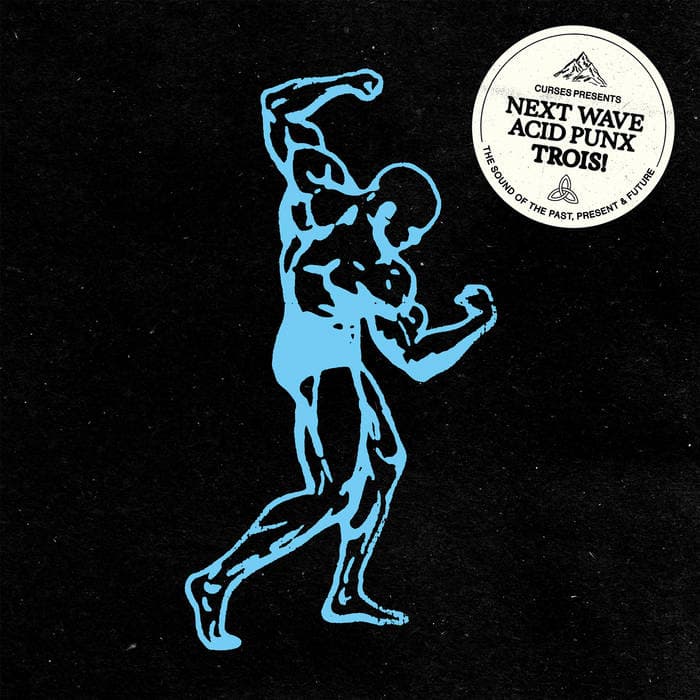
Curses closes a scene archive, not just a compilation
Curses has used Next Wave Acid Punx TROIS to do more than wrap up a series. The final chapter reads like a working map of how acid, post-punk, EBM, new beat and darker club forms keep colliding inside contemporary minimal and underground DJ culture. With 46 hard-to-find, new and exclusive tracks spread across three 2LP chapters and 3CDs, the release is built as a serious listening object, not a quick compilation pass.

That scale matters because the project has always been about more than quantity. The original Next Wave Acid Punx landed in 2021 on Eskimo Recordings as a 38-track three-CD, double-vinyl set spanning nearly 40 years of dark club music. It included 12 brand-new exclusive tracks from artists such as Shubostar, Chinaski and Curses himself, which immediately signaled that this was both a dig through history and a statement about where the scene was headed.
What TROIS says about Curses right now
The useful way to read TROIS is as a closing statement about placement. Curses, the project of Luca Venezia, is sitting at the point where acid line pressure, post-punk attitude, EBM drive and minimal club austerity overlap without collapsing into a single genre tag. Beatportal’s framing makes that clear by treating the trilogy as a personal excavation of punk, EBM, new beat, techno and rave records rather than as a tidy anthology.
That distinction is the key to understanding why the compilation lands with more force than a standard retrospective. The records here are not arranged to prove a taste profile. They are positioned to show how underground dance music actually works in practice: through records that move bodies first and only later get sorted into genre bins. In minimal techno terms, that is the difference between a playlist and an argument.
The sonic markers that define the lane
If you want to place Curses in the current club landscape, the markers are specific. The trilogy moves from late-1970s industrial and post-punk into 1980s EBM, new beat and freestyle, then toward the sounds Venezia plays and makes today. That gives TROIS a darker, more machine-led center of gravity than a pure acid compilation, but it never abandons the physical snap that keeps these records useful in a club.
The atmosphere that emerges is one where punk scenes, warehouse raves, hardcore, gabber, techno, breaks, trance, ambient, drum and bass and industrial all share the same emotional field. That is a strong clue for DJs and listeners trying to understand the record’s function: it is not about clean separation, but about transitions, tension and release. The references to Colourbox, Suicide and Front 242 underline that the project is tracing the line between raw electronic experimentation and the harder edges of club history.
Why the trilogy works as an archive
Eskimo Recordings originally wanted a compilation centered on EBM and new beat, but Venezia widened it into something more personal and historically messy. That expansion is exactly why the trilogy feels alive. It does not present underground music as a sealed-off museum; it shows how records travel between cities, scenes and eras, picking up new meanings in the process.
The 2021 launch already hinted at that ambition by packaging the material as a three-CD, double-vinyl set that stretched across nearly 40 years of dark club music. TROIS pushes the concept further. By the time a compilation reaches 46 tracks across three 2LP chapters and 3CDs, the point is not excess for its own sake. The point is to build an alternate history where the emotional logic of the club matters as much as the formal genre label.
The genre question Curses keeps refusing
One of the most revealing details around the project is Venezia’s attitude toward naming. In a previous Beatportal interview, he said he fears genre labels because once you name something, you kill it. That line explains a lot about how Next Wave Acid Punx has been built: the project refuses to flatten its influences into a single marketing slot, even when the components are easy to identify.
That refusal matters for minimal techno readers because the most durable records in this world are often the ones that sit slightly off-center. They carry enough acid, EBM, post-punk or industrial tension to cut through a room, but they also leave space for interpretation. Curses is effectively curating that space. The trilogy is not saying the categories do not exist; it is saying they were never as neat as the record store wanted them to be.
New York to Berlin, and why that move still matters
Beatportal links the launch of the Curses alias to Venezia’s move from New York to Berlin in 2015, and that detail helps explain why the trilogy feels so geographically aware. New York gives the project its punk, warehouse and early rave memory, while Berlin sharpens its connection to darker, harder and more European club forms. TROIS sits between those poles without choosing one over the other.
Side-Line places the compilation’s world in New York, London, Frankfurt, Valencia and other cities, which broadens the frame from a personal mixtape into a transatlantic club lineage. That matters because the records in this lane rarely belong to just one city. They move through DJs, labels, warehouses and late-night rooms, where a sound can shift from industrial to new beat to proto-techno without needing permission.
How to read TROIS in practical club terms
For anyone trying to understand whether this final chapter marks the end of a phase or the start of a new lane, the answer is a little of both. It closes the trilogy that began in 2021, but it also makes a sharp case for a broader Curses identity: one that treats maximalist club history as material for present-day sets, not just archival listening.
A simple way to hear the project’s place in the scene is this:
- acid gives it voltage
- post-punk gives it tension and attitude
- EBM gives it mechanical push
- new beat and freestyle give it club memory
- industrial and rave culture give it scale and weather
That combination is why TROIS feels less like a curtain call than a well-aimed final room in a larger building. The trilogy ends, but the archive it builds is still active, and Curses leaves it where the best club records always land: ready to be dug back out, played loud, and heard as part of the room again.
This article was produced by Prism’s automated news system from verified source data, official records, and press releases, then run through automated quality and moderation checks before publishing. The system is built and supervised by the people who set the standards it runs under. Read our full AI policy.
Did this article answer your question?