Deep Minimal Techno, the slow-burning sound selectors keep returning to
Deep minimal techno rewards the slow listen: space, restraint, and long arcs turn tiny details into dancefloor gravity.
Why deep minimal still pulls selectors back
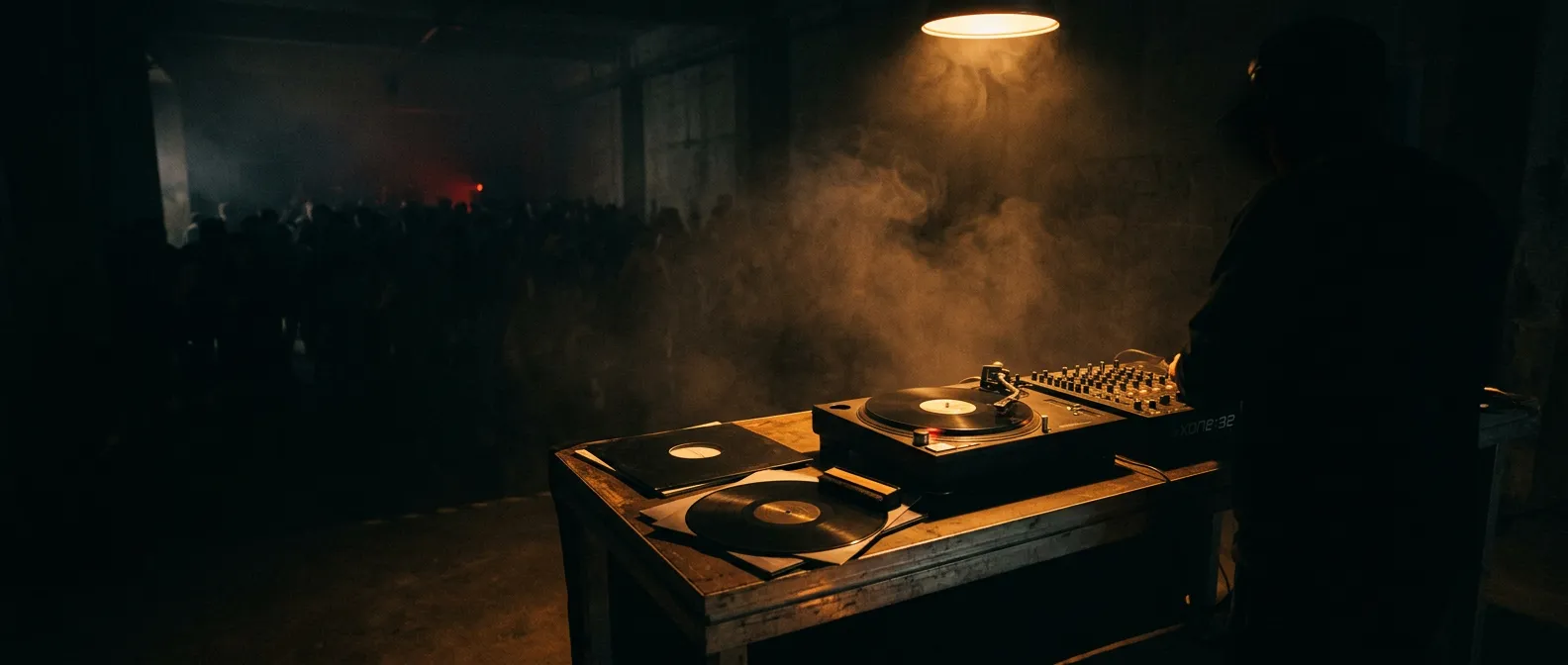
Deep minimal techno is the part of the floor that asks for patience and pays it back hard. It is built on lower-slung kicks, blurred textures, and looping details that do not announce themselves in the first 16 bars, then suddenly feel impossible to ignore after a few tracks, or a few hours. The best part of the style is its discipline: it leaves room for the room itself to do some of the work.
What makes it different from generic background techno is not volume or density, but behavior. A deep minimal record often feels almost invisible at first because it refuses the obvious move, then reveals how much emotional pressure can be carried by one shifted chord, one ghostly percussion loop, or one low-end turn that lands late. That is why selectors keep returning to it for the long transition, the pre-peak corridor, and the afterhours stretch, where small decisions can reshape the whole set.
The sound is about space, not emptiness
The clearest cue is space. Deep minimal techno is not stripped down in a weak sense, where something feels missing. It is stripped down in a deliberate way, where every sound has to earn its place, and the gaps between the sounds matter as much as the sounds themselves. That restraint is what gives the music its tension, especially when the kick stays modest and the arrangement keeps circling instead of sprinting.
Repetition is the other clue, but here repetition is not laziness. In this sound, loops are the engine, and the point is to let tiny changes register over time, not to keep resetting the listener with big drops or dramatic breakdowns. If a record keeps revealing motion without becoming louder or busier, you are probably in deep minimal territory.
Low-end restraint is just as important. The kick is usually lower-slung than in peak-time tools, and the bassline tends to behave like a suggestion rather than a takeover. That makes the music feel less like a command and more like a drift, which is exactly why it can sit inside a long set and keep tension alive without flattening the room.
Detroit gave the genre its grammar
If you want the deep minimal conversation to make sense, start in Detroit. Robert Hood is widely described as one of the founders of minimal techno, and his album *Minimal Nation*, released on January 1, 1994, is one of the defining documents of the style. Hood founded M-Plant in 1994 as well, and that label history matters because it shows how early minimal techno was tied to a clear idea: omission can be as powerful as addition.
That Detroit frame still shapes how people hear deep minimal now. A stripped-back loop is not just a production trick, it is part of a lineage that treats space as structure and repetition as momentum. Richie Hawtin’s Plastikman work and the Minus label belong to that same broader minimal conversation, reinforcing the idea that the style has always been as much about design and restraint as it is about rhythm.
The Romanian strain turned the idea into a scene
The deep minimal language became especially legible through Romanian club culture. Resident Advisor marked 2007 as the moment when Raresh, Rhadoo, and Petre Inspirescu emerged as the brightest young names in minimal techno, and that matters because their work helped turn a sound into a social world. This was not just a matter of records, but of programming, marathon sets, and the patience required to let long-form dance music breathe.
Petre Inspirescu is known for moving between restrained minimal and harder house and techno, and that flexibility is a big part of why his name keeps coming up in any serious map of the style. Priku, meanwhile, has been a member of Sunrise booking since 2007, which places him inside the same ecosystem of selectors, festivals, and long-set culture that made Romanian minimal so durable. These artists did not just adopt the sound, they helped build the conditions that made it make sense.
The labels tell you how the music travels
Labels are where deep minimal stops being a vibe and becomes a catalog. Petre Inspirescu’s *Intr-o Seara Organica...*, released on vinyl in 2009, sits in the period when Romanian minimal was consolidating its international reputation. The release is a useful reference point because it reflects the style’s core qualities: patience, atmosphere, and enough dancefloor utility to work without ever becoming blunt.
Priku’s work around Atipic also shows how the music moved into more formal structures. He runs the Atipic label and the Atipic live project, while Atipic itself is listed as a Romanian label run by Adrian Niculae and established in 2016. That label infrastructure matters because deep minimal has always traveled through a network of DJs, imprints, and festivals that treat subtlety as a strength rather than a compromise.
How to hear the difference in a set
The practical test is simple: listen for what the record does over time. Deep minimal techno usually rewards a set that lets a groove settle before the next layer appears, and it often feels strongest when it is allowed to stretch across transitions instead of being used as a one-track statement. If a tune keeps its emotional weight without leaning on obvious peaks, you are hearing the style at work.
A few cues help separate it from generic background techno:
- Space that feels intentional, not unfinished
- Repetition that evolves through micro-changes
- Bass that supports the groove without swallowing it
- Arrangements that unfold slowly rather than rushing toward payoff
- Textures that blur the edges without turning cloudy
That is why these records can feel ordinary on the first pass and indispensable later. Deep minimal often refuses to grab you immediately, but once your ear adjusts, the detail level becomes addictive. It is music for people who like hearing a room change shape by degrees.
Why it still matters now
Deep minimal techno keeps returning because so much dance music now arrives louder, faster, and more front-loaded. This sound offers something different: a way to hold attention without forcing it, and a way to create intensity through patience instead of impact. In an era where plenty of tracks feel built to peak and disappear, deep minimal still understands how to linger.
That is also why the scene around it remains important. Sunwaves Festival says it has existed since 2007 and has two annual editions on Romania’s Black Sea coast, which gives the style a real institutional home, not just a playlist identity. Recent reports that the festival’s 35th edition in 2025 was meant to be its last in Romania before relocation only underline how fragile, and how deeply rooted, this ecosystem is.
Deep minimal survives because it asks better questions than most club music. Not how hard can this hit, but how long can it hold. Not how fast can it turn over, but how much life can it reveal inside a single loop. That is the reason selectors keep circling back, and the reason the sound still feels like a secret worth learning to hear.
This article was produced by Prism’s automated news system from verified source data, official records, and press releases, then run through automated quality and moderation checks before publishing. The system is built and supervised by the people who set the standards it runs under. Read our full AI policy.
Did this article answer your question?