Maher Daniel’s Splinter Time deepens Cadence Noire’s hypnotic minimal sound
Maher Daniel's Splinter Time feels like a label declaration: Cadence Noire leans deeper, more hypnotic, and built for late-night pressure.
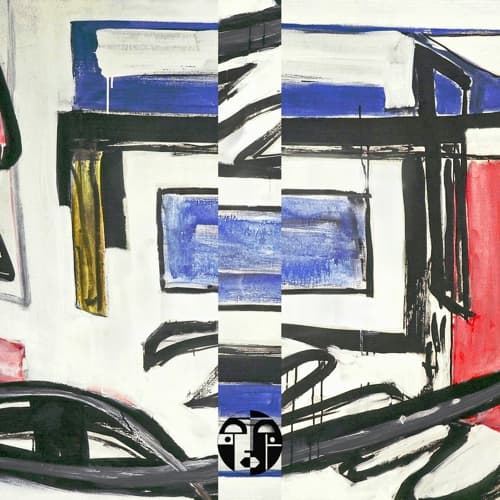
Maher Daniel’s Splinter Time lands less like a routine two-tracker and more like a clear statement of where Cadence Noire wants to live. Released on 12 June 2026 as the label’s eighth cut, it pairs Daniel’s minimal discipline with a label identity built around deeper shades, hypnotic grooves, and organic tension.
Cadence Noire’s direction comes into focus
Cadence Noire describes itself as a Switzerland-based imprint, and its own language gives the release its context: “deeper shades of underground,” a whisper of Cadenza Music, and a launch point in June 2025 under the direction of Guy From Downstairs. That framing matters because Splinter Time does not try to widen the lane, it sharpens it. The record sits inside a catalogue that is still forming its personality, and this EP reads like a marker for how that personality is being defined.
The label’s positioning also points back to a lineage that still matters in this corner of the scene. Cadence Noire presents itself as a continuation of the Cadenza legacy while pushing into more introspective territory, with hypnotic grooves and experimental textures at the center. Splinter Time fits that brief by leaning into restraint, atmosphere, and patient forward motion rather than peak-time punctuation.
A two-track package with a single mood and two paths
The release contains just two tracks, Splinter Time and Cloud Break, and the label describes them as two distinct directions within the same journey. That small format is part of the appeal. In minimal techno, a tight two-track package often says more than a larger compilation because every detail has to earn its place, and here the promise is not abundance but control.
The opening path is described as deep and chugging, which tells you plenty about the record’s function. This is music built on pressure, texture, and a rhythm section that keeps moving without reaching for obvious release valves. The broader wording around the record points to otherworldly spaces, immersive atmospheres, and slow-burn development, all of which suit listeners who want a track to unfold rather than announce itself.
Why the title track reads as a serious DJ tool
Beatport places Splinter Time squarely in Minimal / Deep Tech and Deep Tech, and the title track is listed at 127 BPM, in C minor, with a runtime of 7:35. Those details matter because they reinforce the record’s club logic: steady enough to mix cleanly, long enough to breathe, and harmonically shaded enough to hold tension without turning dramatic.
That 7:35 structure especially supports the label’s “deep, hypnotic spaces” framing. It gives the track room for gradual modulation, which is exactly where minimal records earn repeat plays. Nothing in the description suggests a flashy lead line or a hard pivot; the appeal sits in the subtler work of groove alignment, percussion interplay, and the kind of low-key propulsion that can keep a room locked without raising its voice.
Maher Daniel’s profile strengthens the release’s credibility
Part of what gives Splinter Time extra weight is Daniel’s broader track record. Resident Advisor describes him as American-born Palestinian and notes that he began as a resident at Stereo Montreal, a detail that places him inside a club tradition where long-form DJ craft matters. Discogs lists 27 releases and 106 credits, and its archive shows recorded output stretching back to at least 2007, which makes this latest EP feel like an extension of an established vocabulary rather than a new experiment.
Recent activity also shows why this release lands as part of an ongoing run rather than a one-off. Beatport’s recent catalog includes Daniel’s 2025 collaboration with Ricardo Villalobos on The Other Side, alongside solo minimal and deep-tech releases in 2025 and 2026 such as Analogue Future and Motionless. Read together, those credits suggest an artist actively working the same corridor of sound, and Splinter Time tightens that line rather than changing direction.
What stands out for the minimal crowd
For minimal techno listeners, the appeal here is not mystery for its own sake. It is the clarity of the choices: a two-track set, a defined BPM, a minor key, a long-form club runtime, and a label language that favors immersion over spectacle. That combination gives Splinter Time a strong club-use proposition while also telling you where Cadence Noire is drawing its boundaries.
- The release feels intentionally narrow, not underbuilt.
- The groove language is deep, chugging, and patient rather than showy.
- The label identity and the artist profile both point to the same hypnotic zone.
- The eighth-release slot gives the EP catalogue significance, not just playlist value.
That is why Splinter Time matters beyond the usual new-release cycle. It does not merely showcase Maher Daniel’s command of the minimal form, it clarifies Cadence Noire’s aesthetic in the process. The label sounds more certain of itself with every detail of this EP, and that is exactly what makes the release feel like a marker rather than a placeholder.
This article was produced by Prism’s automated news system from verified source data, official records, and press releases, then run through automated quality and moderation checks before publishing. The system is built and supervised by the people who set the standards it runs under. Read our full AI policy.
Did this article answer your question?