PiNG’s Fragments EP delivers patient, high-fidelity minimal techno
PiNG turns three long cuts into a patient minimal-techno study, with Fragments EP rewarding slow listening, not quick DJ-tool consumption.
A release that refuses to rush
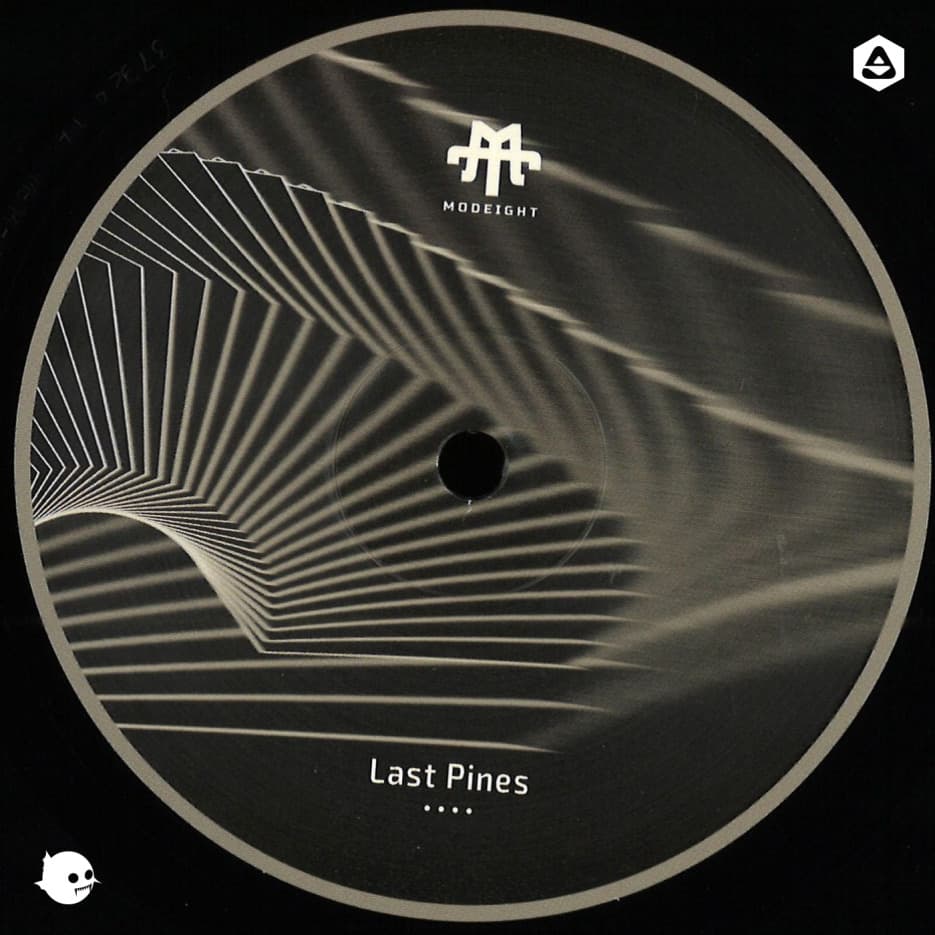
PiNG’s Fragments EP lands as a small record with a big patience requirement. Released on April 30, 2026, it gives you three tracks, Fragment 001, Fragment 002, and Fragment 003, and none of them behaves like the kind of clipped, grab-and-go minimal cut people often treat as a DJ utility. The runtimes tell the story immediately: 11:21, 9:48, and 8:46, which means this is built to breathe, stretch, and settle into a room instead of sprinting toward payoff.
That scale matters because minimal techno and microhouse are so often judged by whether they can function fast, whether they lock a floor in the first minute and move on. Fragments EP takes the opposite route. It feels like a record for people who still care about the long fade-in, the tiny loop mutation, and the way a groove becomes persuasive only after it has had time to expose its seams. The 24-bit/44.1kHz download reinforces that mindset, because this is not presented as disposable club fodder. It is a high-fidelity digital release for listeners who notice texture first and utility second.
Where PiNG sits in the minimal map
PiNG (UK) frames itself on Bandcamp as a Portsmouth, UK project with the tag line “Minimal techno / Micro-minimal,” and that combination is the key to understanding Fragments EP. The record also carries the tags minimal house, micro house, minimal techno, rominimal, and Portsmouth, which places it right in the overlap zone where genre borders get porous and the music starts to depend more on feel than on strict labeling. In other words, this is not a record trying to prove purity. It is a record that lives comfortably in the crosscurrent between microhouse detail, rominimal swing, and minimal-techno restraint.
A Juuz Records release page adds another useful piece of context: PiNG (UK), aka Jay Liddell, is a Portsmouth-based producer with over five years of production experience and the founder of Obscura Records. That gives the project a real working identity, not just a Bandcamp alias. You can hear Fragments EP as the output of someone who has spent time inside the scene’s practical side, where arrangement, mix discipline, and label instinct matter as much as vibe.
The catalog count on the Fragments page sharpens that picture even more. Bandcamp listed 24 PiNG (UK) releases at the time of the page crawl, which is a serious body of work for an artist this focused. The number is the kind of stat that makes people sit up, because it tells you this is not a one-off experiment. It is a long-running practice built around consistency, small refinements, and a very specific sonic vocabulary.
How the three tracks map the style
Fragment 001
At 11:21, Fragment 001 is the clearest statement of intent on the EP. The length alone pushes it toward microhouse’s long-loop logic, where the point is not dramatic change but cumulative pressure, the slow reveal of groove as a living thing. It feels like the most patient cut here, the one most likely to reward headphone listening and the least interested in hard-selling itself to a dance floor in the first 90 seconds.
If you are mapping the record stylistically, this is the track that leans hardest into microhouse and rominimal thinking. The room to develop is what makes it work. Rather than behaving like a strict minimal-techno tool, it reads more like a long-form miniature, where small shifts and subtle edits do the heavy lifting.
Fragment 002
Fragment 002, at 9:48, sits in the middle and acts like the EP’s balancing point. It is still long enough to avoid the “DJ tool” trap, but it trims back some of the sprawl implied by the opener. That makes it the most likely bridge between microhouse patience and minimal-techno function, the track that could keep a mix moving without flattening the mood.
This is where the record’s restraint becomes the most useful. A cut of this length can hold the floor while still leaving space for detail, and that is exactly the zone where PiNG seems most comfortable. If Fragment 001 is the deep inhale, Fragment 002 feels like the controlled exhale, the point where the EP starts to show how sequencing can shape perception as much as individual sound design.
Fragment 003
Fragment 003 is the shortest track at 8:46, but in this context that still counts as extended. It feels like the most minimal-techno-adjacent piece on the record, the one with the sharpest sense of purpose and the strongest chance of functioning as a late-set pivot. Even here, though, PiNG does not collapse into hurry. The track still belongs to the long-form world; it just gets there with a more concentrated arc.
That makes the closing position smart. By ending on the most compact track, the EP tightens the frame as it goes, which gives the whole release a sense of progression rather than repetition. The sequencing moves from the broadest statement to the most focused one, and that arc is a big part of why Fragments EP feels intentional instead of merely spacious.
Why the record works as an ecosystem piece, not just an EP
Fragments EP also makes more sense when you look at what PiNG (UK) has been releasing around it. Bandit EP arrived on March 23, 2026, Kanazawa on April 4, Saigon 2.0 on April 11, and both Vendetta EP and [Redacted] landed on April 30, the same day as Fragments EP. Then SAMPLE PACK - Micro-Minimal Vol.2 followed on May 1, 2026, while SAMPLE PACK - Micro-Minimal Vol.1 by PiNG (UK) [Hidden Circuits] had already appeared on March 8, 2026.
That run tells you PiNG is operating inside a producer-facing ecosystem, not just uploading tracks and waiting. The label page even includes sample packs and earlier releases, and the sample-pack download instructions explain access through a .txt file and Dropbox link. That matters because it shows how minimal-techno identity now gets built from both sides: finished records on one hand, source material and production tools on the other.
The back catalog supports the same reading. Earlier visible releases include Infirmary blues from September 12, 2025, Angel from April 24, 2025, and Chatter from March 3, 2024, all carrying similar minimal-house, microhouse, minimal-techno, and rominimal tags. So Fragments EP is not a sudden stylistic turn. It is the latest clean expression of a sound PiNG has been tightening for years.
What makes the EP worth your time is not just that it is minimal. It is that it understands patience as a function, not a compromise. The record trusts scale, sequencing, and fidelity, and that trust gives the music its strength. In a field full of quick-hit tools, Fragments EP feels like a reminder that the most persuasive minimal techno often wins by taking its time.
This article was produced by Prism’s automated news system from verified source data, official records, and press releases, then run through automated quality and moderation checks before publishing. The system is built and supervised by the people who set the standards it runs under. Read our full AI policy.
Did this article answer your question?