Temporary Permanence returns with two-track Vault II, minimal techno from Sofia
Temporary Permanence turns two tracks into a small archive, tying Sofia to Berlin, Detroit, and dub-heavy minimal techno without mistaking influence for imitation.
The Vault series as a statement
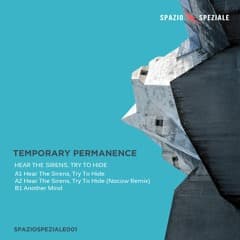
Temporary Permanence makes a two-track release feel like a filing cabinet pulled from the club's working memory. From The Vault II arrived on May 6, 2026 on Spazio Speziale, and as the second edition of the Vault series it reads less like a quick drop than a deliberate act of collection.

That framing matters. When an artist presents current work as an archive, they are doing more than packaging old ideas in a new sleeve. They are signaling that the music belongs to a continuing line of thought, with selection, memory, and discipline built into the concept. In minimal techno, where every detail is exposed and every repeat has to earn its place, that choice can say as much as a twelve-track album.
Sofia as the filter, not the footnote
The geography behind the release gives the record its pull. Spazio Speziale is based in Sofia, Bulgaria, and Temporary Permanence is described as Sofia-based as well, which makes the label and artist feel like a single working ecosystem rather than separate names on a page. That local base becomes especially interesting once the release tags start pointing outward toward Berlin techno, Detroit techno, dub techno, hypnotic techno, and minimal techno.
Berlin and Detroit can function like shorthand in this music, but here they do more than decorate the release with lineage. They set up a triangle: Detroit as source code, Berlin as club-world reference point, and Sofia as the place where those histories are being filtered into a contemporary language. That is a much more compelling statement than simple homage, because it places the artist inside the canon while still insisting on a current, situated voice.
The broader Spazio Speziale catalog backs that up. Temporary Permanence has already appeared there through From The Vault One, released on November 11, 2021, along with Breathless Confessions from March 4, 2019, Les Bleus De Sofia from November 19, 2018, Emotions Runnin High from August 3, 2020, and Zero Otto Zero Otto from September 4, 2020. Seen together, those releases make Vault II feel like a continuation of an existing line, not an isolated experiment.
Two tracks, one compact argument
The record is short, but it is not slight. Repetativ Hinote and While The World Was Burning do the work of a much larger EP by drawing a clear line between reduction and mood. The first title sounds almost like a manifesto for loop logic, which suits a project that leans into repetition without losing grip on the floor. The second pushes the release toward a more ominous, contemporary register, giving the set a present-tense edge that keeps it from sounding sealed off in nostalgia.
That tension is one of the record’s strongest qualities. Temporary Permanence is not trying to reinvent minimal techno so much as to restage its core virtues: deep pulse, controlled motion, and enough pressure in the arrangement to keep tension alive in headphones and in a DJ set. The brevity helps rather than hurts, because two focused tracks can feel more purposeful than a longer release that drifts past its own idea.
For a quick read on how the EP works, it helps to listen for a few things:
- The dub-techno influence, where space and echo shape the groove as much as the drums do.
- The way repetition becomes structure, not filler, especially on a title like Repetativ Hinote.
- The contrast between functional club utility and conceptual framing, which makes the release feel both playable and intentional.
Why the lineage matters now
The archive framing lands more strongly once you place Temporary Permanence’s career behind it. Beatport’s artist bio says his break came in 2015 on FLASH Recordings with the STATIV EP, followed by BARIKADI. That same bio says HEIS received spins from Joseph Capriati during a Fabric London set in April 2016, which is the kind of detail that immediately places the music in the real circulation of the scene rather than in a purely local bubble.
The bio also says he later moved from DJ sets toward live performance using MIDI controllers, samplers, and effects. That shift fits the logic of Vault II surprisingly well. An artist who has moved into live construction is often thinking in terms of systems, layers, and repeatable gesture, exactly the kind of mindset that makes a “vault” concept feel credible rather than cosmetic.
Other biographical descriptions go further, identifying Temporary Permanence as a Bulgarian DJ and producer, a label owner of Spazio Speziale and Raw Roots, and a mastering engineer for DVNTT Records. They also note that his tracks have been played by DVS1, Tommy Four Seven, Joseph Capriati, Richie Hawtin, and Alex Bau. Those names matter because they show the record arriving from an artist whose work has already traveled through serious techno channels, with tastemakers and floor specialists already treating the sound as useful currency.
What this release is signaling
That is why From The Vault II is more interesting than a simple two-track EP might first appear. It is a statement about canon, but not in the museum sense. Temporary Permanence is showing how the canon still moves, how Berlin and Detroit remain active reference points, and how Sofia can function as a site of interpretation rather than imitation.
The best archive projects in dance music do not freeze the past. They show you how the past is being re-read right now, in small decisions about bass weight, echo, repetition, and arrangement. Vault II does exactly that, turning two tracks into a compact proof that minimal techno still lives in the space between memory and motion.
This article was produced by Prism’s automated news system from verified source data, official records, and press releases, then run through automated quality and moderation checks before publishing. The system is built and supervised by the people who set the standards it runs under. Read our full AI policy.
Did this article answer your question?