Uno Technopuro's Zelvuran turns minimal techno into evolving systems
Zelvuran blooms slowly, turning minimal techno into a living mechanism rather than a loop trick. Its 13-track arc rewards DJs and listeners who stay for the long build.

A slow-blooming mechanism
Zelvuran is built for the long inhale, not the instant hit. Uno Technopuro turns minimal techno into something that feels alive, a system that shifts by degrees, where tension accumulates through texture, repetition, and tiny changes that only register if you stay with them.
That approach makes the record feel unusually useful to people who actually work with this music, especially DJs scanning for material that earns its place by movement instead of impact. Thirteen tracks is already a statement, and when most of those cuts live in the six-to-eight-minute range, the album tells you exactly how it wants to breathe: slowly, patiently, and with enough space for the room to change shape around it.
The track list unfolds like a circuit
The release opens with an Ambient Version, then moves into Vaelen, Ventomora, Omnol, Tredoma, Asvara, Tollun, Orborin, Dravuin, Erdona, Nolmeth, and Silence Friction. That sequence matters because it frames the album less as a stack of individual songs and more as a continuum, one section feeding the next without the hard resets that can make minimal techno feel like a functional grid.
What comes through in the structure is continuity. The tracks behave like evolving systems rather than fixed structures, with repetition that stays immersive instead of static and controlled tension that keeps the listener locked in. Even when the music is pared back, it never feels empty; the movement is in the pressure, the resonance, and the way each layer reveals the next.
Why this sits inside the minimal techno conversation now
The record lands in a lineage that has always prized reduction without surrendering momentum. Techno emerged in the United States in the 1980s and became globally popular in the 1990s, while minimal techno took shape in Detroit during the 1990s before a distinct Berlin-bred style later developed. That history gives Zelvuran a familiar frame, but the album does not behave like a museum piece or a nostalgic rerun.
Robert Hood remains one of the genre’s central names, with Resident Advisor once describing him as the man who invented minimal techno, and Daniel Bell is also widely treated as a foundational figure. Zelvuran feels connected to that lineage, but it pushes the idea forward by emphasizing atmosphere, depth, and motion rather than the bare-bones minimalism people sometimes mistake for the whole style. This is minimal techno as living process, not a fixed template.
That distinction is why the album matters to the current scene. It resists the cliché of tiny, empty loops and instead treats repetition as a way to create space. In practice, that means the music can sit in a late-night set and still work at home, where patient listeners hear the changes that a crowded booth or a restless floor might only feel.
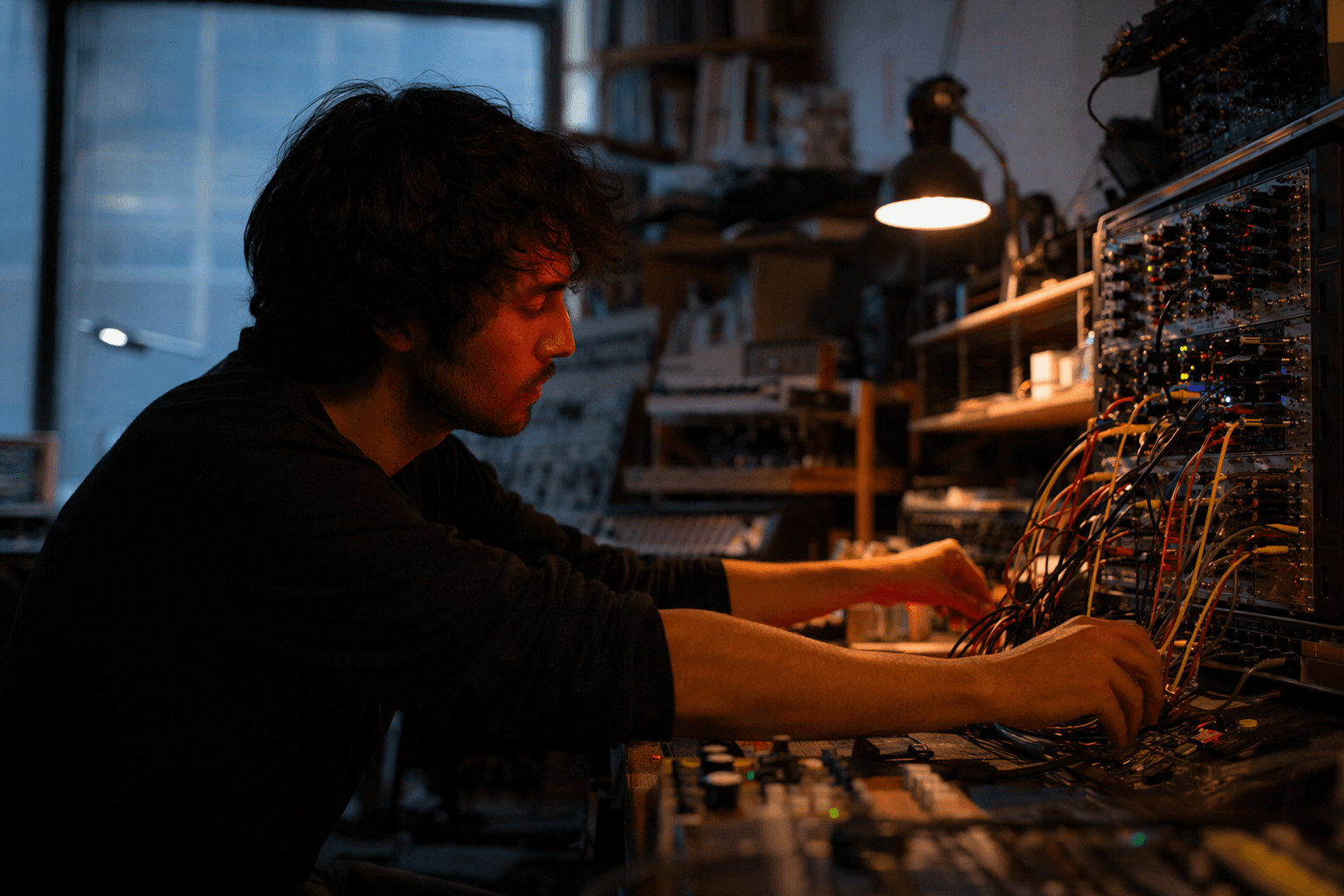
The Helsinki studio behind the shadows
Uno Technopuro brings a very specific profile to that idea. Based in Helsinki, Finland, he describes his sound as ever-evolving minimalism, anchored by low frequencies, dark hypnotic textures, and analog melodies. Resident Advisor’s biography adds another layer, casting his music as shadowy soundscapes where minimalism, tension, and deep frequencies pull the listener into a trance-like state.
The production setup helps explain why the record feels so tactile. His SoundCloud bio lists a hybrid studio built around Logic Pro, a Novation Bass Station 2, a Korg Minilogue XD module, and a Novation Peak, and it also places him on Luminal Records in Berlin. That mix of software and hardware reads less like a gear flex than a method, one that supports the album’s sense of circuitry, pressure, and gradual mutation.
His Bandcamp catalog suggests that Zelvuran is not a one-off experiment but part of a larger working language. Earlier releases such as Haze EP, Lofted EP, The Reality Is Watching Us EP, Koli EP, and Vayrel point to a producer already committed to a particular strain of disciplined, atmospheric techno. Zelvuran sounds like the point where that approach has been refined into something even more deliberate.
How to hear Zelvuran in the room
The best way to approach the album is to stop waiting for it to announce itself. Its power lies in the margins, in the way a pattern shifts after several minutes, or how a low-end pulse changes the temperature of a room without calling attention to itself. That is exactly why it works for DJs, who need tracks that can buy time, steer energy, or hold a floor in suspension without flattening it.
It also explains why the record resonates beyond the booth. Minimal techno at its best can make ordinary time feel elastic, and Zelvuran does that by turning small changes into events. The album’s real achievement is not that it is sparse, but that it makes sparseness feel populated, active, and human.
By the time Silence Friction arrives, the album has already made its argument: minimal techno does not have to be a fixed function. In Uno Technopuro’s hands, it becomes an evolving system, one that keeps mutating long after the first pass, and that is precisely what gives Zelvuran its pull.
This article was produced by Prism’s automated news system from verified source data, official records, and press releases, then run through automated quality and moderation checks before publishing. The system is built and supervised by the people who set the standards it runs under. Read our full AI policy.
Know something we missed? Have a correction or additional information?
Submit a Tip