Kingdom Clash’s five-year evolution shows live-service design lessons
Kingdom Clash’s climb from a 50-level bottleneck to a 10% revenue jump shows why live-service battlers evolve around retention, clans and PvP.
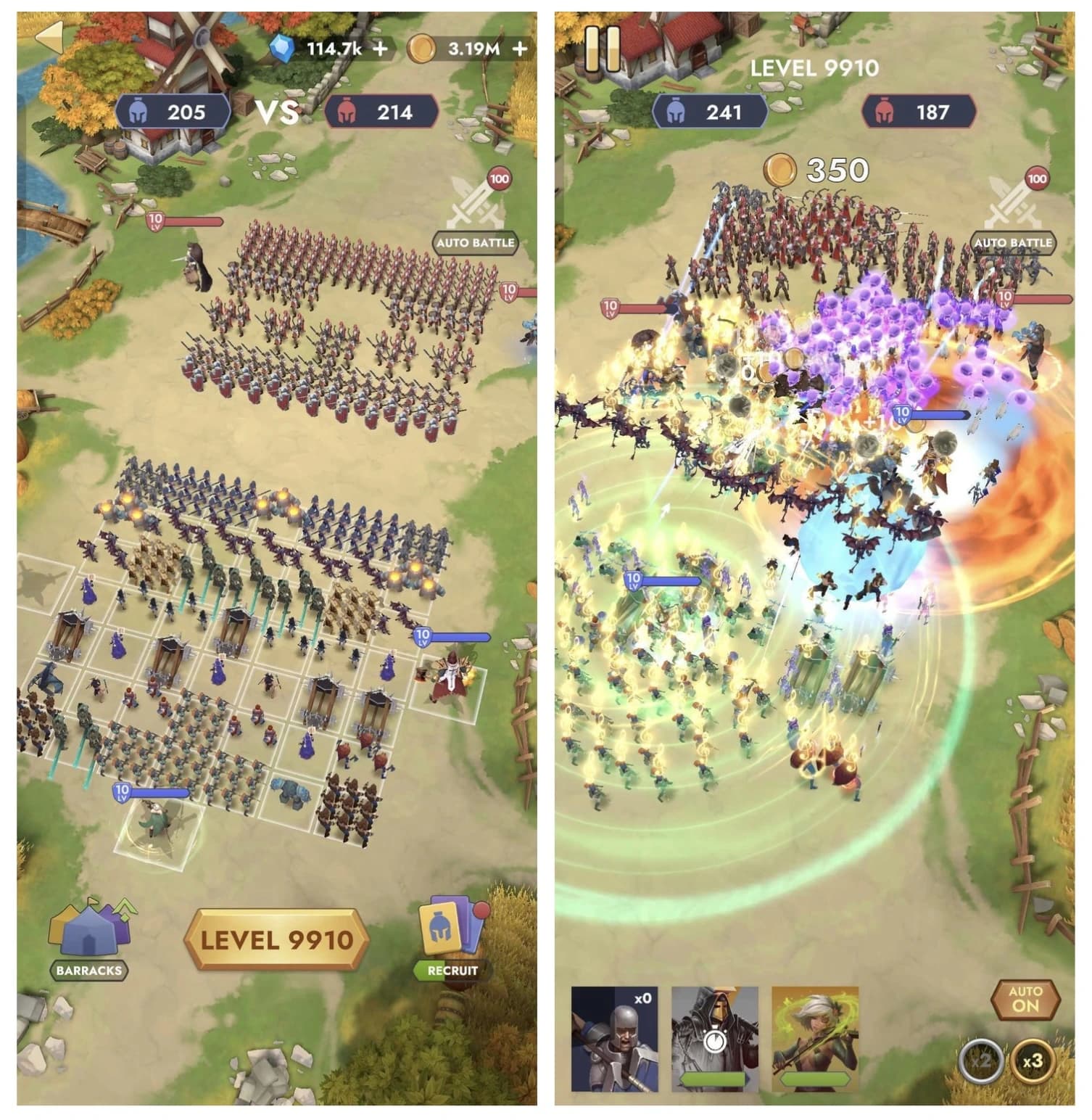
Kingdom Clash has turned a straightforward mobile battler launch into a five-year live-service case study with very practical lessons for anyone who plays kingdom-builders. The game first went global on November 19, 2021, and today it sits on Google Play with 10M+ downloads and about 395K reviews, proof that the project has stayed relevant while continually changing shape.
A launch that was smaller than the game became
What makes Kingdom Clash interesting is how limited it was at the start. It launched without PvP and with only about two hours of campaign content, yet it still posted strong early numbers, including a high R1 and roughly 35 minutes of average playtime. That combination tells you a lot about midcore mobile design: a game can start narrow, but if the first sessions land, the studio gets room to build.
Lev Nazin, a game designer at Azur Games, frames the five-year journey as a string of experiments rather than a straight content expansion. Across dozens of iterations, the team pulled ideas from other battlers, other genres and even PC games, then kept the parts that actually improved retention or monetization. For players, that is the real reason live-service kingdom games often feel slow after launch: every new feature has to justify itself against churn, progression, and spending behavior.
Why pacing mattered more than raw content
One of the clearest lessons in Kingdom Clash is that campaign pacing can be more valuable than simply adding more stages. In the early version, the first 50 levels acted like a tutorial, then players hit a wall where they had to farm or buy boosters. That structure is blunt, but it is also effective, because it creates a well-timed difficulty spike where monetization can happen without breaking the whole experience.
Azur Games says that campaign progression and carefully placed difficulty spikes improved monetization and first-purchase conversion. For kingdom-builder players, that explains why a studio may hold back new maps, bosses or upgrades until it knows exactly where frustration turns into intent. The goal is not just more content, it is better spacing, so the game keeps feeling solvable without becoming trivial.
Clans became the retention engine
If the campaign teaches the basics, clans keep people logging in. Azur Games has said clan systems are one of the biggest drivers of long-term retention in Kingdom Clash, and that lines up with the broader logic of social mobile design: once the core combat loop is understood, community ties become the reason to stay. The studio even noted that veteran players may be bored with the loop but remain active because they do not want to let their clan down.
That is a major signal for the kingdom-builder genre, where guilds, alliances and shared goals often outlive raw progression. Azur’s own clan-focused updates were driven by community demand, which is another reminder that retention features are not always invented from scratch. Sometimes they are simply the systems players keep asking for because they make the game feel like a place, not just a menu.
PvP changed the identity of the game
The biggest pivot came when PvP stopped being a side system and became the center of the game. Azur says that within the first month after release, the PvP arena had become the heart of Kingdom Clash, and not only the main monetization driver but also the main topic of community discussion. Tactics, lineups and army compositions became part of the game’s identity, which is exactly what gives a live-service battler staying power.
That shift mattered because Kingdom Clash did not begin with a huge competitive toolkit. It has grown from a couple of factions and a handful of heroes into a much larger roster with dozens of units and faction identities. The combat system is built around player choice in unit placement rather than a rigid rock-paper-scissors model, so the community was able to invent formations, counter-builds and its own meta instead of simply following a fixed answer chart.
How the meta kept expanding
Once players start solving a battler, developers have to keep giving them new problems. Kingdom Clash did that by adding counterplay over time, including explosive spiders designed to punish assassins that jump into the back line. That kind of addition is easy to miss if you only see the patch notes, but it is exactly how live-service balance works in practice: one dominant strategy appears, then the studio adds pressure points to stop the meta from collapsing into a single answer.
Azur’s follow-up discussions on matchmaking and exploits show the other half of the job. The studio had to keep adjusting balance and systems after release because exploits and uneven matchups could distort the experience, and dead ends had to be cut rather than preserved for the sake of completeness. For players, that is why long-running kingdom games evolve so slowly after launch: every unit, every queue rule and every battle tweak can change how retention, fairness and spending all interact.
The money trail matches the design trail
Kingdom Clash’s longevity is not just a design story, it is a commercial one. Azur Games said in October 2024 that the game was earning around $500,000 monthly while still in active development. Then update 3.0.0 in February 2026 added a second hero slot on the battlefield and reportedly drove an immediate 10% revenue increase, a sharp example of how one well-placed mechanic can still move the numbers in a mature mobile game.
That is the clearest lesson for the mobile audience: live-service design is not about shipping a finished battler and walking away. It is about keeping a working economy alive, then testing which changes improve playtime, spending and community momentum at the same time. Kingdom Clash has stayed in that loop long enough to show how a game can be both old and still unfinished.
The community is part of the product
The game’s Discord server, with 118,687 members, reinforces that idea. Azur uses it for updates, sneak peeks, support and developer feedback, and the studio says player ideas can make it into the game. That is not a side channel anymore, it is part of the development pipeline, which helps explain how a battler can keep adapting long after its first release window is over.
Kingdom Clash’s five-year run shows why mobile live-service games take so long to find their final shape. The campaign had to be paced, the clans had to matter, PvP had to become the center, and the roster had to keep growing until the meta felt alive rather than solved. That slow evolution is the point: in a game like this, launch is only the first draft.
This article was produced by Prism’s automated news system from verified source data, official records, and press releases, then run through automated quality and moderation checks before publishing. The system is built and supervised by the people who set the standards it runs under. Read our full AI policy.
Know something we missed? Have a correction or additional information?
Submit a Tip