Rainbow Six Mobile Ability Tier List Ranks Best Operators for Version 2.0.100
Smoke and Hibana are running the Version 2.0.100 meta in Rainbow Six Mobile, while Recruits and Dokkaebi are the traps eating your unlock credits.
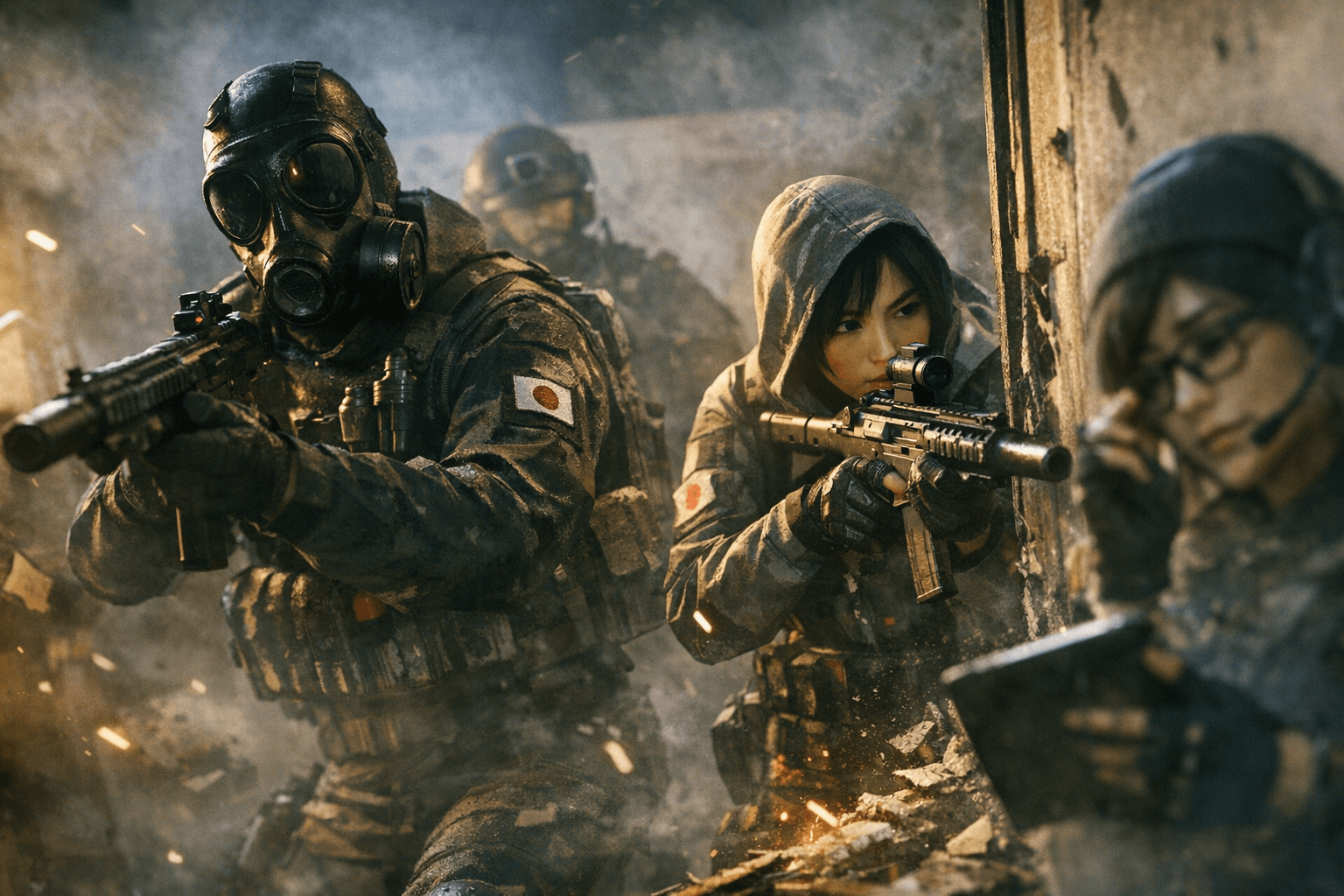
The mobile meta shifted hard with Version 2.0.100, and if you're still picking the same operators you unlocked at launch, you're already behind. The PocketGamer ability tier list, updated April 5, 2026 by Mihail Katsoris, is the clearest snapshot of where the current operator pool stands, and the gap between the top and bottom of the rankings is wider than it's ever been. Here's every ability ranked from must-pick to active liability, with concrete callouts for solo queue, stacked teams, and both sides of the objective.
S-Tier: Lock These In Every Round
1. Smoke (Remote Gas Grenades, Defender)
Smoke is the single best ability in the game for the mobile format. His remote-detonated canisters shut down bomb plants in the final countdown, and on mobile maps where the last push compresses into a single chokepoint, there is nowhere for attackers to hide. If you're in solo queue and your team can't communicate, run Smoke and deny the plant yourself. He's the one operator whose kit works even when your teammates don't.
2. Hibana (X-Kairos Launcher, Attacker)
Hibana's X-Kairos pellets let her open reinforced walls and hatches from a safe distance, meaning she delivers hard-breach value without standing next to the charge waiting to get headshot. On mobile maps with compressed sightlines, that range difference is often a full round swing. She's the safest hard-breaching investment in the roster and the consensus strongest attacker in Version 2.0.100.
3. Ash (Breaching Round, Attacker)
Ash is built for mobile pacing. Her breaching rounds pop barricades and defender gadgets in under a second, and her speed rating lets her reposition after an engagement faster than most operators can react. She's an entry fragger who creates her own angles rather than waiting for teammates to make them. In solo queue, that self-sufficiency is irreplaceable.
4. Bandit (Shock Wire, Defender)
Bandit is among the strongest defenders at denying entry into a room or holding the objective, and Version 2.0.100 hasn't changed that. His Shock Wire charges electrified reinforced walls, forcing attackers to commit utility before they can even think about breaching. On maps with tight defender setups, a well-placed Bandit kit can stall an entire attacking wave.
A-Tier: Strong Picks, Slightly More Map-Dependent
5. Jäger (Automatic Defense System, Defender)
Jäger's ADS canisters automatically intercept and destroy incoming grenades. The gadget is easy to place, does its job passively, and keeps the site clean through the mid-round. He's a recommended starting point for newer players on defense because the learning curve is minimal and the return is immediate. His kit isn't flashy, but it removes an entire category of attacker utility from the round.
6. Thermite (Exothermic Charge, Attacker)
Thermite is the team's hard-breach anchor, and that's the catch. His Exothermic Charge opens the largest holes in reinforced walls in the game, but he needs a Thatcher-style support to clear the wall before placing it and a teammate watching his back while the charge counts down. On maps with one key reinforced entry point, he feels essential; elsewhere he's dependent on coordination that solo queue often can't deliver reliably.
7. Sledge (Breaching Hammer, Attacker)
Sledge punches through soft surfaces silently, opening new lines of fire and flanking routes without burning hard-breach utility. He's one of the best operators for creating chaos on a budget, and his simplicity makes him a strong unlock for players still developing their map knowledge. The Breaching Hammer doesn't expire and doesn't alert defenders to the exact breach point the way explosive charges do.
8. Mute (Signal Jammer, Defender)
Mute's jammers block drone intel and deny electronic gadget activations in the early round drone phase, which is where most attacking teams collect the information they'll base their entire push on. Shutting that down forces attackers into blind gunfights, and blind gunfights favor defenders. His value drops in solo queue when attackers aren't running coordinated drone sweeps, but in a stack he's mandatory.
B-Tier: Situational Picks With Real Ceilings
9. Mira (Black Mirror, Defender)
Mira's Black Mirrors create one-way sightlines that force attackers into awkward angles around the site, and on the right map with the right setup, she feels almost unfair. The problem is "the right map with the right setup." She's site-dependent, punishes her own team's mistakes hard, and loses significant value whenever attackers can flank, vertical-pressure, or simply bypass the mirror side entirely. In a coordinated five-stack with voice comms, she's borderline S-tier. In random lobbies, she consistently underdelivers.
10. Buck (Skeleton Key, Attacker)
Buck's underbarrel shotgun is a vertical play machine, capable of opening floors and ceilings to create angles defenders can't anticipate. The ceiling on his kit is high, but recoil management with the Skeleton Key is noticeably harder on a touchscreen than on PC or console, and vertical play requires map knowledge that takes real time to develop. He's viable, not a priority unlock.
11. Kapkan (EDD, Defender)
Kapkan's Entry Denial Devices farm kills in mobile lobbies where players sprint around corners without clearing. His traps are free kills in the early and mid-round against teams that aren't droning doorframes systematically. The problem is that disciplined teams do drone and prefire, at which point Kapkan becomes just a defender with a gun. His value spikes on doorway-heavy maps and fades fast against organized opponents.
12. Rook (Armor Pack, Defender)
Rook drops an armor pack at round start that lets teammates grab extra plates and increase their effective health pool. It's a real team benefit, but it's entirely passive after placement, and his gameplay becomes pure gunfighting from there. He's a support pick in the truest sense, and on mobile where rounds resolve quickly and rotations are compressed, the armor value often doesn't compound the way it would in a slower-paced game.
C-Tier: Traps That Cost You Rounds
13. Glaz (Thermal Flip Scope, Attacker)
Glaz is the only attacker with a dedicated scope ability, and his HDS Flip Sight lets him toggle thermal vision and pick defenders through smoke. On paper, that's a niche counter-strat. In practice, mobile sightlines are short enough that the long-range payoff rarely materializes before an entry fragger has already won the gunfight closer to the objective. He has his moments, but he doesn't earn a consistent spot in most team compositions.
14. Caveira (Interrogation/Silent Step, Defender)
Caveira's roaming kit depends on stealth, positioning, and opponents making predictable movement errors. On PC, she can be a nightmare. On mobile, where rounds are shorter and map sizes are compressed, her window to isolate and interrogate a target is narrow. The ability ceiling exists, but realizing it consistently in mobile's faster tempo is a genuine challenge.
15. Dokkaebi (Logic Bomb, Attacker)
Dokkaebi hacks defender phones to create noise and reveal positions, a strong anti-roam tool in theory. The issue on mobile is twofold: her primary weapons are DMRs that demand precision tapping on a touchscreen, and her Logic Bomb only delivers round-deciding value when your team actually reacts to the audio cues it generates. In solo queue, that coordination rarely lands. She's an ability built for organized play that finds itself in chaotic lobbies.
16. Recruit (No Ability, Attacker/Defender)
The Recruit is intentionally neutral, included in the game to preserve balance as a zero-ability baseline that every player starts with. The tier list notes Recruits specifically as the weakest options available. They're not a pick, they're a placeholder. If you're still fielding a Recruit in Version 2.0.100 ranked play, the ability update you need isn't in this tier list, it's in your unlock queue.
The Takeaway for Your Next Session
The consistent thread across the entire Version 2.0.100 ability ranking is that team-wide utility beats individual flair on mobile. Smoke, Hibana, Ash, and Bandit don't require perfect coordination to extract value; they generate pressure the moment the ability activates. The operators buried in B and C tier aren't bad operators, they're operators whose kits assume a level of team synchronization that mobile matchmaking doesn't guarantee. Invest your credits where the ability does the work with or without your teammates. That's where the climb happens.
This article was produced by Prism’s automated news system from verified source data, official records, and press releases, then run through automated quality and moderation checks before publishing. The system is built and supervised by the people who set the standards it runs under. Read our full AI policy.
Did this article answer your question?


