Scriver blends word puzzles, deckbuilding and art gallery strategy
Scriver turns word puzzles into a gallery-management roguelike, with 120+ hand-painted artworks and a $4.99 iPhone launch already live.

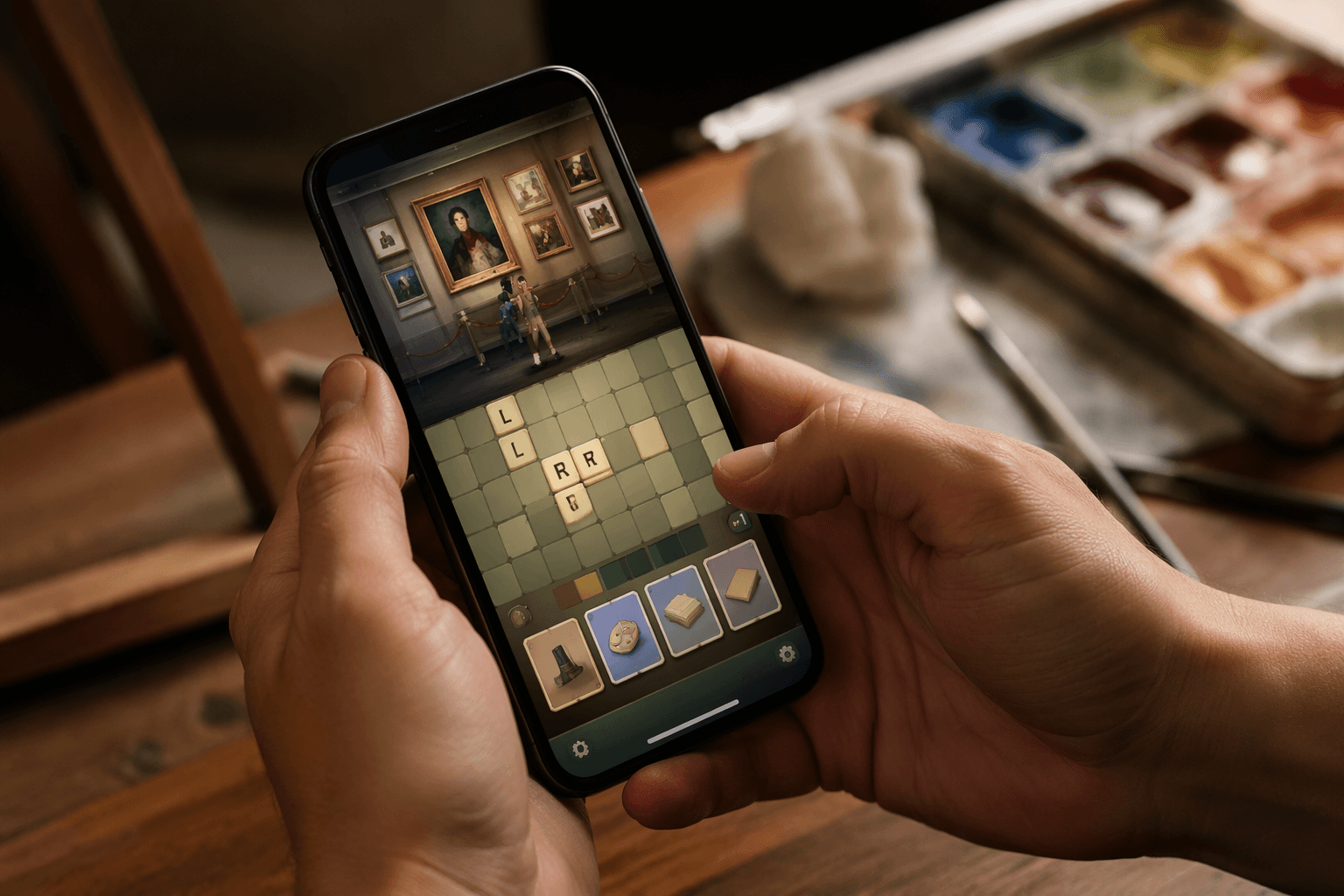
Scriver: A Word Game does not behave like a normal crossword-app time sink. It turns spelling into a gallery hustle, then makes the gallery itself part of the build, so every run is as much about curation and resource management as it is about finding words. That is the big win here: Scriver is trying to drag mobile word games out of the stale “solve board, collect stars, repeat” lane and into something that actually changes how each session plays.
A word game with a real second loop
The core pitch is unusually clean for such a strange mash-up. Scriver is a word-crafting roguelike deckbuilder wrapped around an art gallery management sim, and the gallery side is not there just for flavor. You buy, sell, and arrange artwork in your space, then use those pieces as part of the strategy loop, which means the layout and the collection matter just as much as the board you are spelling on.
That is the smartest thing about the design. A lot of mobile word games run out of steam because the only question is whether you can keep solving the same puzzle type slightly faster. Scriver gives you a different pressure point: the gallery economy. Every exhibit can become a tactical decision, not just a decorative one.
Why the gallery matters in combat, not just presentation
Pocket Gamer’s coverage makes it clear that the gallery is where Scriver separates itself from the usual premium puzzle fare. The game’s cast of more than 25 characters can interfere with runs by stealing art, disabling letters, or otherwise warping the round’s rules. That means a patron or critic is not just a background visitor, but an active threat or modifier that can reshape the puzzle in real time.
That idea gives the game a very specific kind of tension. You are not simply collecting the prettiest pieces and hoping for the best. You are building a room that can survive disruption, and that turns each exhibit into a tactical encounter. For players who like systems that collide instead of sit quietly beside each other, that is the hook.
The buildcraft is where Scriver earns its roguelike label
The deckbuilding side looks substantial enough to support that idea. The press kit describes more than 120 hand-painted unique art pieces, each with abilities and synergies, which gives the collection a visual identity that most word games never even try for. That matters on mobile, where a lot of premium puzzle releases feel interchangeable once you strip away the theme.
Scriver also leans hard into variety across its other systems. The shop is built around 45 items split between drinks, books, and albums, and those categories do different jobs in the build. The press kit says there are 20 books that enhance letters, 15 albums that drastically modify the deck, and 10 drinks that level up word traits, so the run is not just about better vocabulary. It is about how you bend the word system to fit the tools you have assembled.
On top of that, the game brings in 25 exhibit awards and 25 achievements, plus six starting decks and six challenge modes before endless mode even enters the picture. That is a lot of structure for a word game, and it suggests Scriver is built for experimentation rather than a one-and-done campaign.
What you get on iPhone right now
The App Store version is already live, and it is easy to see why this is being positioned as a premium indie oddity instead of a free-to-play grind. It is priced at $4.99, listed as fully offline, weighs in at 274.3 MB, and requires iOS 13.0 or later. The age rating is 4+, which is unusual for a game with this much systems overlap but makes sense for a word-driven puzzle release.
That mobile-first setup is important because Scriver looks like a game that benefits from being self-contained. You can drop into a run without worrying about connectivity, stamina systems, or the usual live-service noise. For iPhone and iPad players who want something they can sit with in chunks, that is a strong pitch.
The only catch is platform reach. Pocket Gamer says the iOS version is out now and there is no Android release yet, while the official press kit points to a Steam release window in Q3 2026. So right now the game is living in that very specific lane of Apple-first indie experiment, with PC still ahead and Android not in the picture.
Who this actually hits on mobile
Scriver is not trying to win over the broadest possible mobile audience, and that is probably why it is interesting. If you want a clean, minimal word game, this is going to feel crowded fast. But if you already enjoy roguelike deckbuilders, collection-driven systems, and games where the economy is the real puzzle, Scriver has enough moving parts to feel fresh instead of fussy.
The audience it can actually win over is the one that gets bored when a word game stops at vocabulary. The hand-painted art, the character interference, the six starting decks, and the mod-heavy shop all point to a game that wants your attention on multiple levels at once. That is exactly what most mobile word games are missing.
Scriver’s biggest trick is that it makes spelling feel like one part of a larger creative machine. You are not just solving a board, you are curating a gallery, managing a deck, and surviving a room full of people who can break your plan. That is the kind of genre collision that can make a tired mobile category feel newly alive.
This article was produced by Prism’s automated news system from verified source data, official records, and press releases, then run through automated quality and moderation checks before publishing. The system is built and supervised by the people who set the standards it runs under. Read our full AI policy.
Did this article answer your question?


