Athearn’s Genesis NSC 6000 gondola targets modern scrap service layouts
Athearn’s Genesis NSC 6000 gondola is a modern scrap car with the right heft, the right hardware, and enough load detail to pull weight on an active layout.
Why this gondola matters
A scrap gondola only earns its place when it looks like it has a job to do, and Athearn’s Genesis NSC 6000 does exactly that. Built around National Steel Car’s late-2010s prototype from Hamilton, Ontario, this HO-scale car fits the newer end of a 1990s-to-present layout and brings the kind of traffic that instantly makes an industrial scene feel current instead of generic.
That matters because scrap service is one of those jobs where the right car changes the whole story. A plain stand-in gondola can move the load, but it rarely tells you where it came from, what it is carrying, or why it is there. The NSC 6000 does all three, especially in scenes built around scrap dealers, steel mills, interchange blocks, and short industrial spurs where modern equipment is supposed to look busy, not nostalgic.
What Athearn is selling
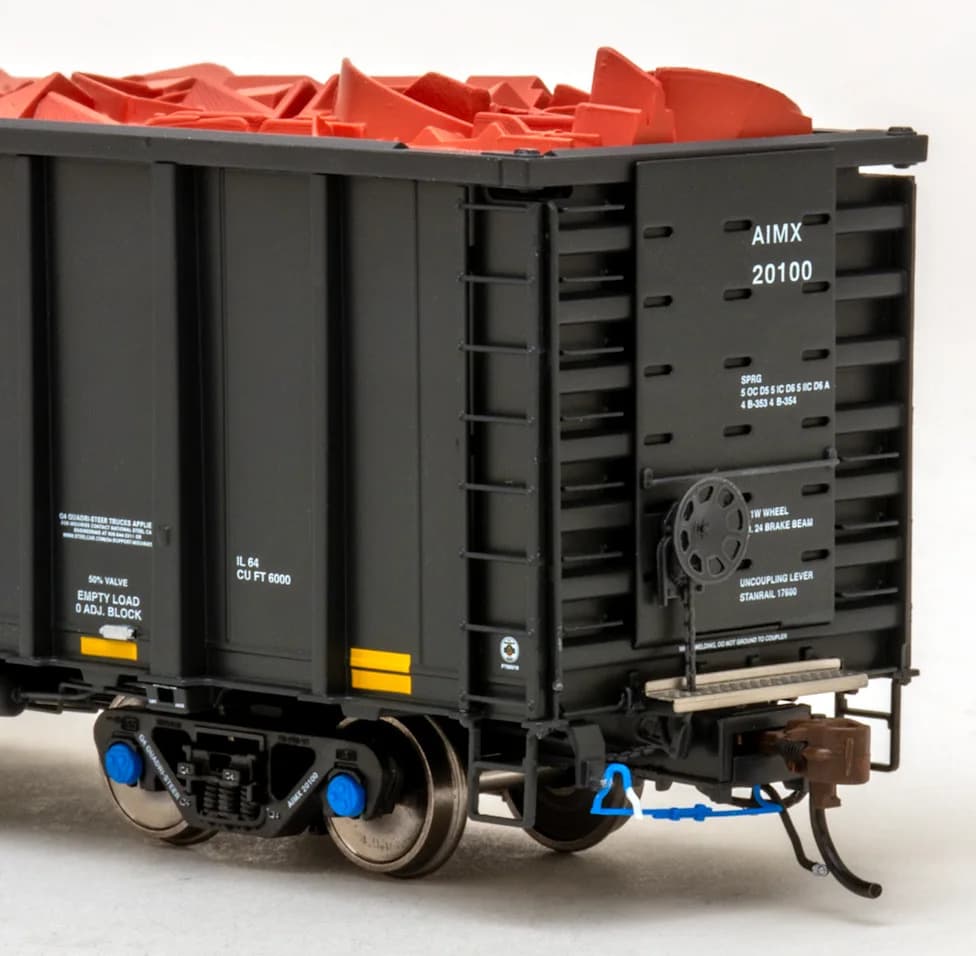
This is a Genesis-series car, and Athearn is treating it like a premium freight model rather than a simple filler piece. The current HO release comes in two-car packs and is offered in American Iron & Metal, IMRX, and Texas-Louisiana Producing & Carbon Co. paint schemes, with six road numbers per scheme. The reviewed example was the American Iron & Metal pair numbered 20100 and 21225, while retailer listings show other pairings such as AIMX 20157 and 20176.
That packaging is a good clue to how the car is meant to be used. A two-pack gives you enough material for a believable local or industry spot, not just a single display car, and the MSRP around $109.99 per pair puts it squarely in Genesis territory. You are paying for tooling, finish, and operating details that are expected to hold up in regular use, not just sit under glass.
The details that make it work
The visual story starts with the body and load. Athearn gives the model a plastic body with a removable scrap load, which is exactly the right choice for a car like this because you can show it loaded, unloaded, or in transition without committing to one static scene forever. That flexibility is part of the value, especially if your layout includes a scrap dealer that sees cars arrive dirty, leave stripped, and cycle back through the yard.
The rest of the hardware is where the model earns its Genesis badge. The car rides on body-mounted McHenry lower-shelf couplers, with plastic side ladders, formed-wire grab irons, 18-hole end panels, plastic crossover handrails, and see-through etched-metal crossover platforms. Athearn also models the Elecon-National handbrake and uses a plastic brake wheel on the B end, while the underframe is built around a one-piece plastic crossbearer that incorporates the center sills, crossmembers, body bolsters, and draft-gear boxes.
That underframe treatment matters more than it sounds. On a scrap gondola, the brake gear and structure are part of the personality, because the car is often seen at rest in places where operators linger over details. When the rigging is visible and the parts look like they belong to a real work car, the model does more than fill a siding. It tells a believable story every time you stop the train.
How it runs on a layout
The running gear is aimed at active service, not just shelf duty. Retail listings identify newly tooled Barber S-2-E 100-ton trucks with animated bearing caps, and the car is weighted to NMRA standards for reliable operation. Athearn and its retailers specify a 22-inch minimum radius, with 24 inches recommended, which makes the car practical for a lot of HO layouts without pushing into specialty territory.
That is important if you actually intend to work the car. A scrap gondola that looks right but behaves badly is dead weight in a switching session, and this one is built to stay in the train. The truck choice, the weight, and the broad-radius guidance all point to a model that is meant to negotiate yard tracks, industrial leads, and short branch trackage with less drama than many high-detail freight cars can manage.
Where it belongs, and where it does not
This is not a generic gondola for any era. It is strongest on layouts that show contemporary freight operations, especially scenes with scrap handling, steel-related traffic, or late-model industrial switching. The prototype’s late-2010s introduction means it fits naturally with the present day and the last stretch of the modern era, while older 1990s settings will need a more selective hand if you want the roster to stay believable.
- a scrap dealer track with loads moving in and empties moving out
- a steel mill or transload scene where raw material traffic needs visual punch
- a local freight working a recycling facility or industrial spur
- an interchange block where one distinctive car signals modern traffic better than a plain generic gon
The payoff comes in the operating scenes it upgrades immediately:
That is where the NSC 6000 beats a stand-in. Its proportions, load, trucks, and brake gear all push it toward a specific kind of service, and that specificity is what makes a layout look lived-in instead of assembled from whatever was handy.
Worth the Genesis price
At around $109.99 for a two-pack, this is not an impulse purchase. It is also not overpriced if you want a car that can pull duty in the active roster and still look good in a close-up consist. The removable load, the etched crossover platforms, the fine grabs, the detailed brake gear, and the right trucks all add up to a model that feels built for modern freight reality, not just photo sessions.
If your layout leans into present-day scrap service, this is the kind of car that changes the track plan from “freight cars on a siding” to “a real operation with a reason to exist.” That is the difference the NSC 6000 makes: it does not just occupy a spot in the train, it explains why the train is there.
This article was produced by Prism’s automated news system from verified source data, official records, and press releases, then run through automated quality and moderation checks before publishing. The system is built and supervised by the people who set the standards it runs under. Read our full AI policy.
Know something we missed? Have a correction or additional information?
Submit a Tip