Bachmann’s On30 trench engine brings narrow-gauge realism to small layouts
Bachmann’s On30 Class 10 trench engine is built for cramped curves, short trains, and hard-working industrial scenes, with military pedigree that adds real prototype pull.
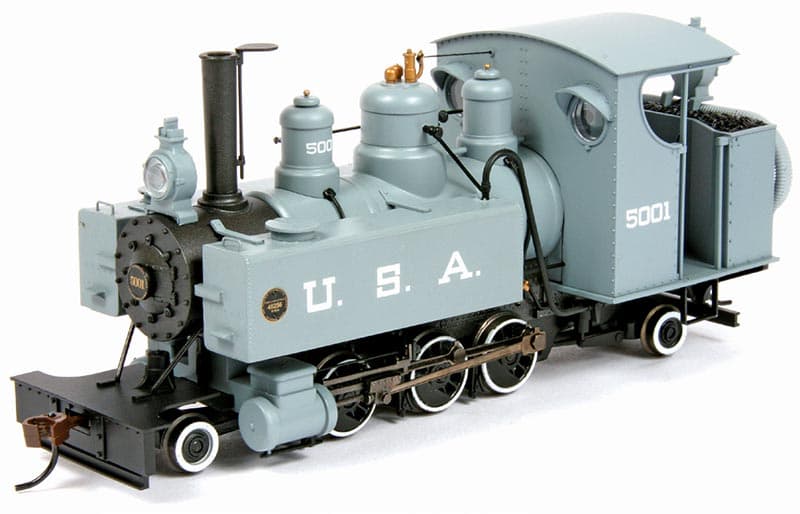
Bachmann’s On30 trench engine answers a very specific layout question: how do you put a believable steam locomotive on a small railroad without forcing the whole scene to look oversized? The 2-6-2T tank format makes that answer easy to understand at a glance. It is a compact, workmanlike engine aimed at short-radius trackage, narrow-gauge atmosphere, and layouts where every inch has to earn its keep.
A small-layout locomotive with a clear job
The Bachmann model is identified in product listings and reviews as an On30 Baldwin Class 10 trench engine, and that matters because the prototype style is built around utility rather than speed. A 2-6-2T tank locomotive keeps its water and fuel on the engine, which gives it the compact footprint that home layouts need. In On30, that footprint carries extra weight because the scale runs 1:48 on HO gauge track, a combination that has long appealed to modelers who want narrow-gauge character without needing sprawling space.
That makes this release especially relevant if your plan leans toward industrial switching, temporary trackage, or a railroad that lives off the mainline. Logging camps, mines, quarries, and light industrial spurs all fit the trench engine’s personality. The locomotive does not just fill a roster slot, it sets the operating tempo for a small railroad where short trains, tight clearances, and rugged scenes feel right at home.
Why the prototype story helps the model
The Class 10 trench locomotive brings more than a compact silhouette. Railroad Model Craftsman points out that the American Expeditionary Force would have been supplied with similar 2-6-2Ts built by Baldwin Locomotive Works for service in France. That detail gives the model a direct military connection, and it opens the door to World War I-era light railway scenes, supply lines, and wartime industrial modeling.
That prototype link is useful for more than historical accuracy. It gives you permission to build a whole operating environment around the engine: temporary track, rough ballast, patched-together structures, mud, weeds, and the kind of weathered equipment that looks convincing in a trench railway or front-line supply setting. If you like reference-photo-driven modeling, this is the kind of locomotive that can anchor an entire scene instead of sitting as a generic steam engine on a shelf track.
What Bachmann offered out of the box
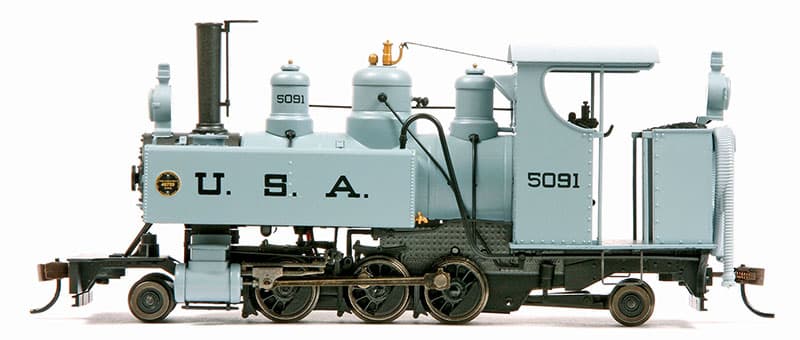
Bachmann’s On30 trench engine came in four road numbers: USA 5001, USA 5091, USA 5153, and QMC USA 1. That gives you some flexibility if you are trying to match a specific railroad identity or simply want a roster with variation. One commonly listed sound-equipped version is Bachmann item 29502, road number USA 5091.
The Bachmann quick start guide describes the locomotive as DCC sound-equipped and featuring WOWSound sound technology by TCS. That is important for operators who want a ready-to-run engine that does not need an immediate electronics project before it can earn a place on the layout. Bachmann’s Spectrum line has also built a reputation for a more refined presentation than basic starter gear, so the model arrives with expectations that go beyond just being a novelty narrow-gauge engine.
How it fits compact trackage and tight curves
The real test for a locomotive like this is not whether it looks good on a straightaway. It is whether it can live honestly on the sort of curves and turnouts that define a small railroad. That is why the Bachmann trench engine drew online forum discussion about minimum radius and running characteristics. Modelers did not treat it as a display piece; they treated it as a candidate for working layout duty, where clearance, curve behavior, and short train lengths are the first questions that matter.
A tank engine in this style is naturally suited to compact trackage because its wheel arrangement and body proportions are built for practical hauling. You can picture it on industrial sidings, mine branches, or rough narrow-gauge lines where the track itself is part of the scene. It is the kind of locomotive that makes sense when the layout plan includes sharp turns, limited run length, and switching moves instead of long, fast mainline runs.
Where the scene potential really opens up
This is where the trench engine earns its keep. Industrial, military, and narrow-gauge modeling all benefit from a locomotive that suggests hard service and limited infrastructure. Steep grades, dirt roads, temporary track, weather-beaten buildings, and rolling stock with visible maintenance scars all fit naturally behind it.
- a wartime supply line with rough track and ad hoc structures
- a logging or mining branch with loads that keep the train short and purposeful
- a quarry or light industrial railroad with tight curves and constant switching
- a micro-railroad where the engine is the signature piece, not just one item in a long roster
You can build toward several believable settings:
That flexibility is a big reason On30 remains such a strong fit for space-limited layouts. The gauge and scale combination allows dramatic scenery and believable operations without demanding the footprint of larger narrow-gauge arrangements.
Why the narrow-gauge press paid attention
The locomotive drew real attention from dedicated narrow-gauge media, which is usually a good sign that a release has room to matter beyond the general hobby market. The Narrow Gauge and Short Line Gazette published a review of the Class 10 2-6-2T Trench Engine in On30 by Bob Brown, while Model Railroad News also reviewed Bachmann’s Spectrum On30 2-6-2T Class 10 Trench Engine. When both narrow-gauge specialists and broader product-review outlets give a model space, it usually means the release speaks to actual operating use, not just catalog appeal.
That attention fits the engine itself. A trench locomotive is not a broad-appeal mainline star, and it does not need to be. Its value is in solving the small-layout problem with a believable prototype, compact proportions, and a clear operating role. If your railroad needs a locomotive that can own a cramped branch, handle short trains, and make an industrial or military scene feel complete, Bachmann’s On30 Class 10 trench engine lands in exactly the right place.
In the end, that is the appeal: it looks like an engine built for work, behaves like an engine meant for tight spaces, and gives a small layout enough narrow-gauge character to feel finished instead of crowded.
This article was produced by Prism’s automated news system from verified source data, official records, and press releases, then run through automated quality and moderation checks before publishing. The system is built and supervised by the people who set the standards it runs under. Read our full AI policy.
Did this article answer your question?