BBC Gardeners' World Live gold medal garden railway tour
A gold medal garden railway at BBC Gardeners' World Live showed how 16mm scale, 45mm gauge, and planted sightlines turn a showpiece into a working layout.
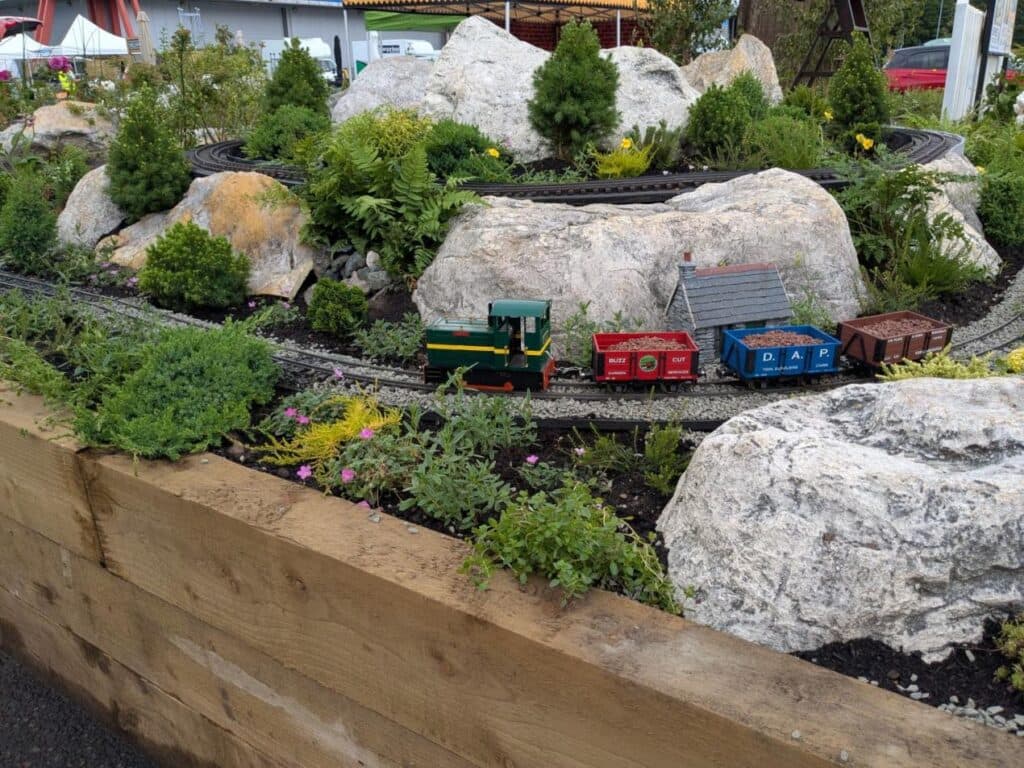
The most useful thing about Trains in the Garden is that it behaved like a working railway first and a showpiece second. At BBC Gardeners' World Live, held 18-21 June 2026 at NEC Birmingham, the gold medal-winning Showcase Garden at stand SC6 ran in 16mm scale on 45mm gauge and carried steam and battery-powered trains through a planted display built for public viewing. That makes it a rare kind of garden railway lesson, where the track, the planting, and the operating plan all had to hold together in front of a crowd.
A scale choice that can carry real movement
The 16mm scale on 45mm gauge is the first thing worth borrowing, because it gives the layout enough presence to feel like a railway line rather than a decorative strip of track. World of Railways’ driver’s-eye-view ride on the last day of the show underlined that point, since the experience was built around motion through the scene, not just a static look from the path edge. When a garden railway can handle steam and battery-powered trains during the same show, it tells you the operating concept was planned with flexibility from the start.
That flexibility is a practical design lesson. A public garden railway has to cope with different power sources, changing weather, and show-day handling, so the line cannot be treated as a delicate ornament. The stronger takeaway is that the Christie layout was designed as an active railway environment, with the scale and gauge chosen to support proper running instead of merely suggesting it.
Track that leads visitors through the planting
Greenfingers Charity described the garden as an interactive working railway that would take visitors on a real train journey, and that wording matches the most useful part of the layout: the route was meant to guide people, not just sit there beside them. The tracks wound through a richly planted landscape, which is exactly the sort of integration that makes a garden railway feel complete rather than pasted onto a flower bed. The line and the planting were doing the same job, shaping how the eye and the feet moved through the stand.
That matters because the plants were not just backdrop. Many of them were to be sold off at the end of the show, which means the display had to work both as a live exhibit and as a temporary horticultural installation. In other words, the planting had to look settled enough for a garden show, but also be practical enough to disappear into a sale once the event closed. That is a very real design constraint, and one modelers can learn from if they ever build for shows, club open days, or temporary public displays.
The charity link gave that planting another layer. Greenfingers Charity builds gardens in hospices and hospitals, so the railway sat inside a wider story about comfort, access, and community use, not just hobby craftsmanship. When a display is carrying that kind of purpose, the plant choices, path edges, and sightlines all need to feel welcoming rather than overloaded.

A build that depended on a wide support network
Andy and Louise Christie of Bournville built the garden with the help of a large volunteer team, and the sponsor list shows how wide the support base was. British Garden Centres, Severn Valley Railway, Brunel Models, Garden Railway Specialists, Footplate, Thrive, CJS Heritage Engineering, Garden Rail Magazine, Black Cat Bridges, and CrossCountry Trains all appear among the named supporters. That mix says a lot about how a serious public garden railway comes together: it pulls from horticulture, preservation, engineering, publishing, and transport culture all at once.
Andrew Christie’s own background explains why the project felt so rooted in the railway world. His interest began in childhood, watching trains near his grandparents’ garden and through the model railways his father built, then grew into a life that combined steam hobbying with professional railway work. CrossCountry’s release described him as a Birmingham-based train driver, and the garden’s BBC listing tied the design to his love of trains, 20 years on the mainline, community spirit, and local heritage. That mix of family memory and working railway knowledge shows up in the way the display was framed, not just in how it looked.
What the gold medal setting adds
BBC Gardeners' World Live is a big stage for a layout of this kind. The 2026 event ran as a flagship summer gardening show with experts, shopping, live entertainment, and show gardens, while the 2025 edition drew more than 90,000 visitors and featured 48 show gardens, showcase gardens, and beautiful borders. In that setting, a working garden railway reaches far beyond a narrow model audience. It sits beside mainstream horticulture and public spectacle, which is exactly why a railway at stand SC6 could win attention from both gardeners and rail fans.
Pro Landscaper reported the garden earned a Gold Award, and event director Lucy Ashworth called 2026 a “bumper year” of horticultural highlights. Taken together with the gold medal framing and the live operating railway, the message is clear: this was not a token miniature tucked into a flower display. It was a public-facing layout that had to deliver on craft, movement, and presentation at the same time.
The strongest lesson from Trains in the Garden is how naturally all those parts fit once the railway is treated as the heart of the scene. The childhood fascination, the mainline experience, the volunteer build, the planted route, and the charity purpose all came together in one stand at NEC Birmingham, and the result was a garden railway that looked alive because it was built to run.
This article was produced by Prism’s automated news system from verified source data, official records, and press releases, then run through automated quality and moderation checks before publishing. The system is built and supervised by the people who set the standards it runs under. Read our full AI policy.
Did this article answer your question?