Kato expands UNITRACK with tighter curves and smarter N scale track options
Kato's new R282 mm concrete-sleeper curve gives N scale plans a tighter inside radius, while a No. 6 electric turnout and 64 mm straights clean up station geometry.

Kato’s May 7 UNITRACK update was aimed straight at the part of N scale planning that usually gets ugly first: the corners, the station throat, and the cramped double-track section that forces too many compromises. The headline piece is the new R282 mm curve, which is meant to sit inside the standard R315 mm radius and give builders a tighter inner path for compact double-track running. That matters most on home layouts, bedroom-sized boards, and Japanese prototype scenes where clean geometry is worth more than a few extra millimeters of scenery.
The real payoff shows up when that tighter curve is paired with the rest of the new concrete-sleeper range. Kato also added a No. 6 electric turnout with 66 mm track spacing, along with 64 mm straight sections and an R718-15° curved piece. Put together, those parts give modelers more control over station approaches, passing loops, and urban or suburban track plans that need to look deliberate instead of improvised. The No. 6 turnout should be especially useful alongside the Suburban Platform DX Island Set, where the 66 mm spacing helps build a more convincing platform area without resorting to awkward filler geometry or custom cuts.
This is not Kato reinventing UNITRACK from scratch. It is filling in the gaps. Kato’s standard straight is 248 mm, its standard curve is R315 mm, and Kato USA already lists a 315/282 mm 45-degree curve piece in the lineup, so the paired-radius idea was already established. What changes here is the look and the planning flexibility: the new concrete-sleeper versions extend that geometry into a more realistic track style, which is exactly where UNITRACK has always tried to sit, between quick assembly and serious operating layouts.
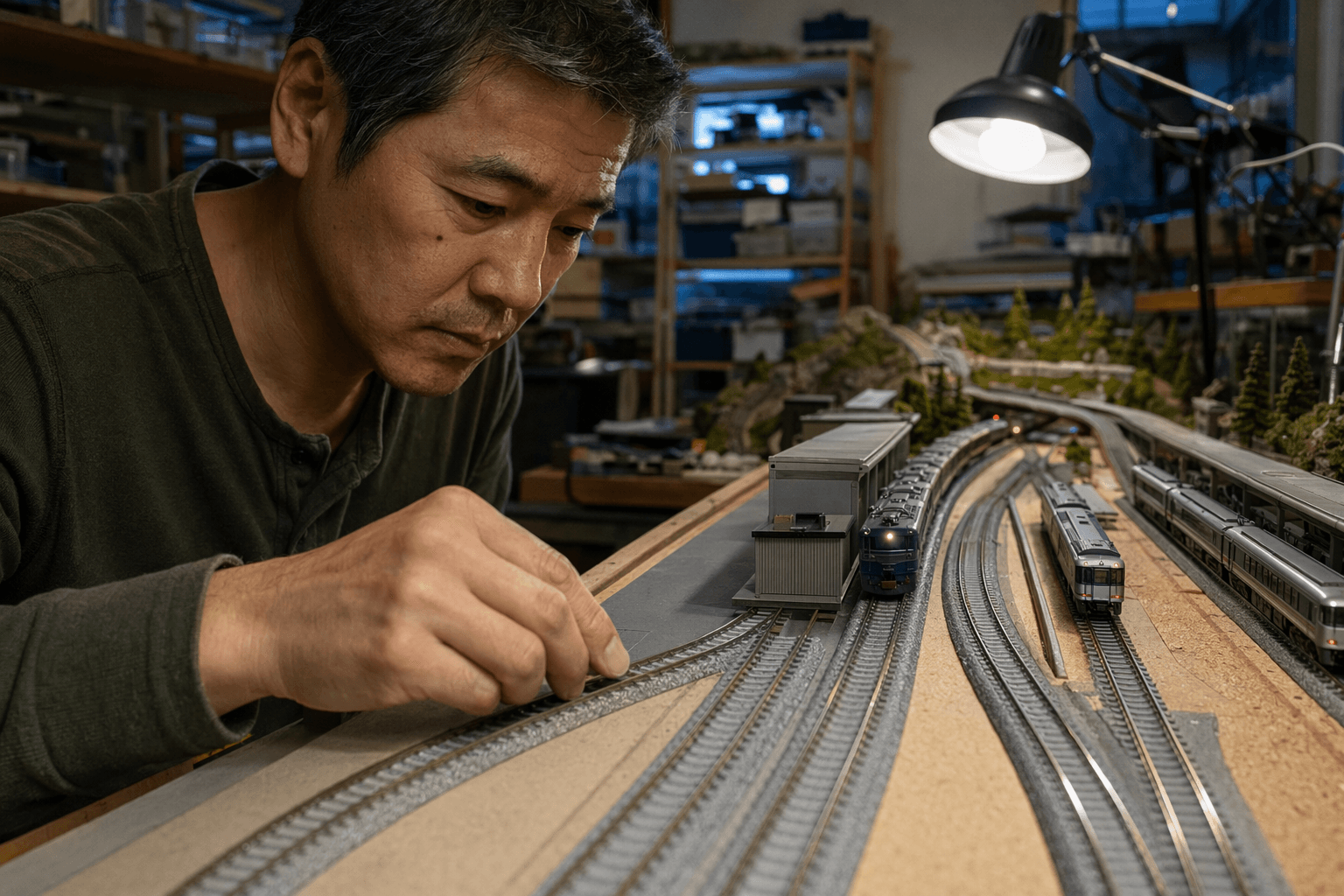
Kato USA describes UNITRACK as using UNI-JOINER connectors and nickel silver rail, which is part of why these additions matter for both temporary and permanent layouts. Fast setup still matters, but so does dependable pickup and a system that does not fight you every time the plan gets tight. These new pieces make the system better suited to compact modern-image layouts, where the difference between a workable plan and a compromised one can come down to one curve, one turnout, or one straight section.
This article was produced by Prism’s automated news system from verified source data, official records, and press releases, then run through automated quality and moderation checks before publishing. The system is built and supervised by the people who set the standards it runs under. Read our full AI policy.
Did this article answer your question?