Kato Japan roundup spotlights N2000 Uwakai, E131 and 211 series N scale trains
Kato’s May roundup put three very different N scale jobs on the same table: a tilting Shikoku limited express, a compact Senseki Line commuter, and a Green Car suburban set.
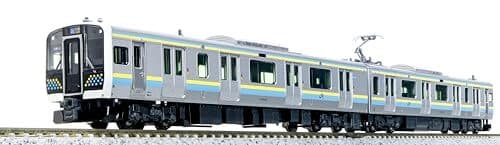
Kato’s May 13 release roundup gave N scalers a clean way to choose a lane: flagship intercity, dense commuter traffic, or classic suburban running. The same announcement covered the JR Shikoku N2000 “Uwakai,” the E131 Series 800 for the Senseki Line, and the 211 Series 3000 for the Takasaki and Tohoku Main Lines, and each one asks for a different kind of layout.
The N2000 “Uwakai” is the one that delivers the most drama in motion. JR Shikoku built the 2000 series for mountainous routes, using a tilting mechanism to keep speed up through curves, and the N2000 is the refined version of that idea. Kato’s modern set reflects the current look with LED headlights, LED destination displays, pre-applied headmarks, replacement headmarks for other services, close-couplers, dummy lead-car couplers, and a slotless motor. If the goal is a flagship passenger train that looks fast even when it is standing still, this is the set that sells that story.

The E131 Series 800 is the opposite kind of pleasure: short, busy, and firmly rooted in commuter rhythm. Kato based it on the N1 formation from Sendai Depot’s Miyagino sub-depot, with ATACS equipment, a non-gangway front, roof antennas, and printed ATACS ID-151 details. The prototype matters just as much as the model. JR East said service on the Senseki Line began on December 1, 2025, after roughly 80 years without a new train introduction, and by the March 14, 2026 timetable revision the line was expected to have 56 cars in 14 four-car sets. On a layout, that means compact platforms, quick turnarounds, and plenty of room to stage crowded local service without needing a giant footprint.
The 211 Series 3000 leans into something older and more suburban, with more visual weight than the E131 and less outright speed drama than the N2000. Kato tied it to the Ueno-origin medium-distance runs on the Takasaki Line and Tohoku Main Line, then anchored the 2026 model in around 2012 with a C8 set and a B2 set. The Green Cars are the hook here: JR East reused them in 2004 from withdrawn 211 and 113 series stock, which gave these formations their unusual look. Kato’s model includes a newly made double-deck SaRo 213, PS33 single-arm pantographs, and selectable original or strengthened skirts, so the train fits a layout that wants longer suburban consists, not just pure commuter churn.
Kato first tooled the 2000 series in 2019 and the N2000 series in 2020, then came back in 2026 with fresh variations. That is what makes this roundup useful: three releases, three operating moods, and three very different answers to the same question, which Japanese passenger train belongs on your railroad.
This article was produced by Prism’s automated news system from verified source data, official records, and press releases, then run through automated quality and moderation checks before publishing. The system is built and supervised by the people who set the standards it runs under. Read our full AI policy.
Did this article answer your question?