Kato Pocket Line brings smooth N scale operation to tiny layouts
Pocket Line turns a desk-sized footprint into a real operating N scale scene, with smooth running, tight curves, and starter sets that make small-space modeling feel easy.
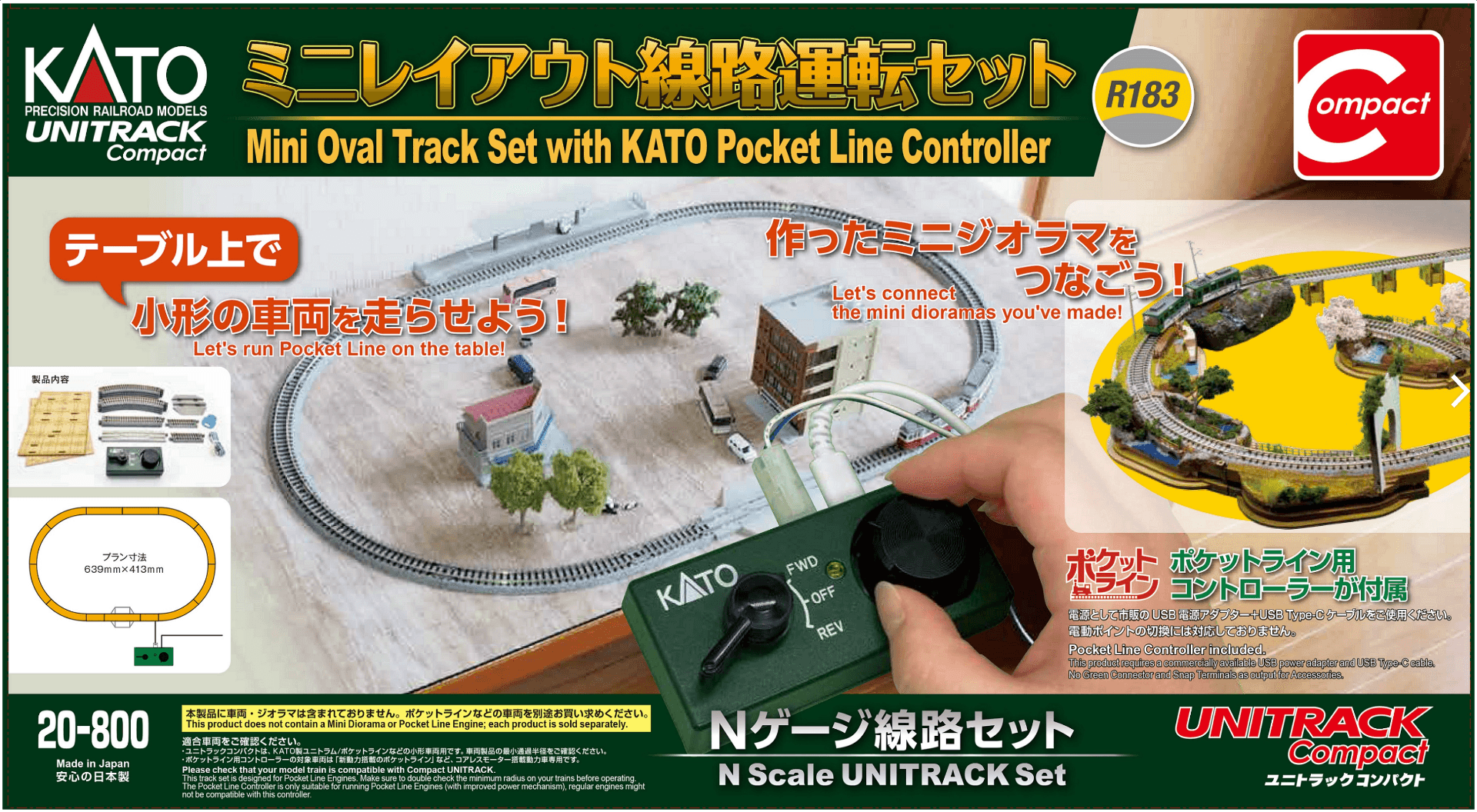
Pocket Line turns tiny spaces into working N scale scenes
Kato Pocket Line is the rare small-scale product that feels built for actual use, not just display. For apartment dwellers, beginners, and returnees who want to get trains moving without committing to a full room, it hits a sweet spot: compact enough for a desk or shelf, but engineered to run with the confidence of a much larger setup.
That matters because the biggest hurdle in N scale is often not the scale itself, but the space around it. Pocket Line answers that problem directly with small engines and mini-trains designed to fit on very small layouts, and Gaugemaster’s recent spotlight makes the case clearly: this is an accessible way into N scale that keeps operation, realism, and affordability in the same conversation.
Why this line works for small-space modelers
The practical appeal starts with how the trains are built. Kato USA says the latest Pocket Line engines use a coreless motor drive with enhanced electrical pickup, which is exactly the kind of engineering that makes a tiny layout feel satisfying rather than fussy. Smooth low-speed running is a big deal in micro modeling, where a locomotive that crawls cleanly through a curve can make a cramped scene feel believable.
Kato also says Pocket Line locomotives can handle small-radius curves of about 5 to 6 inches. That is the kind of figure that immediately changes what is possible on a shelf, a small table, or a narrow display base. Instead of forcing a modeler to enlarge the footprint to get decent operation, Pocket Line is built to work inside the footprint most people already have.
The starter setup is part of the appeal
One reason the range feels so approachable is that it does not ask for a complicated first build. The Kato 20-800 Mini Oval Track Set is recommended for Pocket Line and other small-radius vehicles, giving a newcomer a simple way to go from box to running trains with very little track-laying complexity. Retail listings describe the oval at about 25 inches by 16.25 inches, which is small enough to fit where many N scale layouts simply cannot.
The controller is just as friendly to modern hobby habits. The 20-800 can be powered by USB Type-C with a maximum output of 5V, which lowers the barrier even further for anyone who wants a compact, low-drama setup. Put together, the train, the track, and the power arrangement create the kind of starter package that lets you spend more time operating and less time solving layout problems.
Small does not mean one-note
Pocket Line also avoids the trap of making tiny layouts feel repetitive. Gaugemaster highlights three distinctive themes in the range: a retro-style steam locomotive, a countryside-inspired freight set, and a modern tram. That gives you real scene flexibility without changing scale or making a bigger investment.
The benefit here is subtle but important. A rural freight vignette, a street-running tram, and a nostalgic steam scene all live comfortably within the same compact modeling philosophy, which means you can build for a mood rather than for square footage. For a beginner, that makes the first layout feel less like a technical test and more like a small, complete world.
A layout smaller than A2 is not a gimmick
Kato’s UNITRACK Pocket Line page says its very small track pieces can allow a layout smaller than A2 size, specifically 325 mm by 573 mm. That is a concrete benchmark, and it helps explain why the line lands so well with micro-layout builders. A scene that small can still carry a station stop, a tram loop, a freight spur, or a compact industrial loop, and the trains are designed to look at home in that setting.
This is where the engineering and the storytelling meet. Reliable running on tight curves is not just a technical feature, it is what makes a tiny scene feel finished. A locomotive that glides through the oval makes the whole layout feel intentional, even if the baseboard is barely larger than a placemat.
The range also speaks to collectors and returnees
Pocket Line is not only a beginner gateway. Gaugemaster’s coverage points to two steeple cab locomotives, one in Kato USA orange and one in BR black, available exclusively through the Gaugemaster Collection. That gives the line a collector edge, especially for modelers who enjoy unusual small power and limited-release flavor alongside the practical side of the hobby.
Kato USA says the US-style Steeple Cab Electric was available starting in late July 2021, and it was inspired by 1920s industrial locomotives and Iowa Traction Railway examples. That backstory helps explain why the line resonates beyond its size. It is tiny, yes, but it still nods to real railroading history and to the kind of industrial motive power that gives small scenes their character.
Why this feels like a smart buy, not just a cute one
The strongest case for Pocket Line is value. Train Trax describes the packs as value for money for modellers young and old, and Gaugemaster’s later archive entry reinforces the same idea by framing the series as suitable for Steam Train Passenger Packs, Electric Freight Packs, and even two-coach Tram Units. That combination tells you the line is meant to be used, expanded, and enjoyed, not parked on a shelf.
For a beginner, the payoff is immediate: one small set, one controller, one compact oval, and you are running trains fast. For a returnee, the payoff is equally clear: a low-commitment way back into the hobby that still delivers realistic motion and enough variety to build a convincing scene. For apartment dwellers and anyone modeling on a budget, Pocket Line makes N scale feel less like a compromise and more like a smart starting point.
The bigger takeaway for N scale
Pocket Line succeeds because it solves the hardest part of small-space modeling: it makes the layout feel operational without asking for more room, more money, or more complexity than necessary. The coreless motor drive, enhanced pickup, tight-radius capability, compact track options, and ready-made themes all work toward the same goal.
In a hobby that often rewards patience and space, Pocket Line offers something rarer: a way to start confidently today and still end up with a scene that looks and runs like a real model railroad.
This article was produced by Prism’s automated news system from verified source data, official records, and press releases, then run through automated quality and moderation checks before publishing. The system is built and supervised by the people who set the standards it runs under. Read our full AI policy.
Did this article answer your question?


