KATO unveils HO EF65 1000, JR coaches, Pocket Line, Hiroshima tram additions
KATO’s EF65 1000 JR gray-rubber set lands in September 2026 at ¥26,400, but the broader story is how the lineup now serves both first-time layouts and serious JR-era builders.
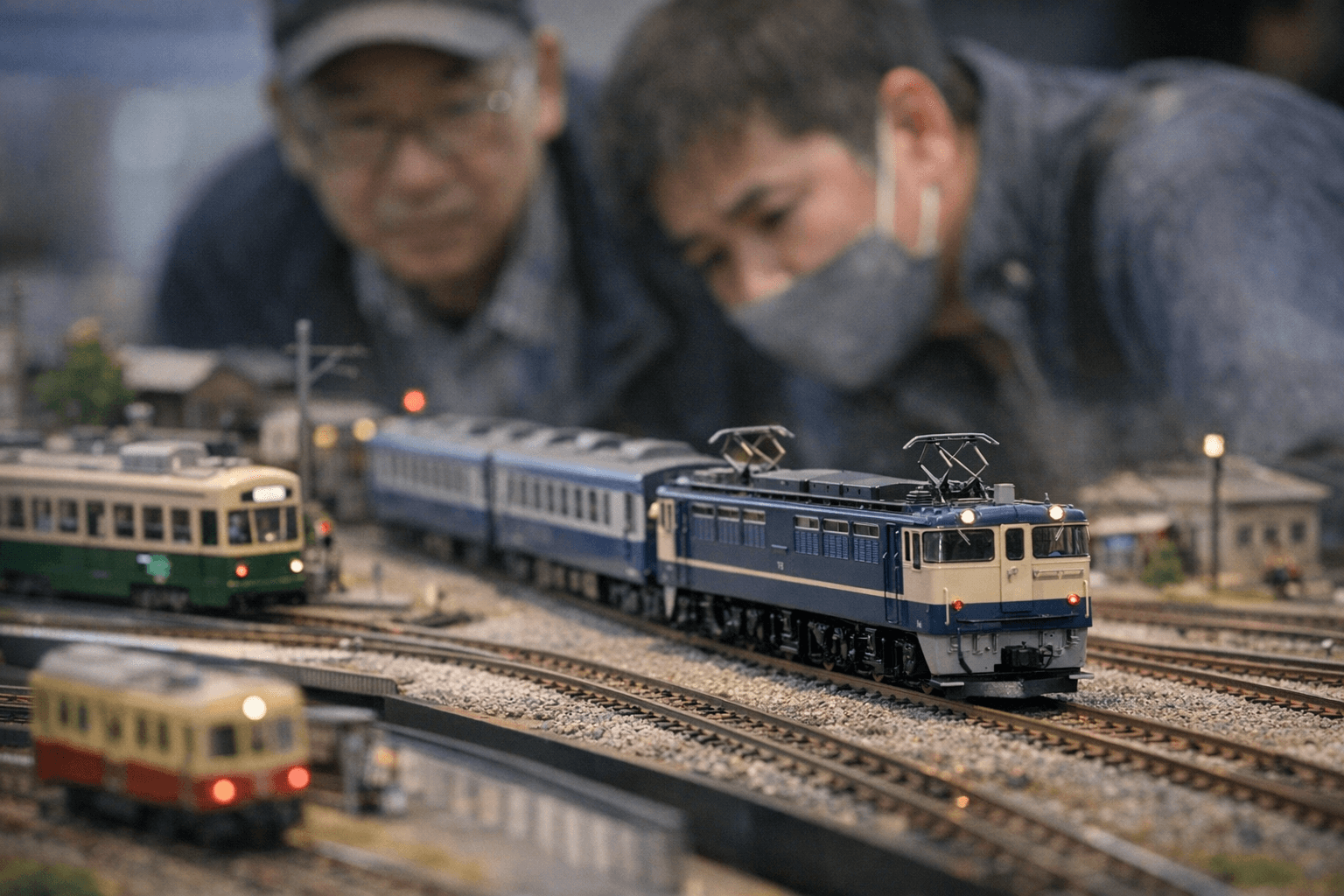
KATO’s latest announcement was not just a fresh batch of catalog items. The real signal was how deliberately it split the market: one side aimed at beginners building tight, workable layouts, the other at modelers chasing a specific JR-era prototype with exacting details. The post drew more than 1,200 likes, which makes the reaction almost as telling as the release list itself.
The headline item for serious Japanese HO fans is the EF65 1000 in JR gray-rubber trim. KATO dates the real EF65 1000 series to 1969, when it entered service as a general-purpose DC electric locomotive for both passenger and freight work on Japan’s flat electrified routes. The model itself is scheduled for September 2026 and carries a price of ¥26,400. KATO says this version is based on locomotive 1103 in the early 1990s, with gray H-rubber, no snowplow, a PS22 pantograph, LED headlights, DCC support, selectable number plates, and quick headmarks.
That matters because this is the kind of release that changes buying plans. It is not a vague “EF65” in a general livery. It is a specific JR-era machine tied to a specific prototype and then linked directly to HO 14-series seat cars and HO 24-series stock on KATO’s own product page. In other words, KATO is not just selling one locomotive. It is nudging layout builders toward a complete, believable formation.
The same announcement also folded in the HO wra1 freight car in fresh tooling, plus flex track and a rerailer, which are the practical pieces that often decide whether a layout actually gets built or stays a box of plans. Those are not flashy releases, but rerailer track and flexible sections are the kind of accessories that make a shelf-size layout less frustrating and far easier to finish.
On the smaller end, Pocket Line remains KATO’s clearest entry point for new builders. KATO describes it as a compact series for very small layouts, with an improved mechanism and better slow-speed running. KATO USA frames it the same way, as an affordable line of small engines and mini-trains built for tiny footprints such as Compact Track and UNITRAM. That is where the Hiroshima tram fits naturally, since KATO’s UNITRACK system already leans into street-track options for city scenes.
Taken together, this is KATO doing two jobs at once. It is feeding advanced JR-era collectors with a very specific EF65 1000 and matching coaches, while also giving new builders a compact tram-and-Pocket Line path that can fit on a small table and still look like a real scene.
This article was produced by Prism’s automated news system from verified source data, official records, and press releases, then run through automated quality and moderation checks before publishing. The system is built and supervised by the people who set the standards it runs under. Read our full AI policy.
Did this article answer your question?