Menards substation and Walthers SW1 headline model train roundup
A utility substation, an updated SW1, a prototype-driven GP9, and a 40-foot boxcar make this roundup unusually useful for real layouts.
The parts here actually change a layout
A weekly hobby roundup only earns its keep when it gives you something you can use on the bench, not just something to admire in a catalog. This one does exactly that: Menards brings a finished O-scale utility scene, WalthersMainline brings a hard-working HO switcher, WalthersProto brings a more exacting road diesel, and WalthersMainline fills in the freight-car roster with a classic steel boxcar.
Menards’ substation is the kind of scenery piece that saves time
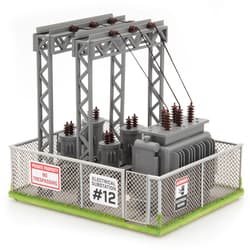
The Menards O-scale Electrical Substation No. 12 is the sort of release that matters because it removes one of the most tedious jobs in layout building. Instead of assembling transformers, bushings, cooling fins, insulators, cables, a chain-link security fence with gate, and warning signs from scratch, you get a ready-to-use lineside structure with all of that visual clutter already baked in.
That matters most on an O-scale layout where a single scene needs to carry a lot of visual weight. The model is unlit and sits on a scenicked base, so it is not trying to be a special-effects piece. It is trying to look like real utility infrastructure, and that is the right call. A substation like this can anchor an industrial edge, back a yard, or give a trackside scene the sort of lived-in detail that makes a big-scale layout feel finished rather than empty.
Menards also continues to position its train line as a source of O-gauge buildings, cars, vehicles, and other accessories, which is exactly why pieces like this land well. If you are trying to build out an O-scale environment without fabricating every pole, panel, and fence post yourself, this is the sort of accessory that earns bench space fast.
WalthersMainline’s SW1 looks built for operators, not just collectors
The WalthersMainline EMD SW1 is the release in this batch that feels most directly aimed at day-to-day layout work. It comes as a one-time run in standard DC and ESU Sound & DCC versions, and the road list is broad enough to cover a lot of operating eras and railroad interests: Milwaukee Road, Amtrak, Boston & Maine, Chicago, Burlington & Quincy, Chicago & North Western, New York Central, and Southern Ry.
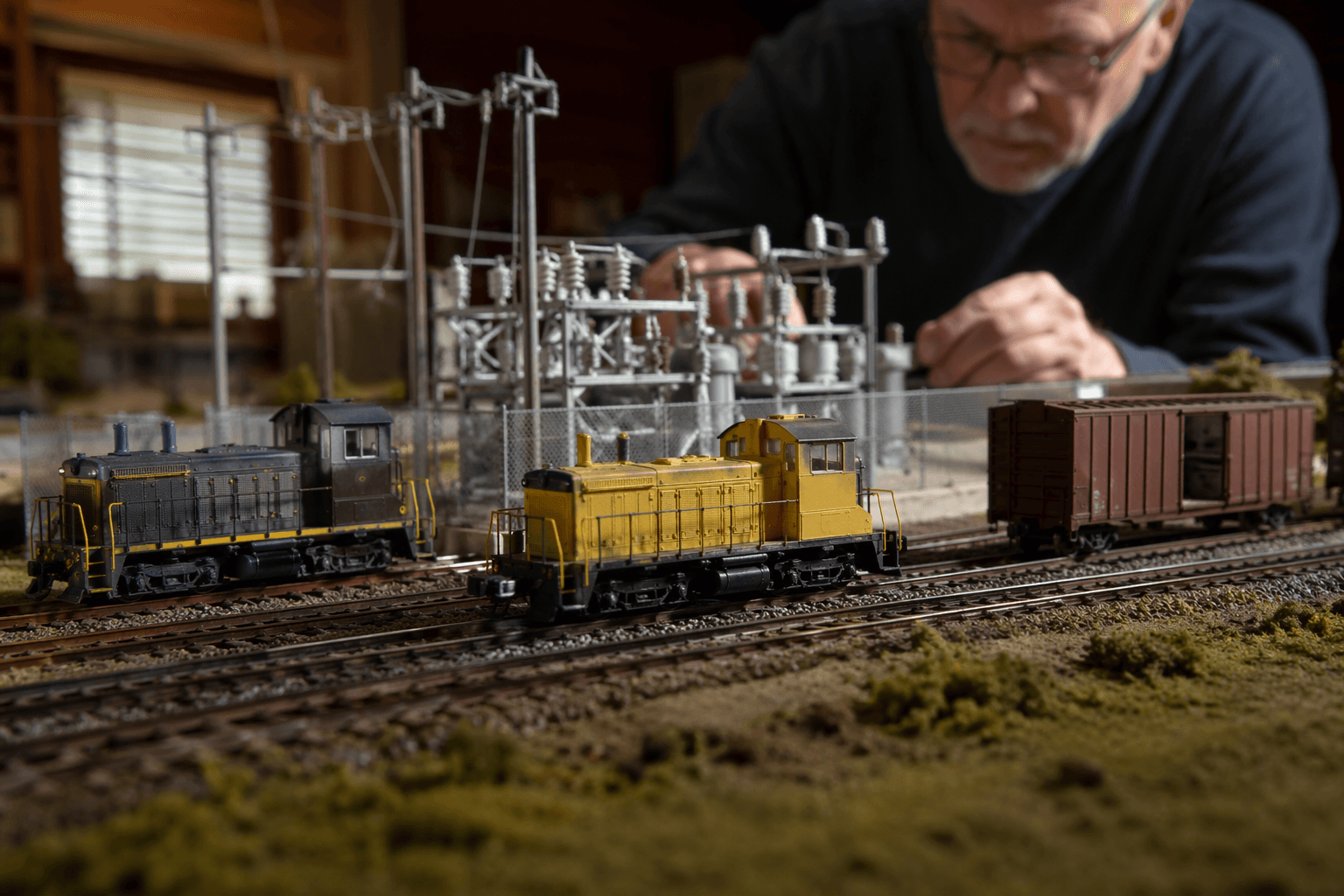
That spread is useful because the SW1 is not a one-note museum piece. It is a classic end-cab switcher, and that makes it a natural fit for yards, light industry, and short-line style operations where a small locomotive still has to do real work. Walthers has pushed the detail and mechanism side hard here too, with updated tooling, wire grab irons, photo-etched lift rings, warm-white constant-direction LED headlights, a 14:1 helical gear drive, a 5-pole skew-wound can motor, a heavy die-cast underframe, RP-25 turned metal wheels, and Proto MAX metal knuckle couplers.
The sound-equipped version adds factory-installed ESU sound and DCC, with dual-mode DC and DCC operation plus selectable air horns and bells. That is the kind of specification that matters to operators, because it means the locomotive is not being sold as a shelf queen with a speaker. It is being sold as a practical switcher that should run cleanly, pull predictably, and fit into a roster that actually sees service.
The GP9 pushes deeper into prototype territory
If the SW1 is the straightforward workhorse, the WalthersProto EMD GP9 Phase II is the one for modelers who care about the exact railroad and the exact version. These models are based on prototypes built from 1955 to 1957, and the road selection shows how far Walthers is leaning into road-specific credibility. The lineup covers Western Maryland chopped-nose units, C&O, C&NW, Penn Central, and Southern Pacific, with both DC and sound-equipped options.
The Western Maryland version is especially interesting because Walthers says it is based on shop-modified chopped-nose units. That matters in HO because the difference between a generic GP9 and one that captures a railroad’s altered nose profile is the difference between “close enough” and “that’s the one.” Revised tooling and road-specific details make the case that this is not just another GP9 body shell in a new paint scheme. It is built to satisfy modelers who notice whether the prototype was changed in the shop and whether the model reflects it.
In layout terms, that makes the GP9 a better fit than the SW1 when you need a more substantial road engine. It suits freight jobs, secondary mainline work, and mixed-era consists where the engine itself is part of the story. The premium HO market lives or dies on that kind of fidelity, and Walthers is plainly leaning into it here.
The 40-foot boxcar is the quiet piece that broadens the roster
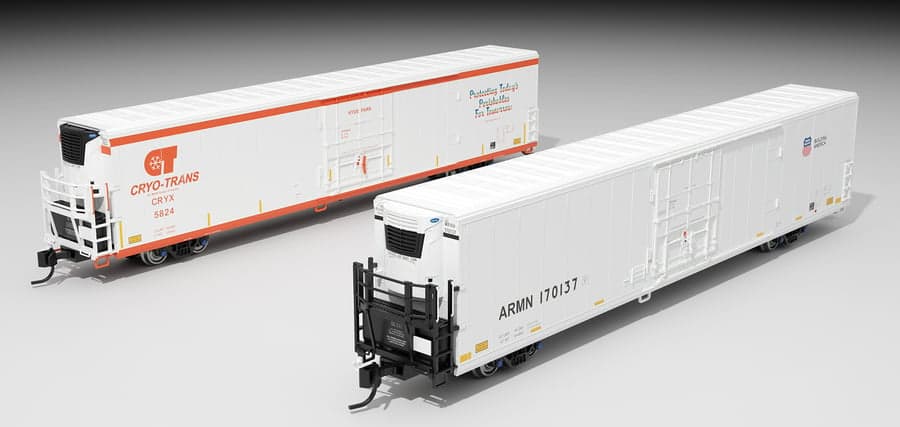
The WalthersMainline 40-foot steel boxcar with Murphy ends is easy to overlook next to two diesels, but that would be a mistake. Freight cars like this are what make a roster feel believable, especially when the paint schemes spread across different roads and operating eras. This run includes Pennsylvania RR, Delaware, Lackawanna & Western, Missouri Pacific in Merchandise Service, Michigan Central with New York Central herald, Nickel Plate Road, Northampton & Bath, New York, Susquehanna & Western, and Union Pacific.
That kind of spread gives you flexibility without forcing the layout into one narrow window. A boxcar is not just filler when it is correctly tied to a road name and a freight identity that matches the era you are building. The Murphy-end body style gives the car enough character to stand out in a train, and the paint choices make it useful whether you are modeling classic transition-era traffic or a later roster that still leans on older equipment.
The real value is the mix
What makes this roundup worth a hard look is not any one item in isolation. It is the range. The Menards substation solves scenery, the SW1 solves switching, the GP9 solves road power, and the boxcar solves fleet depth. That is the kind of week that quietly improves a layout from multiple angles at once, and for model railroaders, those are the releases that actually change what can go on the track.
Know something we missed? Have a correction or additional information?
Submit a Tip