Cornell class teaches beginners how to forage safe wild mushrooms
Cornell’s small Franklinville mushroom class shows beginners what a real foraging course teaches: local species, hands-on ID, and safety first.
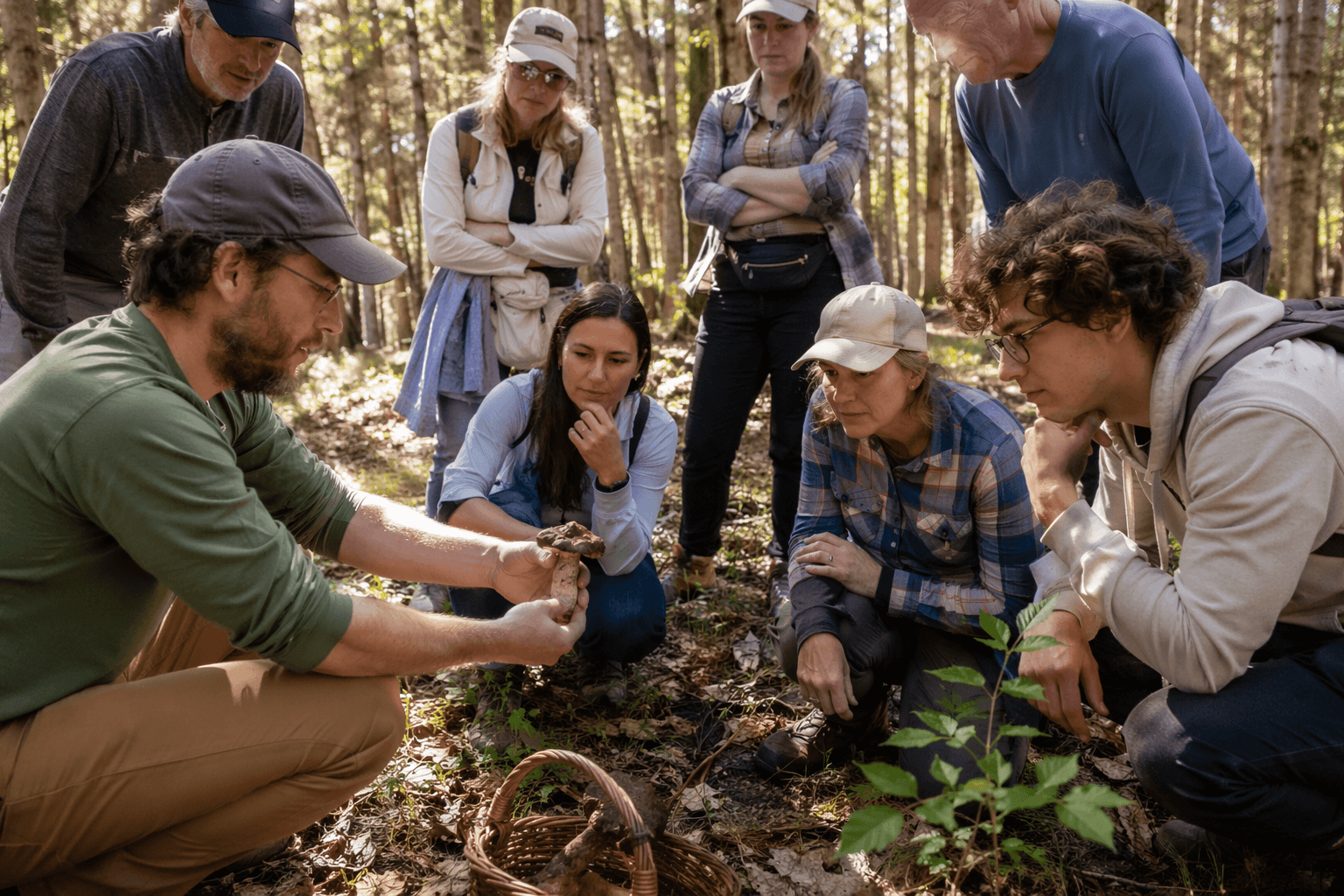
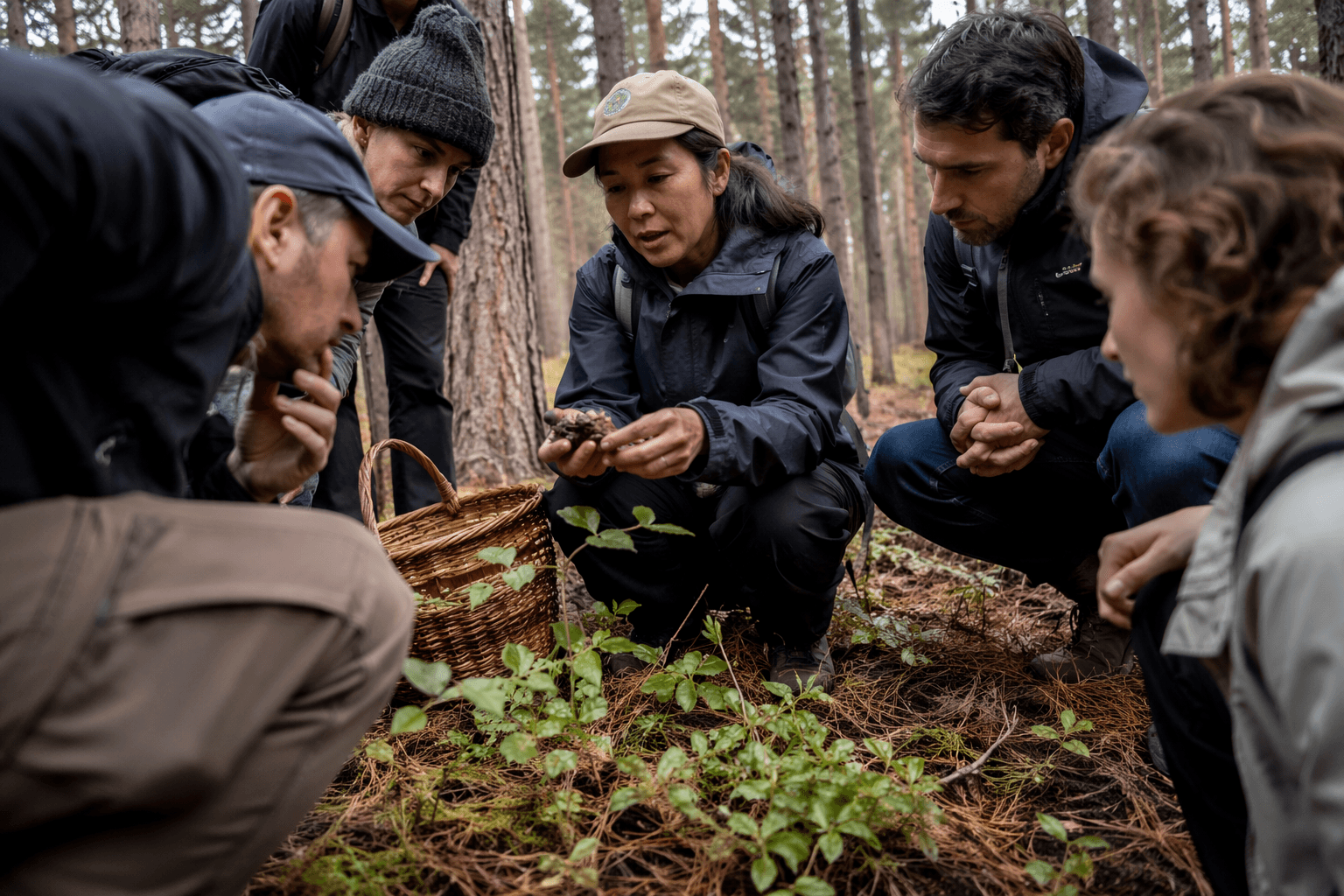
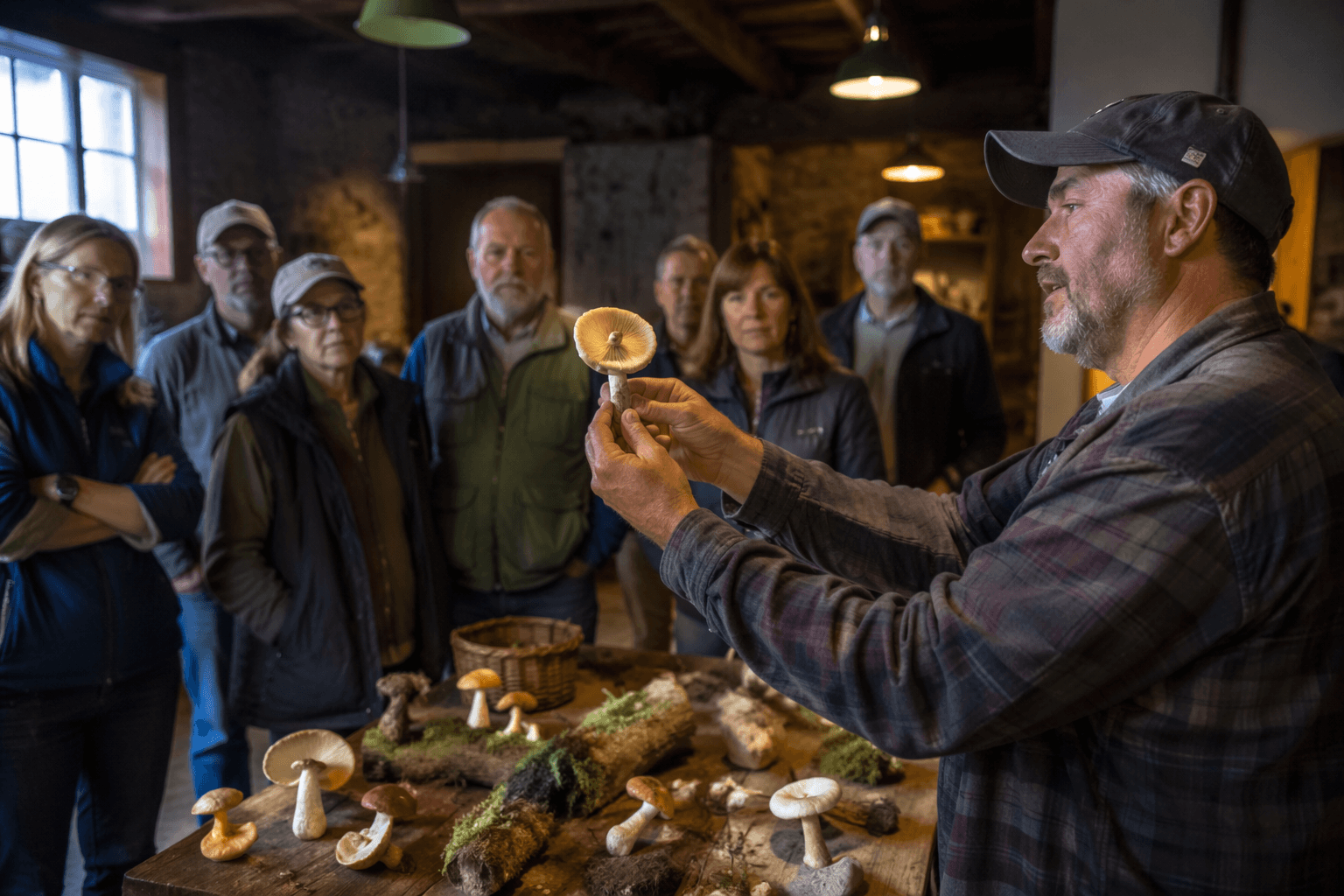
A class capped at 10 people says a lot about how serious mushroom instruction can be. In Franklinville, Cornell Cooperative Extension is using a small, hands-on format to teach beginners how to approach wild fungi with caution, local knowledge, and a clear respect for the risks.
What makes this class feel built for real beginners
The June 23 session runs from 10 a.m. to 4 p.m. at a private farm, with formal classroom instruction from 10 a.m. to 2 p.m. and lunch provided. A later block leaves room for additional fungi-related activity, including inoculation, mushroom-bed preparation, and possibly foraging. That structure matters because it shows the class is not selling a fantasy of wandering into the woods and coming back with dinner. It is teaching the sequence that actually matters: learn first, look closely, then decide whether anything belongs in a basket.
Instructor Stacey Estabrook is the kind of guide beginners should want in the field. She is the founder of FLX Mushrooms, a certified wild mushroom forager, educator, and guide based in the Finger Lakes region of New York. On her site, she says she offers guided foraging tours and beginner-friendly mushroom identification classes designed to help people begin foraging safely. She also offers a Top 14 Edible Mushrooms class focused on species that are easy to identify and have no deadly lookalikes, which is exactly the sort of filter a careful newcomer should be looking for in a course description.
The real test is whether a class teaches judgment, not just names
Cornell’s listing frames the program as an introduction to all things fungi, but the more useful detail is its promise to focus on the most delicious, safe, and easy-to-identify wild mushrooms in the area. That regional specificity is the point. A trustworthy foraging course should tell you what grows where you are standing, what season you are in, and which species are worth your attention in that exact habitat.
That is why small group size matters so much. Ten participants gives an instructor room to slow down, compare specimens, correct mistakes, and make sure people are really seeing the differences between lookalikes rather than just hearing a species list. For mushroom education, the difference between passive listening and hands-on identification is the difference between romance and competence.
Cornell Cooperative Extension’s broader mission helps explain the shape of the class. The organization says it connects communities with research-based solutions across New York state, which is a good fit for a mushroom course that treats local ecology and food safety as inseparable. The lesson is not just about finding fungi. It is about making decisions in the field that hold up once you are back at the table.
Why local habitat knowledge is part of safety
The Finger Lakes region has its own mushroom rhythm, and a good guide knows that identification is never just about the cap and stem in front of you. It is about habitat, timing, and the kinds of places a species actually appears. That is where a local educator like Estabrook brings value that a generic online field guide cannot replace.
Cornell Small Farms adds another layer to that picture. Its Community Mushroom Educator Program and leadership team are working on education and research needs across the mushroom community in New York and beyond. That suggests the Franklinville class is part of a wider effort to build mushroom literacy through extension-style teaching, not a one-off novelty class for people who want a weekend adventure with a basket.
The setting also matters because New York is full of land where foraging questions overlap with land-use rules. The New York State Department of Environmental Conservation says it manages more than 800,000 acres of state forests and more than 900,000 acres of conservation easements. Its forest preserve includes 2.7 million acres in the Adirondack Park and 288,000 acres in the Catskill Park. If you are collecting on public land, the rules are not background noise. Users of state forests and forest preserve lands must follow land-use rules under 6 NYCRR Parts 190 to 199, and enforcement is handled by Environmental Conservation Police Officers.
Safety is the part that should never be optional
The best beginner course does more than identify a few edible species. It teaches caution as a skill. That is why public-health guidance belongs in the same conversation as field craft. The New York State Department of Health says its poison control network can be reached at 1-800-222-1222, and the CDC has reported about 7,500 poisonous mushroom ingestions annually to poison control centers across the United States. The CDC also warns that wild mushrooms should not be eaten unless identified by an expert.
That warning is the backbone of any trustworthy class. The right instructor does not make you feel invincible. The right instructor teaches you how to slow down, ask better questions, and recognize the limits of your own knowledge. In mushrooming, that is not a flaw in the experience. It is the experience.
Cornell’s Franklinville class gets the balance right by treating foraging as a practiced skill set, not a vibe. A small group, lunch at the farm, formal instruction, and room for field work all point to the same lesson: the safest way to enter mushroom hunting is through local instruction that respects the woods as much as the plate.
And that is the real promise of a class like this. It does not hand beginners a basket and a dream. It gives them the slower, sturdier habit of looking twice before they ever pick once.
This article was produced by Prism’s automated news system from verified source data, official records, and press releases, then run through automated quality and moderation checks before publishing. The system is built and supervised by the people who set the standards it runs under. Read our full AI policy.
Did this article answer your question?