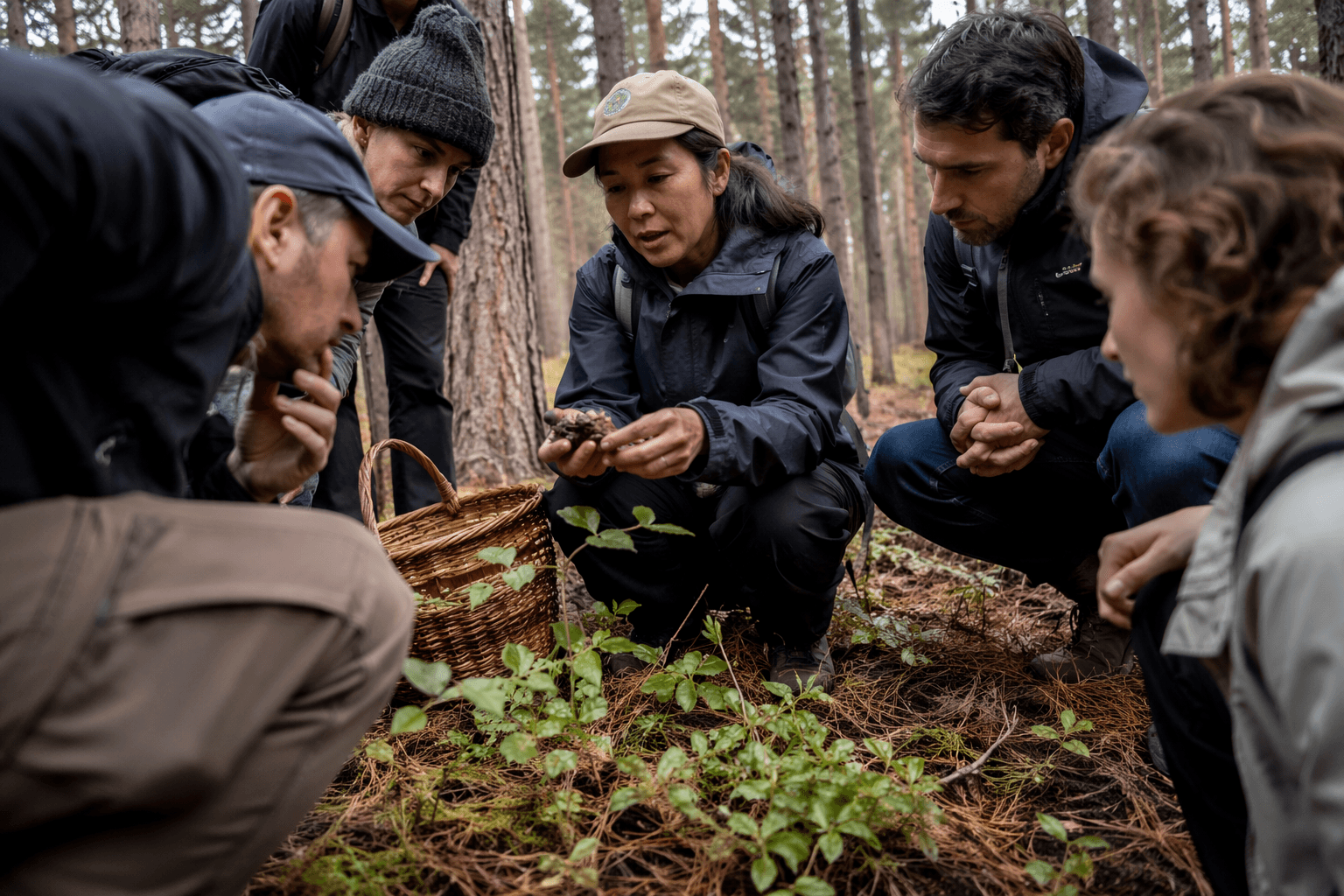
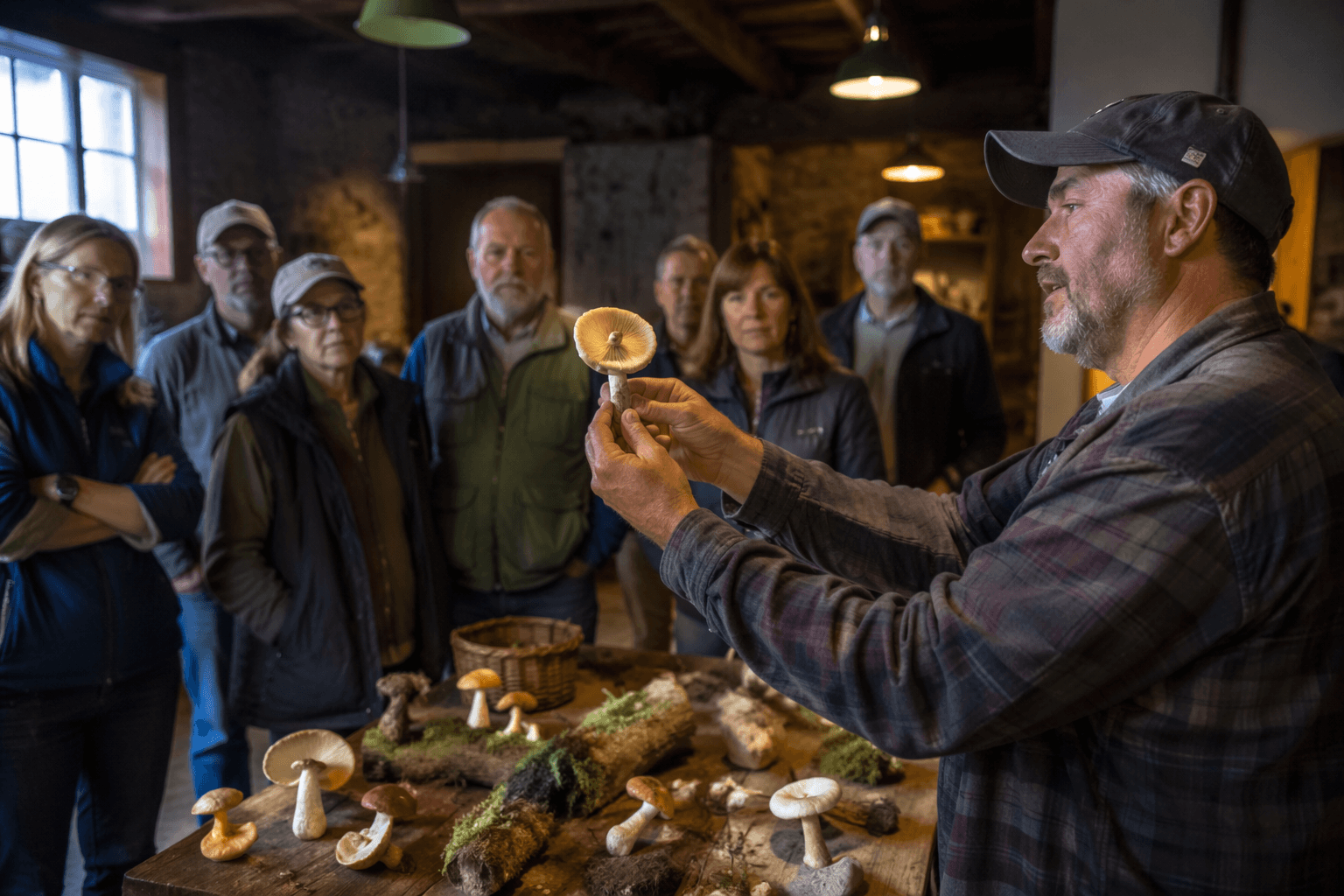
Hale Education hosts guided mushroom walk in Westwood woods
Nick Rajtar and the Boston Mycological Club led a two-hour mushroom walk through Hale’s 1,200 acres, giving beginners a hands-on ID lesson in Westwood woods.
Hale Education turned its 1,200 acres of woods, meadows and ponds in Westwood into a classroom for mushroom hunters on Sunday, June 28. The two-hour walk ran from 10:30 a.m. to 12:30 p.m., cost $40, and allowed refunds up to seven days before the event.
Nick Rajtar, a visiting mycologist from the University of Minnesota lab and a postdoctoral associate in plant pathology, led the outing with members of the Boston Mycological Club’s identification committee. That pairing gave the walk its shape: one guide with academic training in fungi and plant pathogens, and club members ready to help walkers sort what they found from lookalikes, edibles and species better left alone.
The setup made the program especially useful for beginners. Hale’s own description of fungi framed the walk well, noting that mushrooms are part of a broader living system: they help trees thrive, break down organic material into soil, and can be food, destructive agents or poisonous species. In a field like mushroom foraging, that is the first lesson many people need, because the work starts with observation, not picking.
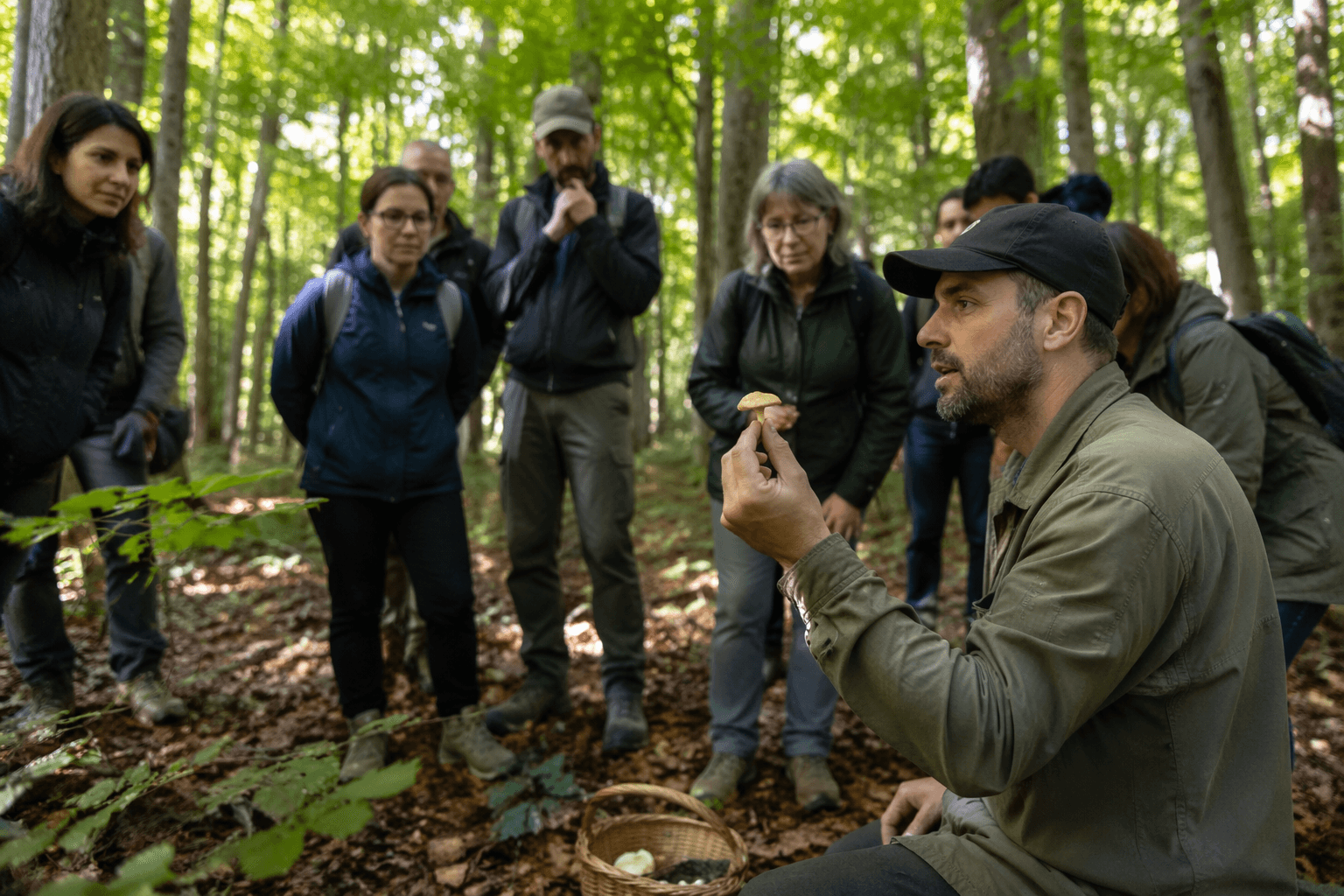
The place mattered as much as the instruction. Hale says its programs serve several thousand children and families from more than 70 Greater Boston communities each year, and The Trustees says the property carries more than 15 miles of trails and four ponds across land in Westwood and Dover. Robert Sever Hale first invited Boston’s youth to engage with the land in 1918, and the current conservation effort aims to protect more than 1,100 acres of the 1,200-acre property, which The Trustees describes as one of the largest contiguous privately owned tracts in the Boston metro region in many decades.
The Boston Mycological Club’s own rules make the educational approach plain. The club says it exists to bring together people interested in fungi, from experts to beginners, and its walk guidance says participants should try identifying specimens themselves first before the ID committee confirms finds at the end of the walk. That is a slow, field-first method that fits Hale’s landscape: a public, carefully managed tract with enough woods, ponds and trails to show how habitat shapes what mushrooms appear, and enough expert help to keep the lesson grounded in what was actually growing underfoot.
This article was produced by Prism’s automated news system from verified source data, official records, and press releases, then run through automated quality and moderation checks before publishing. The system is built and supervised by the people who set the standards it runs under. Read our full AI policy.
Did this article answer your question?