How to identify wild mushrooms safely, from field to table
A safe mushroom ID starts with the specimen, not the skillet. The best field notes, photos, and spore prints can make expert verification possible and keep guesswork out of the woods.
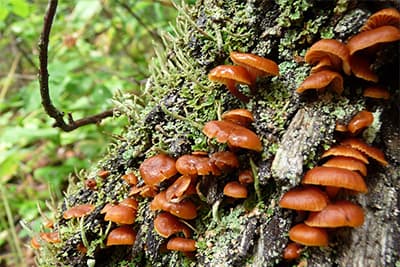
A coin or ruler in the frame can matter as much as the mushroom itself when a wild find needs to be identified later. Treat the first encounter like a documentation job, not a dinner decision. The specimen itself is only part of the record: a complete set of photos, habitat notes, and a cleanly collected mushroom can make later expert verification possible and keep dangerous guesswork out of the picture.
Start with the whole specimen, not a fragment
The first rule is to collect the mushroom intact, with the cap, gills, stem, and base preserved. The base can be critical for identification, and Montana State University warns that a broken specimen can erase the feature that settles the question. Along with the mushroom itself, note what it is growing on, the date, the location, and whether it came from wood, soil, lawn, pasture, or near a specific tree.
A mushroom found on a rotting log, in short pasture grass, or under a particular tree can point in very different directions, and field information becomes even more useful when the tree species is unknown and you can bring a cutting of leaves or needles. Mushroom species concepts are continually being refined, which is one reason identification is difficult for laypeople.
Photograph before you disturb anything
Take photos before the mushroom is moved, bruised, or pulled. Iowa State Extension recommends capturing the top, the side profile, and the underside, and including a size reference such as a coin or ruler so scale is obvious later. That extra minute in the field matters because some mushrooms change color or even liquefy quickly after they are touched, which means a photo taken after handling may no longer show the mushroom as it actually was found.
Identification from photos is inherently limited, the University of Kentucky warns. If a mushroom is important enough to verify carefully, photo evidence may still need to be backed up by a physical sample, microscopy, or even DNA-based techniques.
Collect like an identifier, transport like a preservator
Once the mushroom is documented, pack it in a way that keeps the specimen usable. Use paper-based containers rather than plastic bags. Montana State University warns that plastic causes spoilage, while Iowa State Extension suggests wax paper or small paper bags and keeping specimens cool and out of direct sunlight.
A soft, sweating mushroom in a plastic bag can lose surface details, collapse, or decay before anyone has a chance to inspect it, and that can turn a useful field find into a dead end.
Make the spore print part of the workflow
A spore print is one of the simplest tools in the identification kit, and it belongs in the workflow before any edible call is made. University of Florida IFAS recommends placing the cap on white paper, black paper, or foil, then covering it with a bowl so the spores can fall over time. Montana State University says the print may take roughly 2 to 24 hours, depending on freshness.
The print color can narrow the field, but it works best alongside the cap shape, gill structure, stem, base, substrate, and habitat notes you gathered earlier.
Use expert eyes, not app certainty
The University of New Hampshire Extension recommends learning from formally trained mycologists and joining a mycological organization such as the North American Mycological Association. It also warns against random mushroom advice on social media, because mushroom IDs are often built on small details that get flattened or missed in a photo thread.
K-State Extension warns that wild mushroom hunting has gained fans, but safety comes first because knowing which mushrooms are poisonous requires knowing what to look for. When a specimen is photographed well, collected cleanly, and paired with habitat notes, an expert has something real to work with instead of a guess based on a single image.
Treat poisoning as an emergency, then get the mushroom identified
If a mushroom exposure is suspected, the order of operations changes immediately. The North American Mycological Association treats suspected mushroom poisoning cases as emergencies, and identification comes after medical help is secured. In America’s Poison Centers’ National Poison Data System, the data warehouse for the nation’s 53 poison centers, the 2024 total was 2,092,689 human exposures. The 2023 National Poison Data System report was the 41st annual report.
NAMA’s toxicology guidance warns that dogs are far more likely to die from mushroom poisoning than humans are. It also encourages the public to report adverse reactions, from stomach upset and rash to severe reactions that require hospitalization, and includes animals because pets are part of the exposure picture too.
Keep the long view in mind
NAMA’s historical summary places the first annual mushroom poisoning report in 1985 and puts mushrooms at about 0.4% to 0.5% of total toxic exposures. The association had been receiving reports for about 1% of mushroom poisoning cases, though reporting has dropped significantly over time. Many people now turn to Facebook mushroom groups during poisoning incidents, even though those cases are not captured in NAMA’s database.
This article was produced by Prism’s automated news system from verified source data, official records, and press releases, then run through automated quality and moderation checks before publishing. The system is built and supervised by the people who set the standards it runs under. Read our full AI policy.
Did this article answer your question?