New Brunswick foraging offers mushrooms and wild edibles year-round
New Brunswick’s foraging window never really closes, but the harvest changes fast. Winter chaga, spring morels, and summer fungi all depend on timing, land access, and sharp ID.

Chaga mushrooms and white pine needles carry New Brunswick’s foraging calendar through winter. The province markets that as something to gather every month of the year, but the real lesson is seasonal discipline, because its mushrooms and wild edibles come and go with the calendar, the weather, and the woods you are standing in.
A twelve-month foraging calendar
The progression is clear. Early spring brings morel mushrooms, fiddleheads, ramps, and re-emerging buds. By summer and autumn, the province shifts into a wider abundance of wild edible herbs, plants, fruits, and fungi. Not every species appears everywhere, but New Brunswick offers a recurring rhythm of harvests rather than a single mushroom season.
The province also calls some of its wild edible mushrooms among the rarest and most sought-after. Foragers who come for a quick wander are looking at the landscape the wrong way. The better approach is to match species to season, then match the season to a specific patch of forest, trail, or woodlot that is actually producing.
Where timing and habitat do the heavy lifting
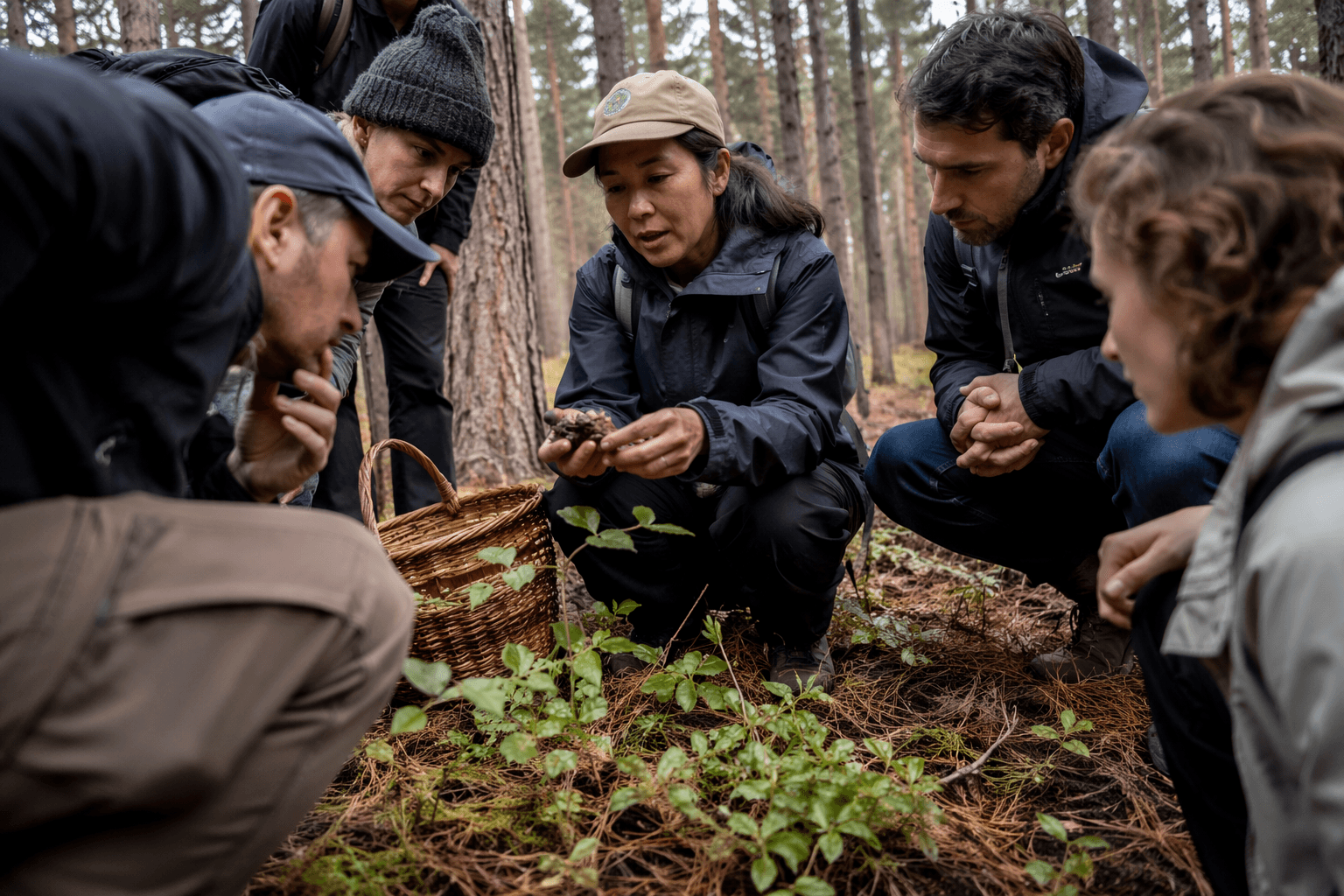
Weather and habitat make the difference between a promising trip and an empty basket. The best results come after a rain, when mushrooms are most likely to appear, and wooded areas are the kind of ground that keeps producing. Fundy National Park and the Miramichi region are known hotspots for mushroom enthusiasts.
New Brunswick’s forests are not a single uniform habitat, and foraging trips work best when you pay attention to local conditions instead of chasing a generic “mushroom calendar.” Moisture, fresh growth, and the right patch of woods all matter more than the date on the page.
The local scene is already organized around mushrooms
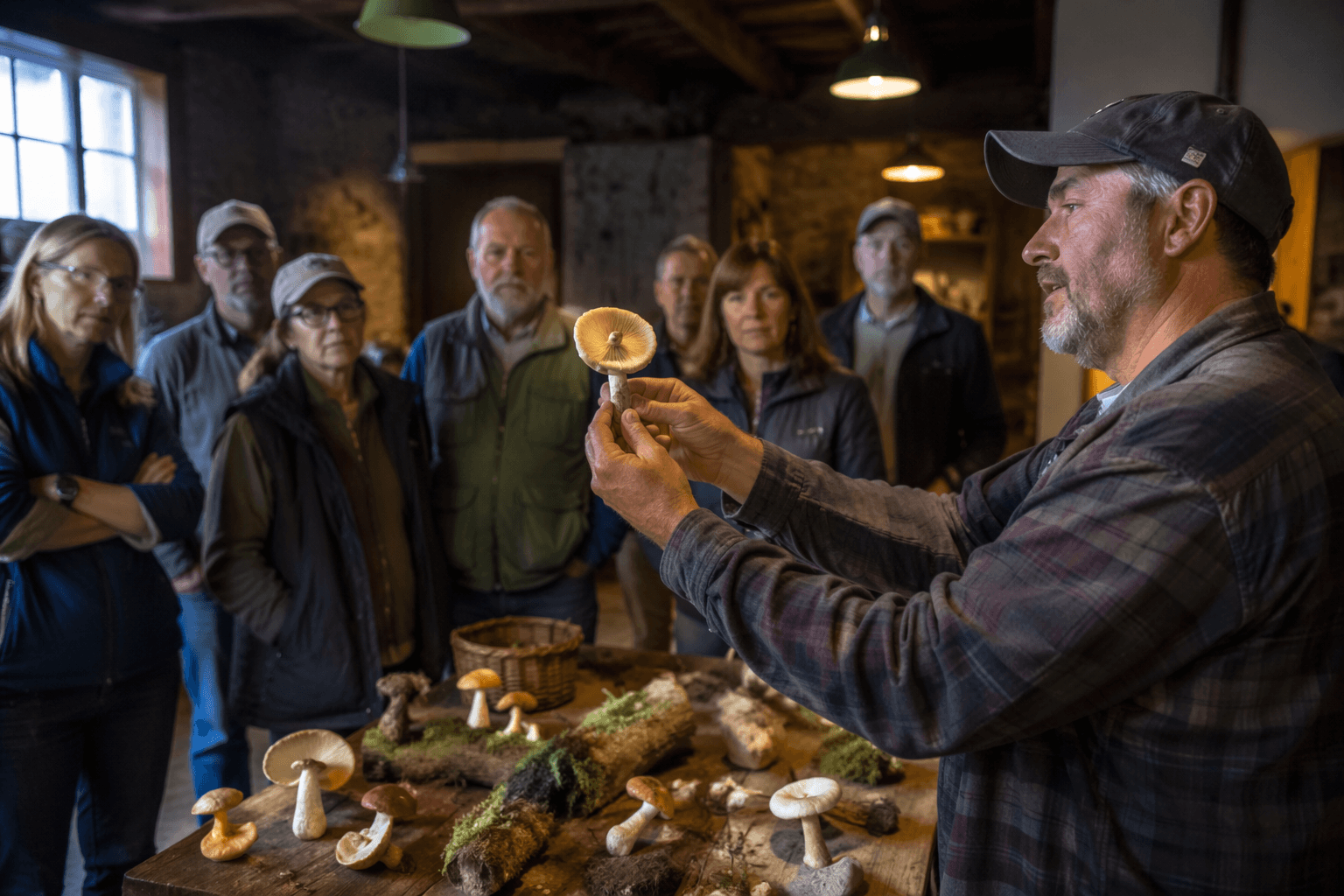
In October 2021, MycoNB Society had formed in New Brunswick to share resources and information about wild mushroom foraging. That kind of group turns a solitary hunt into something closer to a shared local practice with names, notes, and seasonal knowledge.
The community has only grown more visible since then. In June 2023, Foraging Frederictonians were fanning out in the forests around Fredericton to identify edible mushrooms. In June 2024, Alfredo Justo, curator of botany and mycology at the New Brunswick Museum in Saint John, was leading a public mission to document every mushroom species in Atlantic Canada.
Permission, protection, and the line between public land and protected land
Access is part of the story too. Occasional use of Crown land generally does not require formal authorization, and the Crown land FAQ gives examples such as hiking, biking, picnicking, geocaching, canoeing, and overnight camping. That matters for foragers because much of the province’s wild food hunting happens in the same landscape where people already recreate casually.
But access is not the same thing as a green light everywhere. Protected areas are meant to preserve nature, ecosystem services, and cultural values for the long term, so you should not treat every wooded place as interchangeable. The Department of Natural Resources manages forests, fish and wildlife, and Crown land in New Brunswick.
Safety starts with identification, not appetite
The biggest beginner mistake is treating tourism copy like a field guide. A list that says morels appear in spring or chaga turns up in winter is a seasonal clue, not proof that anything mushroom-shaped is safe to eat. Mushroom foraging only works when identification is specific, patient, and grounded in the exact species in front of you.
Call 911 immediately in an emergency or potential poisoning. The province’s Poison Information Line offers high-priority response for New Brunswick residents and health-care providers.
More than a food story
Tourism New Brunswick also places foraging inside a broader food-and-drink identity. Its culinary messaging describes the province as having a “flavourful bounty from land and sea,” and that framing fits the way mushroom hunting is marketed alongside local eating, farm-to-table produce, seafood, and seasonal travel.
This article was produced by Prism’s automated news system from verified source data, official records, and press releases, then run through automated quality and moderation checks before publishing. The system is built and supervised by the people who set the standards it runs under. Read our full AI policy.
Did this article answer your question?