New mushroom guide explores foraging, recipes, and wild fungi safety
A new mushroom guide blends recipes and fieldcraft, but its biggest value may be safety: permits, seasonality, and the danger of lookalike wild mushrooms.

A new mushroom guide lands in the middle of prime picking season with an appealing mix of foraging, recipes, art, and science. That breadth makes it feel less like a simple cookbook and more like a doorway into the culture of mushrooming, while also reminding readers that wild fungi demand real caution. The strongest thread running through it is clear: mushrooming is as much about judgment as it is about appetite.
What the guide is really selling
The book’s promise is not just flavor, it is immersion. By pairing gastronomic, artistic, and scientific angles, it speaks to the way mushroom people actually move through the hobby, with one foot in the kitchen, one in the woods, and one in the library. For a forager, that kind of framing matters because it treats mushrooms as more than ingredients, while still keeping the edible payoff in view.
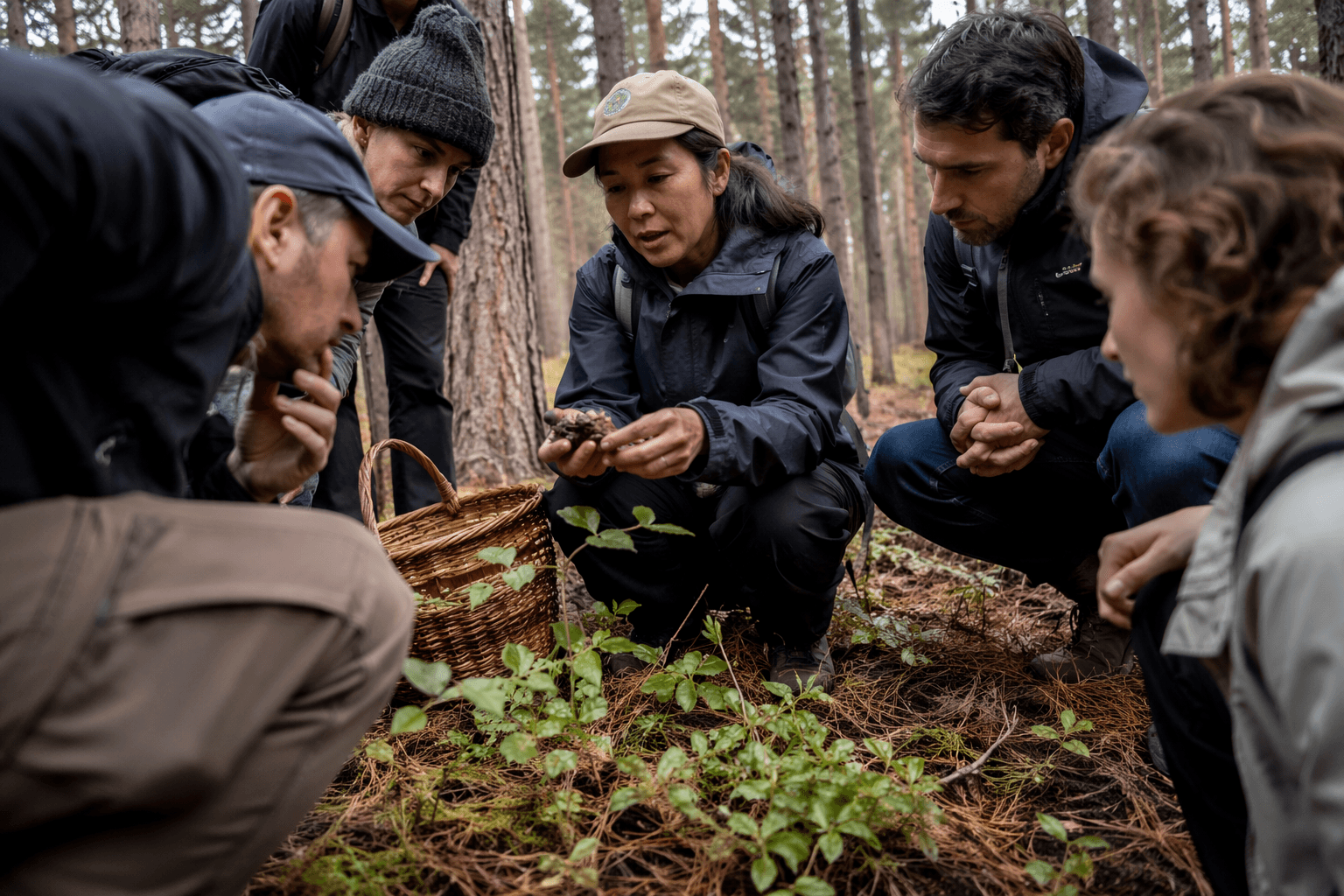
What stands out most is that this is not presented as a bare-bones identification manual. Based on the material behind it, the guide seems especially useful for readers who want context, seasonal rhythm, and practical foraging habits, rather than a purely technical key to every species. That makes it a strong companion piece to field education, especially if you already spend time scanning logs, leaf litter, and mixed hardwood stands for signs of a flush.
Safety is not an optional chapter
Any mushroom guide worth your attention has to confront the fact that poisonous wild mushrooms can resemble edible ones closely enough to fool experienced eyes. Public-health officials keep warning about that danger for a reason. The Centers for Disease Control and Prevention estimated that accidental poisonous mushroom ingestion in 2016 was associated with 1,328 emergency department visits and 100 hospitalizations, a reminder that the consequences are not abstract.
The warning got even sharper in northern California, where the California Poison Control System and the California Department of Public Health responded to an amatoxin outbreak from November 2025 through March 2026. That outbreak caused 39 cases, three liver transplantations, and four deaths. The CDC also noted that many of the people involved had foraged mushrooms that looked similar to species they had encountered in other countries, which is exactly the kind of false confidence that can turn a pleasant walk into a medical emergency.
The broader safety picture is equally sobering. In one CDC dataset on poisonous mushroom ingestion, 8.6% of patients had a serious adverse outcome. That is why the best mushroom books and the best mushroom circles keep stressing the same lesson: identification has to be conservative, not hopeful.
Seasonality is part of the craft
One reason this guide feels timely is that mushrooming lives and dies by timing. Public foraging resources emphasize that mushroom season is shaped by region, weather, and species, not by a single neat calendar. Spring and fall draw the most attention, but those windows only make sense when you are reading rain, temperature, habitat, and the species you are actually chasing.
That matters for familiar quarry like morels and chanterelles, both of which are highly dependent on local conditions. A good guide does not pretend there is a universal mushroom month; it teaches you to think in flushes, not dates. That shift in mindset is often what separates a casual nature walk from serious foraging practice.
For readers trying to sharpen their seasonal awareness, this kind of publication is useful precisely because it keeps the woods in the foreground. Recipes may be the reward, but timing is the discipline. If the guide helps people understand when a habitat is likely to produce, and when it is too early or too late to expect much, it is doing real work for the forager.
The rules in the woods matter just as much as the basket
The practical side of mushrooming is governed by more than taste and weather. In the U.S. Forest Service system, a Forest Products Fee Removal Permit, Form FS 2400-1, or a Forest Products Free Use Permit, Form FS 2400-8, is required for all special forest products leaving a forest. That is a blunt reminder that gathering mushrooms is regulated, not casual by default.
Some national forests prohibit mushroom collecting in designated wilderness areas or monuments, while others allow limited personal-use harvest. The Gifford Pinchot National Forest guidance is especially concrete: pick up your permit and harvest area map before you start harvesting, and do not collect mushrooms in any Wilderness area or within the Mount St. Helens National Volcanic Monument. Foragers who ignore those boundaries risk more than a bad day, they risk violating the rules of the land they are entering.
This is where the guide’s usefulness becomes clearest for ethical harvesting judgment. A mushroom book that encourages respect for permits, harvest maps, and restricted areas is helping readers become better stewards, not just better pickers. In a hobby built on restraint, those details matter as much as a perfect sauté.
The community behind the hobby
Mushrooming has always been bigger than the individual basket, and the North American Mycological Association gives that world a formal backbone. The organization says it has more than 90 affiliated mycological societies across the United States, Canada, and Mexico, and it promotes scientific and educational activities related to fungi. It also supports protection of natural areas and biodiversity, which puts conservation right alongside curiosity.
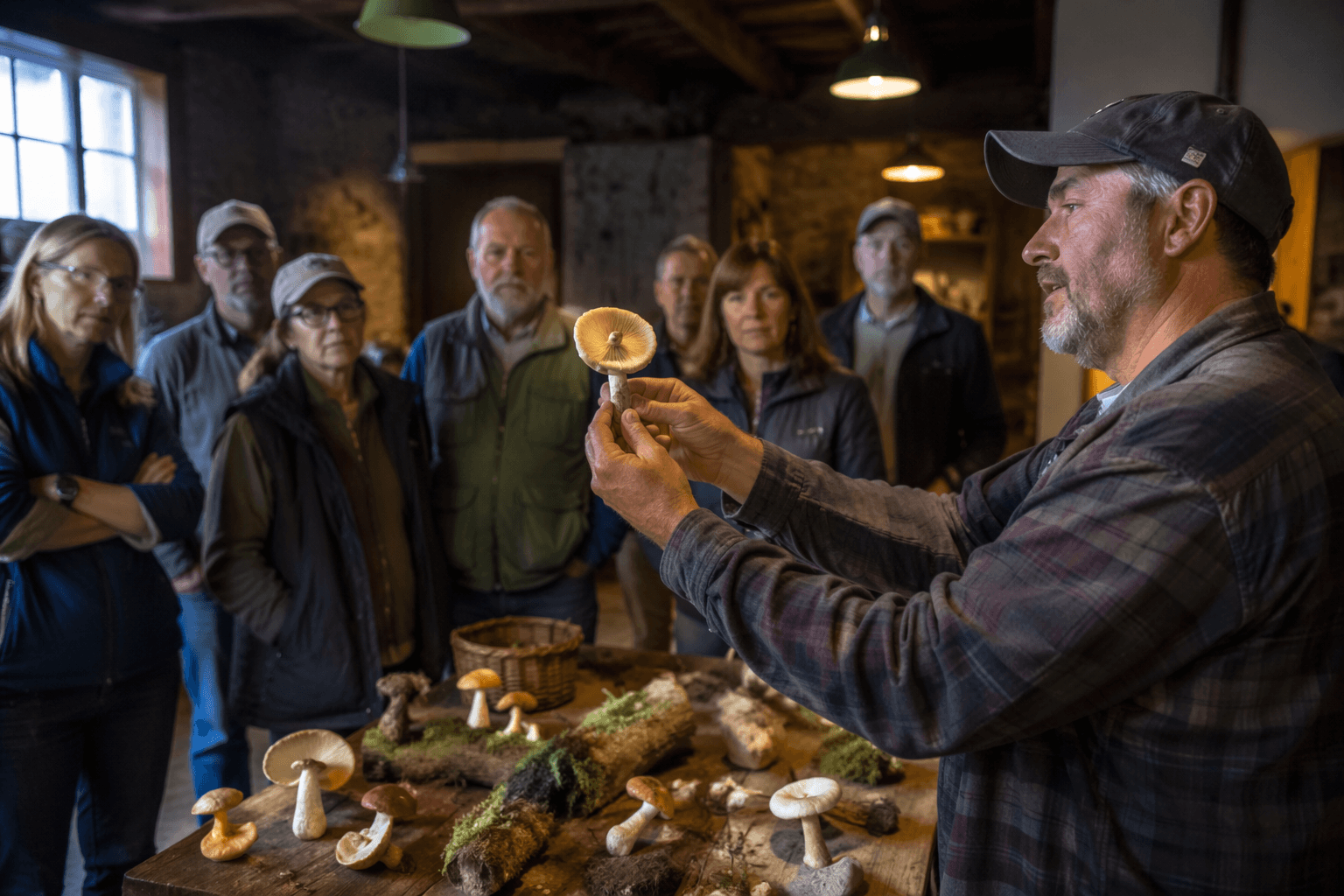
That kind of network is important because it shows how deeply the hobby relies on shared knowledge. Amateur and professional mycologists alike contribute to the same ecosystem of learning, where field walks, society meetings, and careful observation build a culture of caution. A guide that nods toward that world is doing more than entertaining readers, it is situating them inside an active community with standards.
A useful guide, but not the whole toolkit
Taken together, the new publication looks most valuable as an orientation to mushroom culture, one that connects food, science, and ethics without pretending the hobby is simple. It should deepen seasonal awareness, encourage better habits in the field, and reinforce the basic discipline that keeps lookalikes from becoming tragedies. What it does not appear to replace is the slow work of learning species by region, habitat, and mentor-led experience.
That is probably the right balance. Mushrooming has never been about grabbing the prettiest cap and hoping for the best, and the guide seems to understand that. It starts with the pleasure of fungi, but it ends where every serious forager eventually does, with caution, respect, and the knowledge that a basket is only as good as the judgment that fills it.
This article was produced by Prism’s automated news system from verified source data, official records, and press releases, then run through automated quality and moderation checks before publishing. The system is built and supervised by the people who set the standards it runs under. Read our full AI policy.
Did this article answer your question?