Air Force picks Colorado and Montana bases for microreactor planning
Buckley and Malmstrom moved from broad microreactor talk to named bases, putting contractor-built nuclear power inside the Pentagon’s installation playbook.
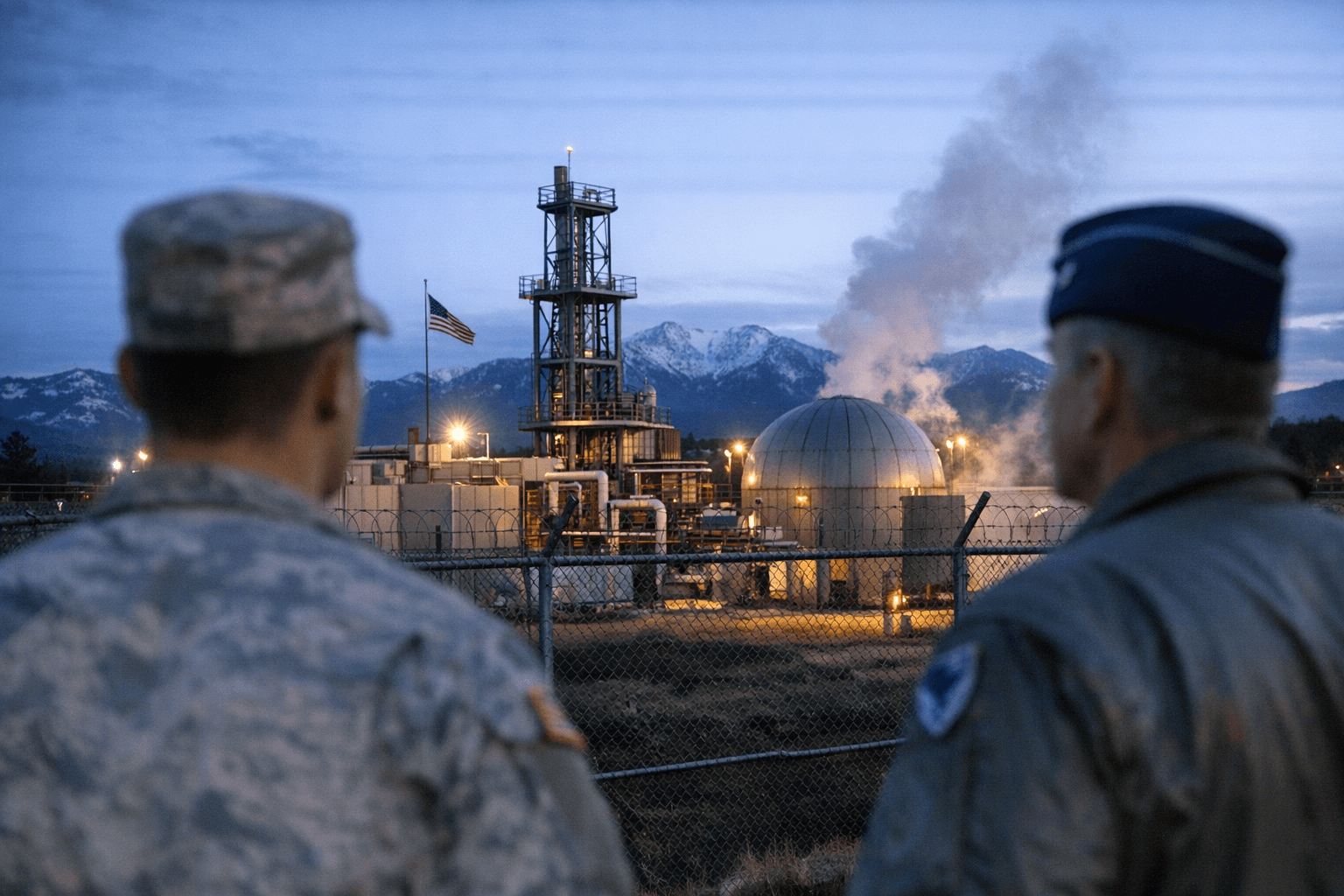
The Pentagon’s microreactor push took a concrete step when the U.S. Department of the Air Force picked Buckley Space Force Base in Colorado and Malmstrom Air Force Base in Montana as potential sites under the Advanced Nuclear Power for Installations program. The choice marked the shift from general interest in advanced nuclear to site planning at two bases where uninterrupted power is tied directly to mission performance.
The Air Force framed the selection around keeping critical missions running without interruption and strengthening national security. Under the ANPI model, the reactors would be contractor-owned and operated, with private developers expected to site, license, construct, operate and eventually decommission the systems. That means the service is not trying to become a reactor vendor; it is trying to buy resilience, backup power and long-duration energy security for installations that cannot afford a blackout.
Buckley fits that mission because it is already a major space-operations hub. Space Delta 4 is headquartered there and handles global missile warning, missile defense and battlespace awareness operations. Space Base Delta 2 says the installation supports resident air operations, space-based missile warning capabilities, space surveillance and space communications missions. For a base like that, a microreactor would not be about replacing the grid entirely. It would be about securing the power behind the sensors, communications and command functions that have to keep working even when outside infrastructure is strained.
Malmstrom is an equally clear test case, but for a different reason. The 341st Missile Wing operates, maintains and secures the Minuteman III intercontinental ballistic missile force, while the 341st Mission Support Group covers a 13,800-square-mile missile complex in north-central Montana. The base is also already part of the Sentinel ICBM modernization effort. In that setting, a microreactor could help shore up the dependable electricity needed for remote operations, protected facilities and the infrastructure that supports nuclear deterrence.
The selection did not launch construction, but it did move the process into a more operational phase. The Air Force announcement came on April 8, 2026, and the Defense Innovation Unit had already listed the Buckley and Malmstrom selection in its updates the day before. Next comes the work that often decides whether a reactor concept survives contact with reality: early licensing, environmental review, siting studies and the sorting of which commercial vendors stay in the running.
That broader pipeline is already taking shape. DIU said ANPI was first announced in summer 2024, and in April 2025 the Department of Defense selected eight companies to be eligible to demonstrate compliant, safe, secure and reliable nuclear power for military installations. Buckley’s selection also landed as the base has dealt with record-low snowpack, drought and wildfire concerns affecting water supplies in the installation and the surrounding Aurora community, underscoring why resilience now sits at the center of the Air Force’s nuclear planning.
This article was produced by Prism’s automated news system from verified source data, official records, and press releases, then run through automated quality and moderation checks before publishing. The system is built and supervised by the people who set the standards it runs under. Read our full AI policy.
Did this article answer your question?