Argonne Submits Draft ASME Code to Certify 3D-Printed Reactor Components
Argonne National Laboratory submitted a draft ASME Code Case to certify laser powder bed fusion 3D printing for high-temperature reactor parts, backed by a four-lab DOE collaboration.
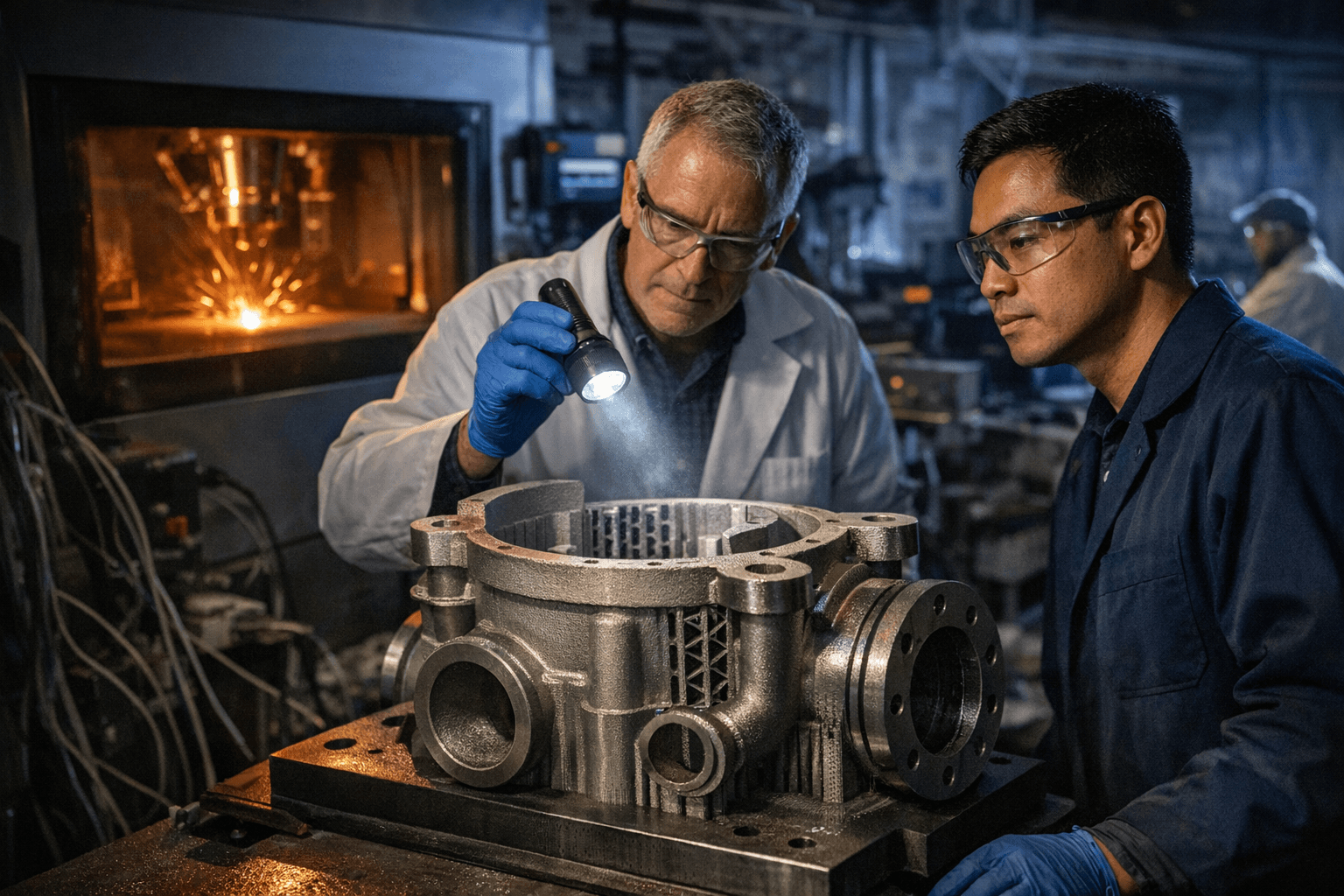
Argonne National Laboratory submitted a draft Code Case to the American Society of Mechanical Engineers aimed at certifying Laser Powder Bed Fusion, a high-precision 3D printing method, for use in nuclear reactor components. The submission targets one of the most demanding corners of reactor engineering: high-temperature components that must survive extreme heat inside advanced reactor systems.
The project was carried out through collaboration between Argonne, Oak Ridge National Laboratory, Idaho National Laboratory, and Los Alamos National Laboratory under the Department of Energy Office of Nuclear Energy's Advanced Materials and Manufacturing Technologies (AMMT) program. Mark Messner, a leading researcher at Argonne, has been previously recognized by ASME for his work updating design rules for high-temperature nuclear reactors. He serves as a member and chair of several ASME Section III Boiler and Pressure Vessel Code working groups responsible for high temperature design methods.
The practical upside for the nuclear industry is considerable. LPBF can enhance the performance of critical components by optimizing microstructures and improving resistance to extreme heat and radiation, while also reducing material waste and shortening production timelines, which is crucial for scaling up next-generation reactor technologies. The approach also strengthens the nuclear supply chain by enabling localized, on-demand production of components and enhances design flexibility, enabling safer, more efficient reactor systems. In concrete terms, that means manufacturers could print replacement parts on demand rather than wait months for forgings, and reactor designers could optimize components free from the geometric constraints of traditional machining.
The underlying qualification effort targets LPBF 316 stainless steel for use under ASME Boiler and Pressure Vessel Code Section III, Division 5 rules for metallic components in high-temperature nuclear reactors. Accomplishing this goal would make the material and manufacturing process available to vendors for inclusion in the next generation of advanced, high-temperature reactors. Separately, Argonne researchers have used supercomputers to model turbulent flow, improving understanding of heat transfer and advancing the development of safer, more reliable, carbon-free nuclear energy systems, work that feeds directly into the design data needed to underpin a Code Case submission of this kind.
The road from draft to accepted standard is not short. The ASME Code Case must go through review and revision before becoming an accepted standard, and the research focused on demonstrating that parts made with this process meet safety requirements; widespread adoption will take time, with each reactor component type requiring separate validation. One key goal of the broader AMMT qualification effort is to explore and develop accelerated qualification approaches that might reduce the time required to qualify new materials by reducing the need for long-term testing.
The technical developments contribute towards shortening the time needed to generate a creep data package for an ASME code case of laser powder bed fusion 316H stainless steel under the DOE's AMMT program. That groundwork positions the draft Code Case as the regulatory bridge between years of materials science research and the fabrication floors of the next generation of U.S. reactors.
Know something we missed? Have a correction or additional information?
Submit a Tip

