Hungary’s new government to review Paks II costs and contracts
Hungary’s new government is reopening Paks II, forcing a fresh look at a 12.5 billion euro buildout already tangled in financing, procurement and EU court trouble.

Hungary’s incoming government has put one of Europe’s most politically sensitive reactor projects back on the operating table, saying it will review the financing and implementation of Paks II as the 12.5 billion euro expansion faces renewed scrutiny over costs, contracts and delivery risk. The move does not signal an exit from nuclear power. It signals a decision point over whether Paks II remains a live buildout pathway or becomes a stranded megaproject.
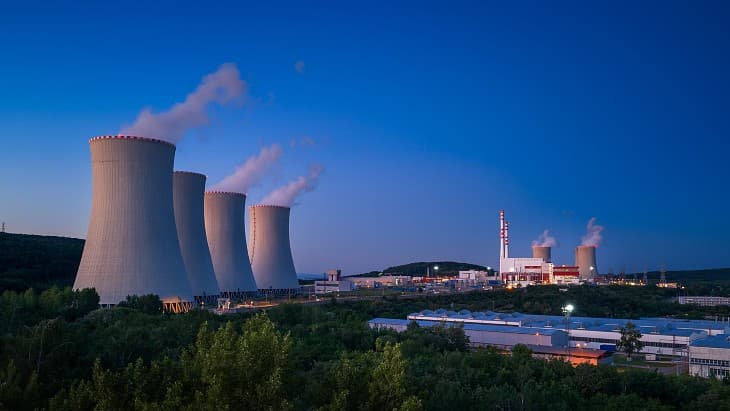
Paks II is meant to add two Rosatom-built VVER-1200 units beside the existing four-unit Paks station on the Danube south of Budapest. Those four operating reactors generated 16,016.6 GWh in 2024, equal to 47.1% of Hungary’s total electricity production, which is why any change in pace or scope at Paks II carries immediate energy-security weight. Hungary’s nuclear regulator issued the main construction licence on August 30, 2022, and approved the preliminary safety report in December 2024 for first concrete, so the project is already well past the paper stage.
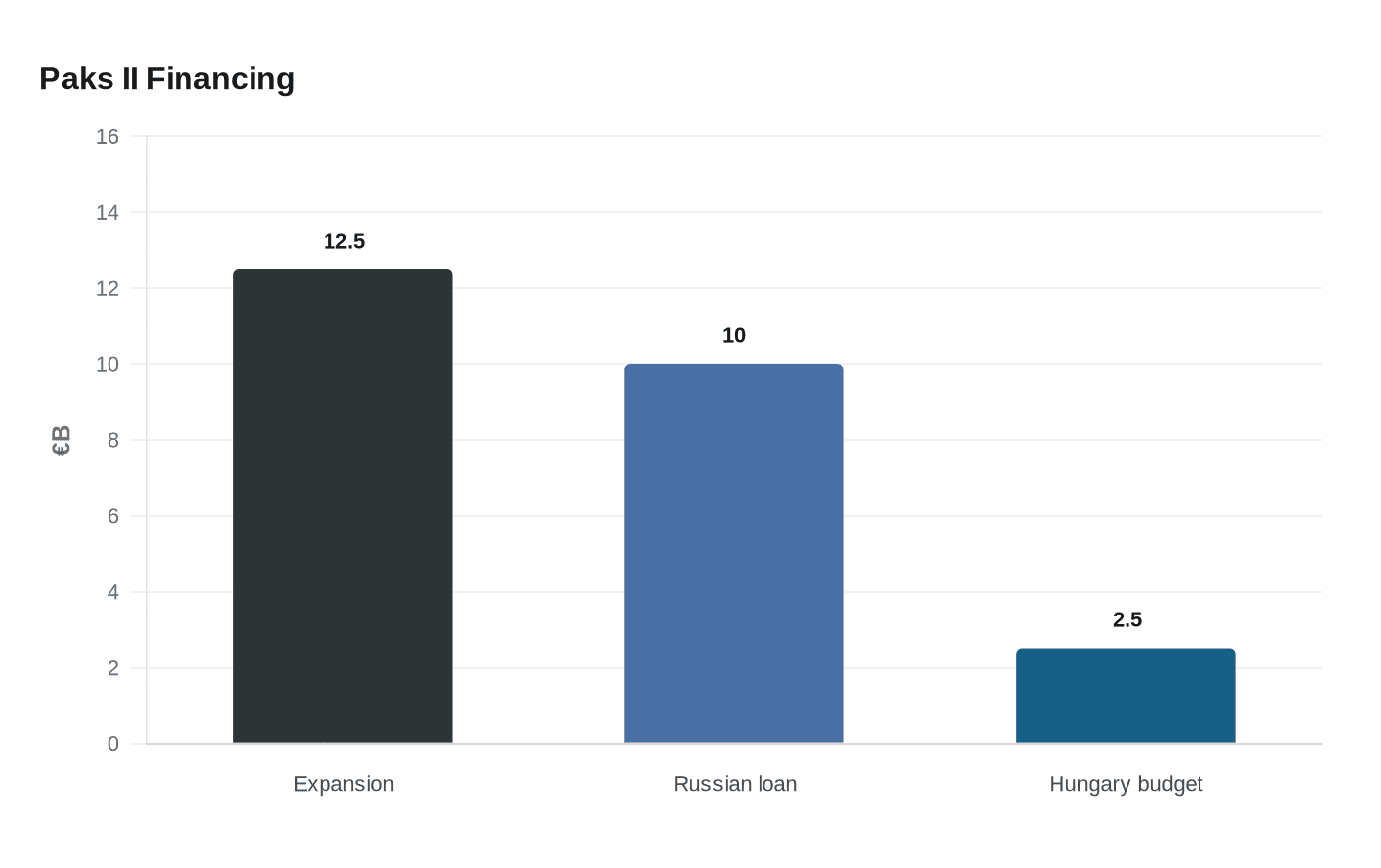
That makes the new review especially consequential. Project chronology materials describe financing built around a Russian state loan of up to 10 billion euros and another 2.5 billion euros from the Hungarian budget, while key contracts remain classified, limiting public visibility into the financial structure. Around the first-concrete milestone, reporting placed roughly 1,000 workers at the site, and the project has already moved far enough for construction activity to matter in schedule terms. But the European Court of Justice complicated the picture on September 11, 2025, annulling the European Commission’s approval of state aid and saying the Commission should have checked whether the direct award to the Russian contractor complied with EU public procurement rules.
That leaves four plausible paths. A renegotiation could keep the reactors alive while tightening procurement and financing terms, which would preserve Hungary’s route to new large-scale nuclear capacity. A delay would push back the first meaningful addition to the country’s baseload fleet and prolong dependence on the existing Paks units. A redesign could reshape contracts, oversight and financing without abandoning the project’s nuclear core. An effective freeze, by contrast, would leave Hungary leaning on the four VVER-440 reactors that still anchor its grid, just as the government says nuclear must remain central to the energy mix.
For now, Paks II is not being buried. It is being reexamined at the exact moment when the hardest part of any reactor project is no longer the reactor island itself, but the political, legal and financial structure holding it together.
This article was produced by Prism’s automated news system from verified source data, official records, and press releases, then run through automated quality and moderation checks before publishing. The system is built and supervised by the people who set the standards it runs under. Read our full AI policy.
Did this article answer your question?