Armenia Removes Final Cobalt-60 Source, Ends Radiological Security Risk
A sealed cobalt-60 source came out of Yerevan’s Fanaryan National Center of Oncology, leaving Armenia free of highly radioactive material and cutting a dirty-bomb risk.
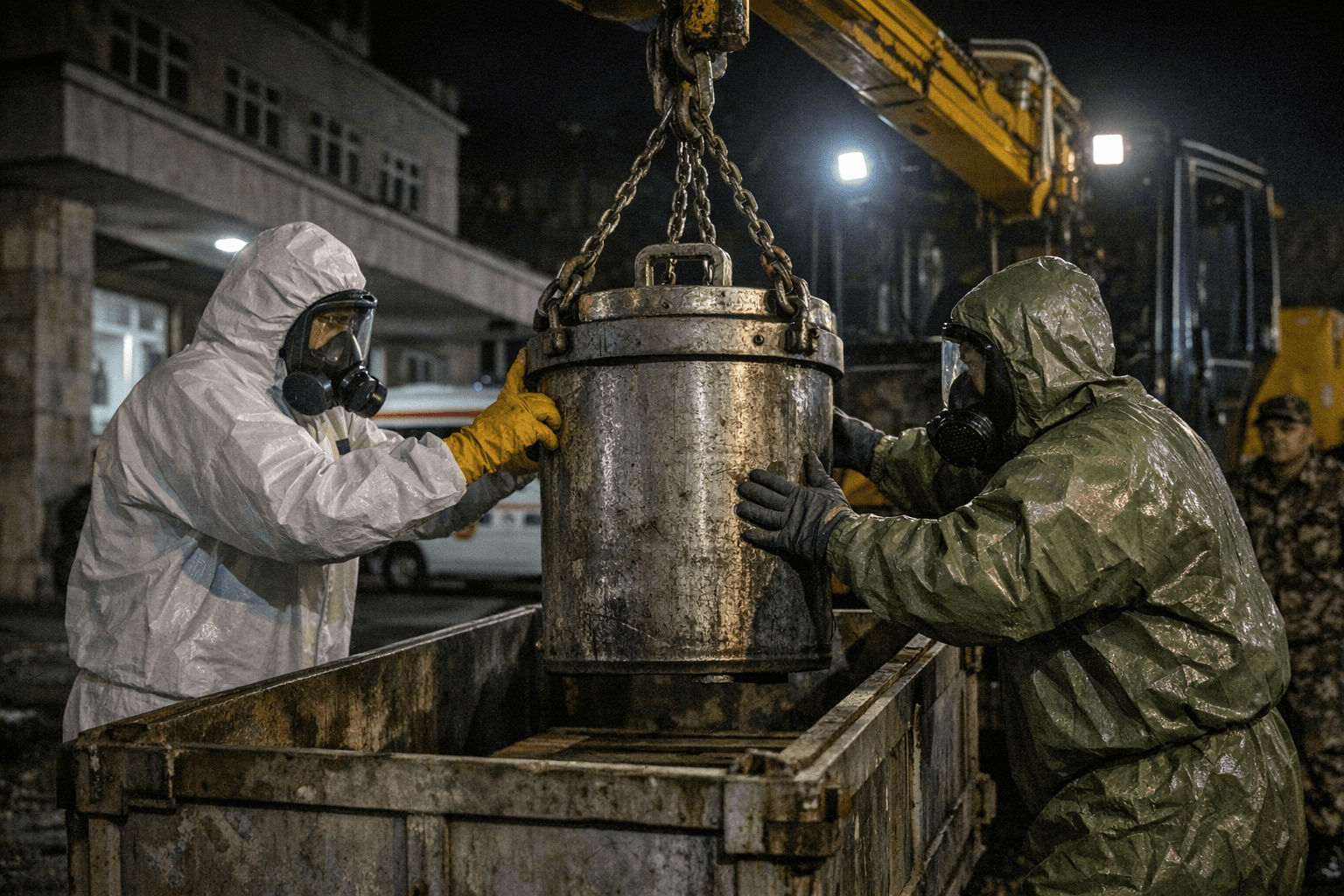
A sealed cobalt-60 source has been removed from the Fanaryan National Center of Oncology in Yerevan, leaving Armenia free of highly radioactive material and ending a radiological security risk that had lingered for years.
The National Nuclear Security Administration said the removal took place earlier in 2026 and marked the country’s last cobalt-60 source. The operation was jointly funded and executed by the United States and Armenia, with NNSA supplying subject matter expertise and secure transportation. Armenian partners handled the disassembly, packaging, crane work and security needed to move the source safely out of the medical facility.
The fact that the source came from an oncology center matters. It was used for cancer-related applications, not for weapons work, which is exactly why source security is such a persistent nuclear issue: material that helps treat patients can also become a serious hazard if it is left in place, stolen or mishandled. NNSA has long warned that cobalt-60 and cesium-137 sources can be used in a radiological dispersal device, or dirty bomb, if they fall into the wrong hands.
Armenian Nuclear Regulatory Authority Acting Chairman Khachatur Khachikyan called the removal “a testament to the power of how shared responsibility can lead to lasting impact on global radiological security.” That line fits the shape of the operation itself. This was not a flashy reactor milestone or a new build announcement. It was careful, technical cleanout work that reduced the chance of an accident, prevented a source from becoming a theft target, and removed one more item that could have been abused in a security incident.
The replacement path is already familiar to the radiotherapy world. The International Atomic Energy Agency says cobalt-60 units and linear accelerators are both common teletherapy technologies, with megavoltage therapy maturing in the 1950s as both systems developed. In practical terms, that means the same medical function can be delivered without a sealed radioactive source sitting in the clinic.
The broader context is the NNSA’s Office of Radiological Security, which works worldwide to protect radioactive sources used in medicine, research and commerce, remove disused sources and push viable non-radioisotopic alternatives. The IAEA’s Directory of Radiotherapy Centres is used in 141 countries to plan radiotherapy services and benchmark teletherapy resources, underscoring how tightly medical physics and source security now overlap. Armenia’s cleanout shows what radiological risk reduction looks like when diplomacy, regulatory work and hospital operations all line up.
This article was produced by Prism’s automated news system from verified source data, official records, and press releases, then run through automated quality and moderation checks before publishing. The system is built and supervised by the people who set the standards it runs under. Read our full AI policy.
Did this article answer your question?