CERN Installs Three-Crystal Shadowing System in SPS to Cut Beam Losses
CERN's new three-crystal shadowing system in the SPS uses bent silicon to shield the septum like a rock deflecting a stream's current.
A refined three-crystal shadowing system is now installed and ready for testing in CERN's Super Proton Synchrotron, marking a significant step forward in the accelerator complex's ongoing effort to reduce beam losses through bent silicon crystal technology.
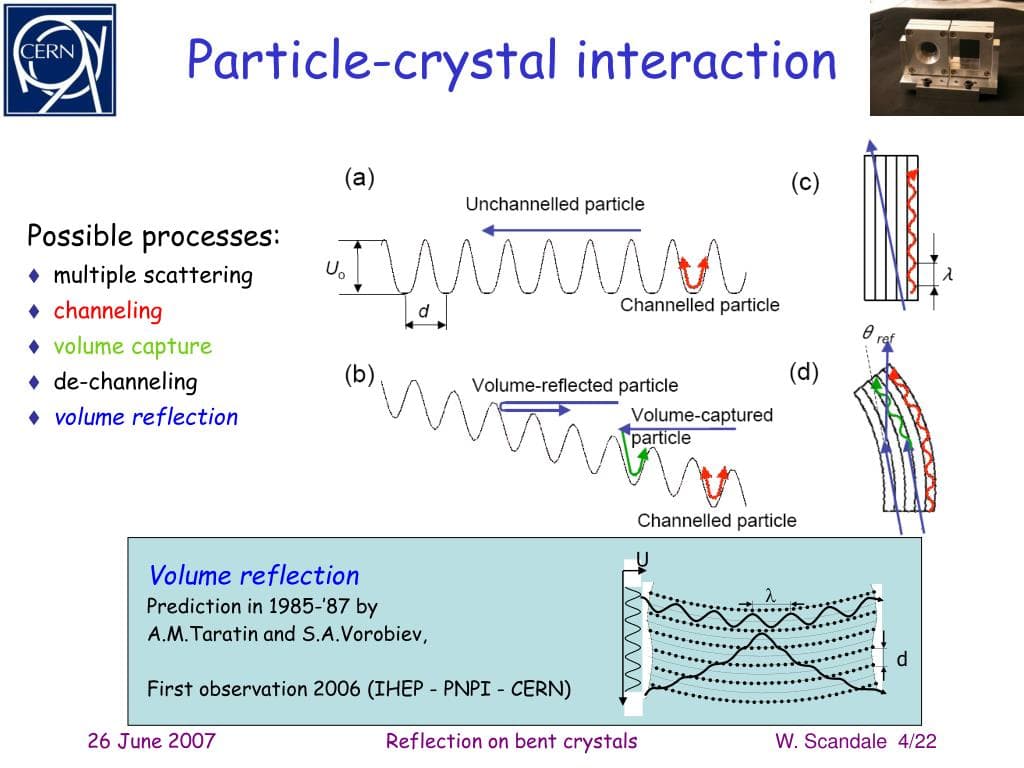
"If you place a large rock in a flowing stream, you can shelter objects located just downstream. It's much the same with crystals and a beam of particles," says Francesco Velotti, applied physicist in the Accelerator Systems (SY) Department. The analogy cuts to the heart of how crystal shadowing works: bent silicon crystals, inserted into the beam path, act as a protective shield for the septum through what the team describes as a shadowing effect. Crucially, the position of the crystals can be remotely adjusted according to beam conditions, giving operators real-time control over the shielding geometry.
The technique itself is not new to the SPS. Crystal shadowing has been in operational use at the machine since 2021, but the freshly installed three-crystal configuration represents a meaningful upgrade in scope and sophistication. The system was developed and installed by experts from three SY Department subgroups, SY-ABT, SY-BI, and SY-STI, with contributions from BE-CEM within the Beams (BE) Department.

That collaborative effort sits inside the broader DECRYCE project, short for DEvelopment of CRYstals for Collimation and beam Extraction, which CERN established in 2022. DECRYCE was designed to cover the full research and development cycle for crystal systems at the facility, spanning everything from the design and engineering of crystal benders to silicon strips, assembly of crystal systems, and experimental validation. The three-crystal installation in the SPS represents that pipeline delivering a refined, testable system to the machine floor.
No performance data or quantitative beam-loss reduction figures have been released at this stage, as the system has not yet entered its testing campaign. What CERN has confirmed is that the hardware is in place and ready, with experimental validation listed as the next phase under the DECRYCE framework. For a machine like the SPS, where beam quality directly underpins the physics programs fed by its extracted beams, getting crystal shadowing right at this scale matters considerably. The coming tests will determine whether the three-crystal geometry delivers the protection the design promises.
Know something we missed? Have a correction or additional information?
Submit a Tip

